Quick Navigation
- What the Mountain Course Actually Is
- How the Two Weeks Are Shaped
- Grandstands, Roadside Banks and Everything Between
- The Rules That Keep Spectators Alive
- Getting Around When the Roads Shut
- Six Things to Do During TT Week Besides Watching
- Is the Isle of Man TT Dangerous?
- Is the Isle of Man TT dangerous?
- Turning This Into a Trip
- Frequently Asked Questions
- What does Isle of Man TT stand for?
- Do you need a ticket to watch the Isle of Man TT?
- Can you move around during a road closure?
- How do you get to the Bungalow and the mountain section?
- What is there to do during TT week besides watching the races?
The best places to watch the Isle of Man TT are the Grandstand on Glencrutchery Road in Douglas for the start and podium, and free roadside spots at Ballaugh Bridge, Ramsey and Creg-ny-Baa along the closed course itself. Almost everything else a first-time spectator needs follows from that word “closed”: where you can stand, when you can move, and why marshals are not making conversation when they ask you to step back.
The short answer
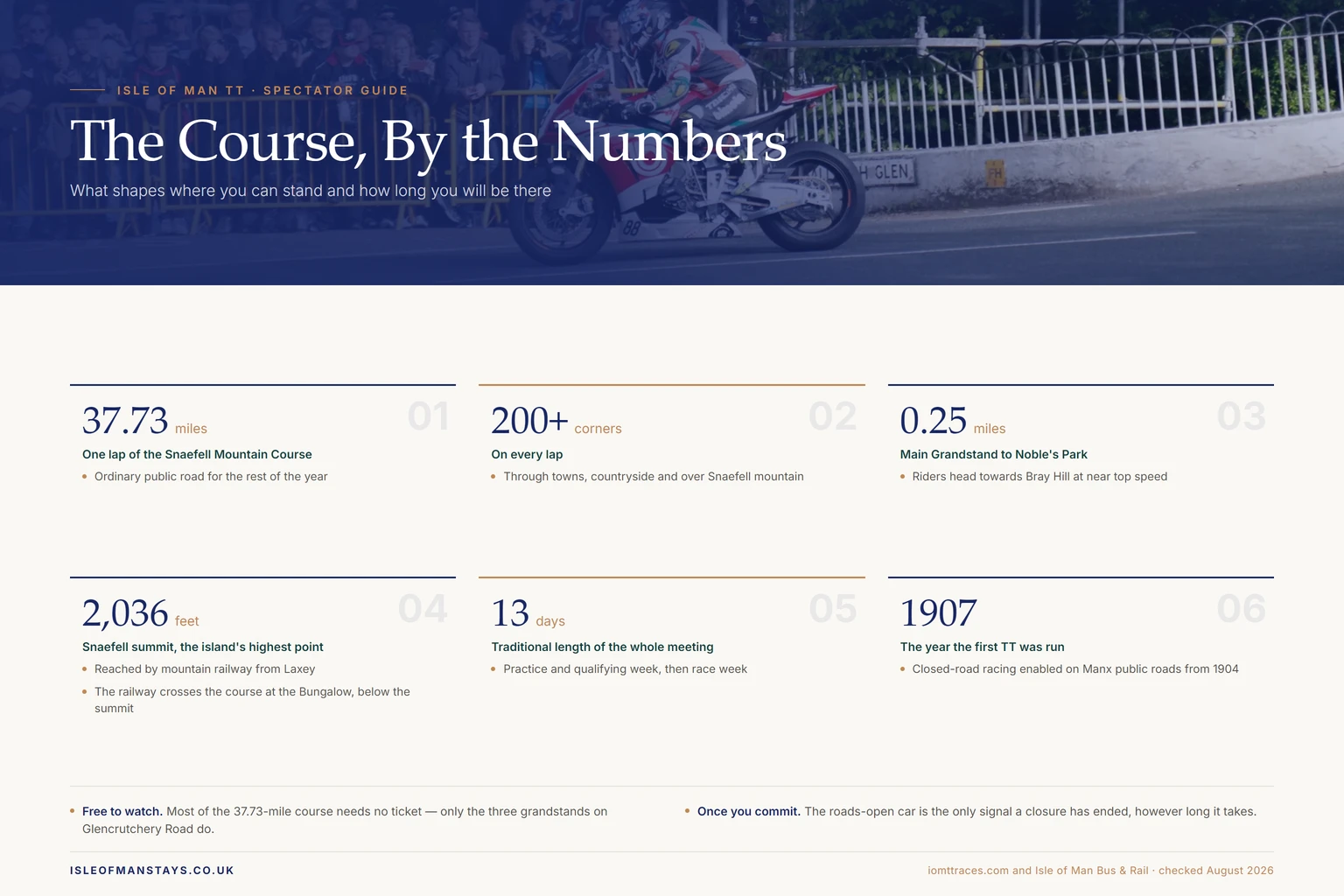
- The course. The Snaefell Mountain Course is 37.73 miles of public road with more than 200 corners.
- Free spectating. Most of the course needs no ticket – only the three grandstands on Glencrutchery Road in Douglas do.
- Village vantage points. Ballaugh Bridge and Ramsey give close, slow-corner viewing with food and shelter nearby.
- The mountain section. The Snaefell Mountain Railway from Laxey crosses the course at the Bungalow on its way to the 2,036-foot summit.
- The meeting length. The TT traditionally runs 13 days – a qualifying and practice week followed by race week.
- Once you commit. Entering the circuit once the roads are closed is an offence, so pick a spot with food, water and waterproofs for the whole closure.
What the Mountain Course Actually Is
The Snaefell Mountain Course is 37.73 miles of ordinary Manx road. The official Isle of Man TT site describes it running through towns, countryside and over Snaefell mountain with more than 200 corners in a lap. It is not built for racing. It is the A1 out of Douglas, the villages of Kirk Michael and Ballaugh, the streets of Ramsey and the A18 over the top, with kerbs, stone walls and front gardens where a purpose-built track would have gravel.
Races are time trials rather than mass starts. Riders are released individually, one after another, and race the clock, so the first machine past a given corner is not necessarily the one leading. The winner is whoever completes the laps in the shortest total time.
How the Two Weeks Are Shaped
The meeting runs across roughly a fortnight, and the official site puts its traditional length at thirteen days. The first stretch goes to practice and qualifying, when riders learn the road, teams work on set-up and starting positions are settled. The second is race week.
That matters for planning, because practice sessions also close the roads. Anyone arriving expecting a normal island until the racing begins has misread the event. If you want to watch practice as well as the races, find somewhere to stay on the island that covers both weeks.
Dates shift year to year and sessions get moved for weather, so treat the organisers' announcements as the only reliable source. If you are still choosing when to come, our guide to the best time to visit the Isle of Man sets the fortnight against the rest of the year.
Planning your trip
Staying overnight? Compare live prices and availability across the Isle of Man on Booking.com.
Compare Isle of Man staysWe earn a small commission if you book through this link, at no extra cost to you.
Grandstands, Roadside Banks and Everything Between
Because the course is made of public roads, the official site points out that free vantage points exist all the way round it. That is the TT's great peculiarity: you can watch one of the world's hardest races from a field or a pub garden without a ticket, provided the organisers permit it.
Ticketed seating is concentrated at the start and finish. The TT's three official grandstands all overlook Glencrutchery Road in Douglas: the Main Grandstand for the start, pit lane and podium, Noble's Park a quarter of a mile on where riders are near top speed towards Bray Hill, and the Fan Park Grandstand by the pit-lane exit.
| Vantage point | What it gives you | Worth knowing |
|---|---|---|
| The Grandstand | Start, finish, pit stops, podium, scoreboard | Ticketed; paddock and Fan Park alongside |
| Bray Hill | Machines near full speed within a mile of the start | Residential and strictly marshalled |
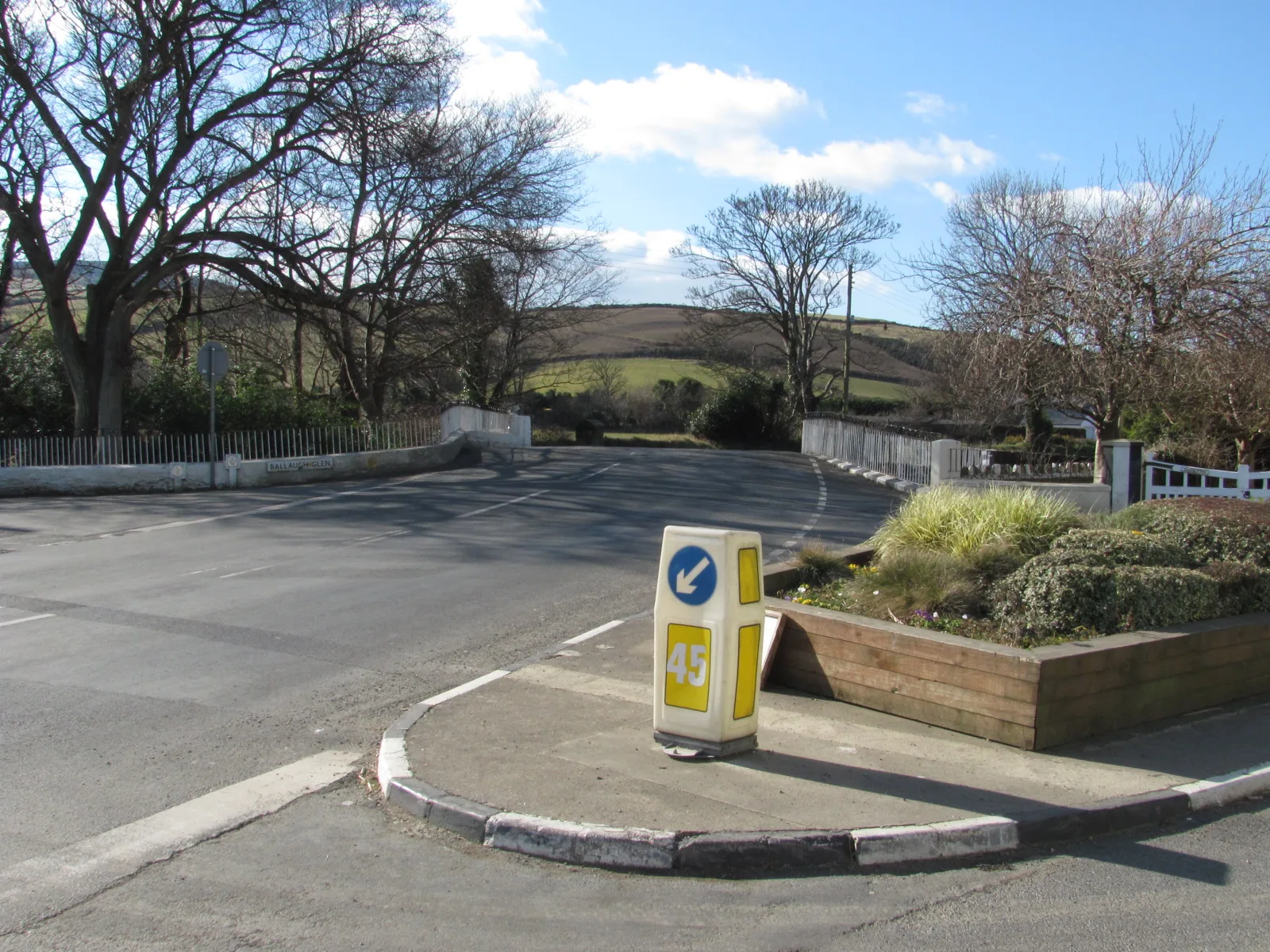
| Ballaugh Bridge | A humpback that lifts the bikes clear of the road | Village setting, so it fills early |
| Ramsey | Parliament Square and the Hairpin – slow and very close | A town, so food and shelter are to hand |
| The Bungalow | The exposed mountain section, high above the coast | Reached by mountain railway from Laxey |
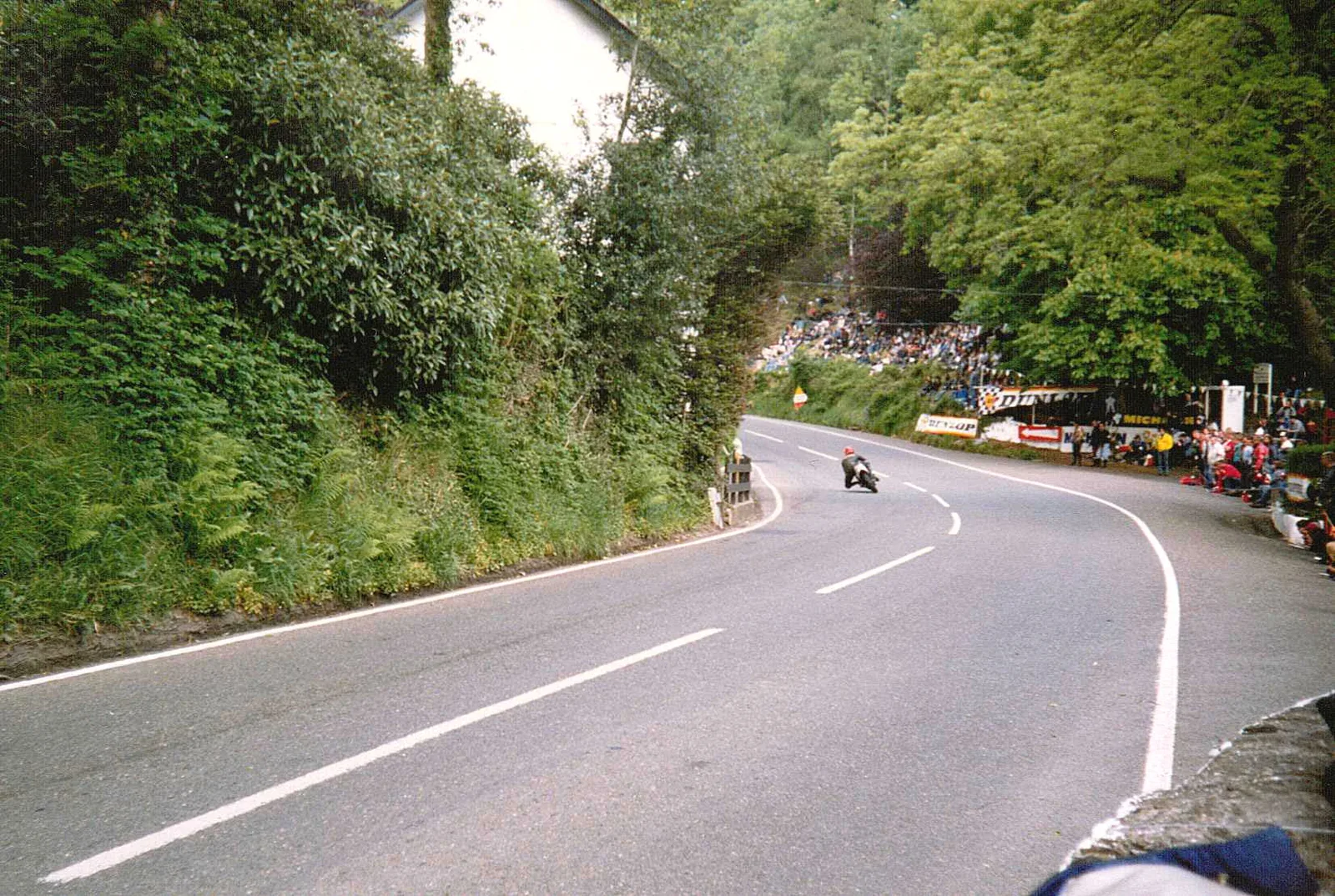
| Creg-ny-Baa | The fast drop off the mountain towards Douglas | Long-established spot with a pub on the corner |
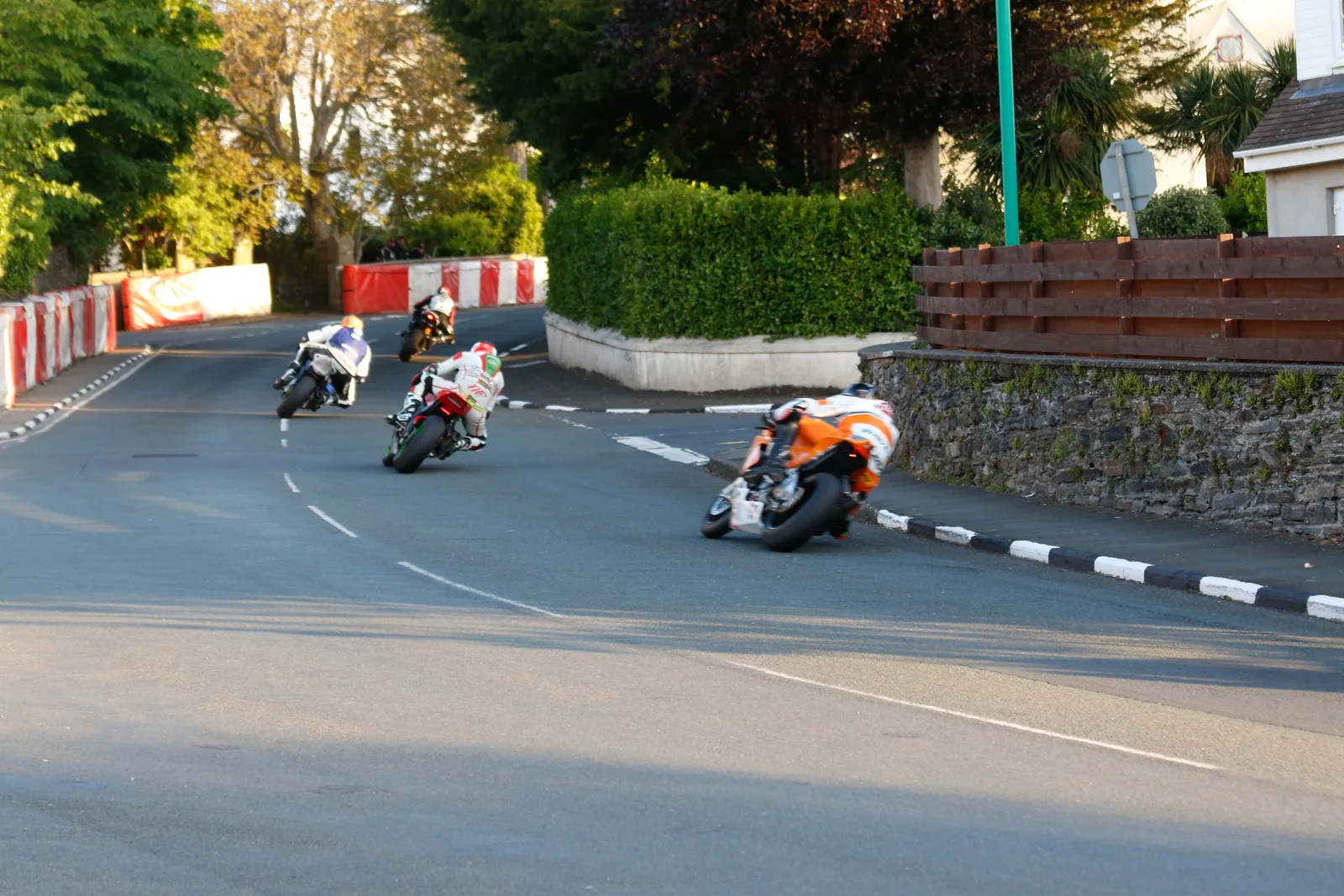
Ramsey deserves a mention for anyone who dislikes standing in a field. The course threads through the middle of the town, the corners are slow enough to see riders working, and there is a beach, a harbour and lunch when the roads reopen. If that appeals, look early at places to stay in Ramsey.
The Rules That Keep Spectators Alive
Once the roads close, the course stops being a road. Entering it once the roads are closed is an offence, not a breach of etiquette, and people are prosecuted every year.
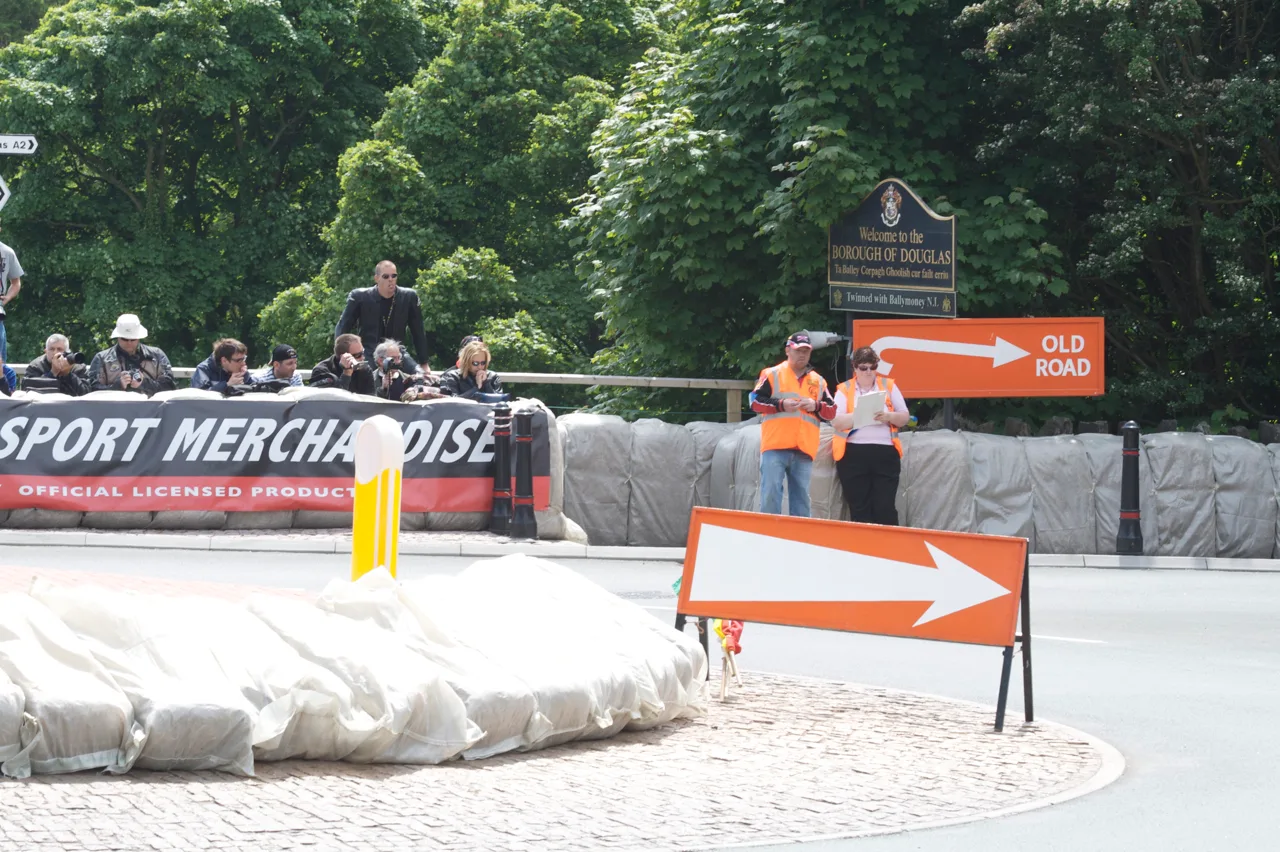
The organisers' own spectating dos and don'ts are short and worth reading in full. The essentials:
- Keep off the course. In the site's own words, “it's no longer a main road, it's a race track”.
- Respect prohibited and restricted areas. They are marked and they change as machines get faster, so last year's spot is not automatically this year's.
- Do what the marshals say. They are trained volunteers in orange bibs, and their instructions are not negotiable.
- Keep phones and selfie sticks in. An arm over the white line is a hazard to a rider at racing speed.
- Wait for the roads-open car. Until it has passed, the roads remain closed, whatever it looks like.
- No drones. They are banned outright and the fine is substantial.
The consequence is that you commit to a spot. Once a closure begins you stay on your side of the course until the roads-open car has gone through, which can be hours. Take food, water, waterproofs and something to sit on: some of the best vantage points are remote, with no toilets and nowhere to buy anything.
Getting Around When the Roads Shut
The Mountain Road catches people out. For the whole event period, not just during sessions, the A18 runs one-way in the racing direction from the Ramsey hairpin to Creg-ny-Baa. You cannot drive up it from the Douglas side even when the course is open, so a journey that looks like a short hop is not one.
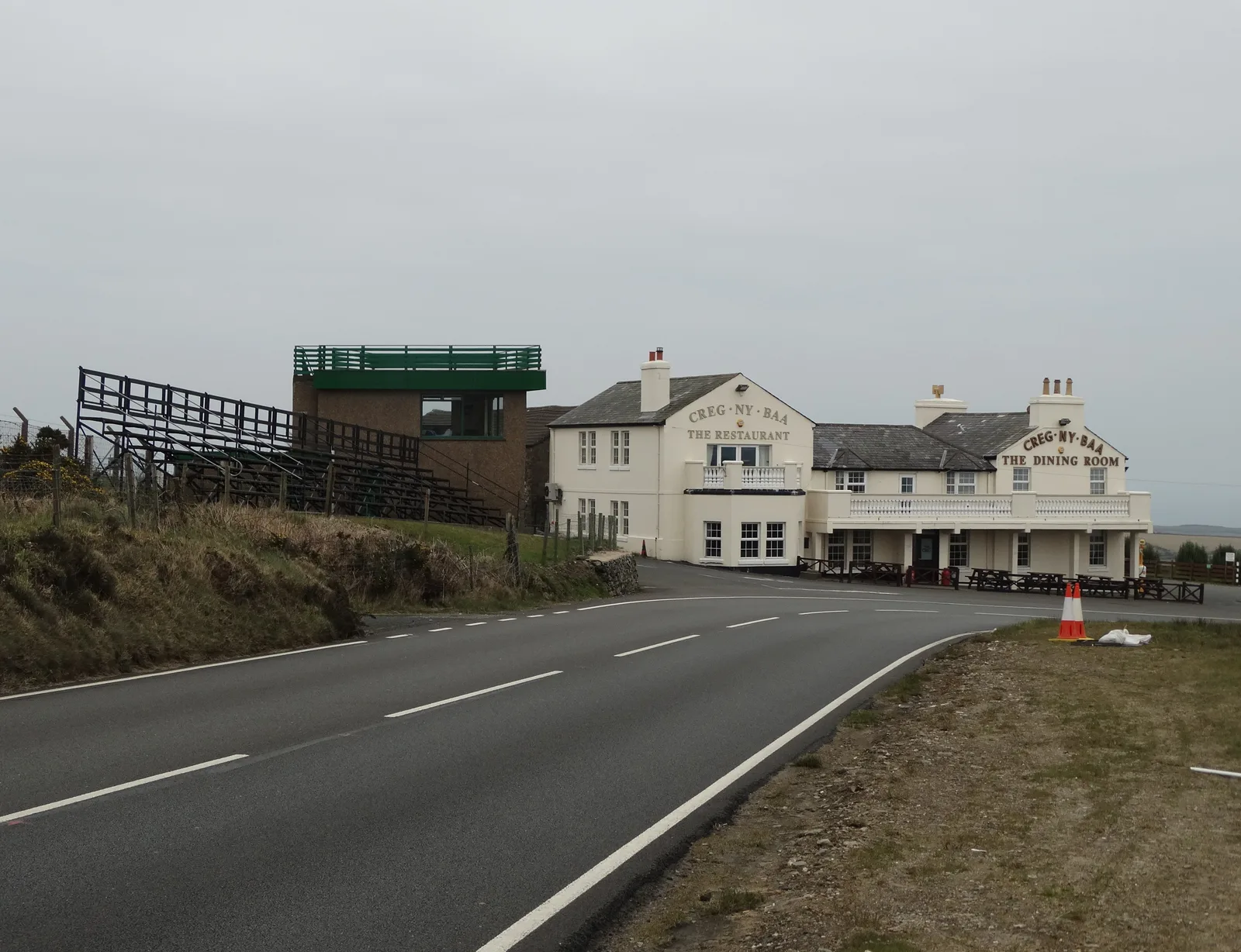
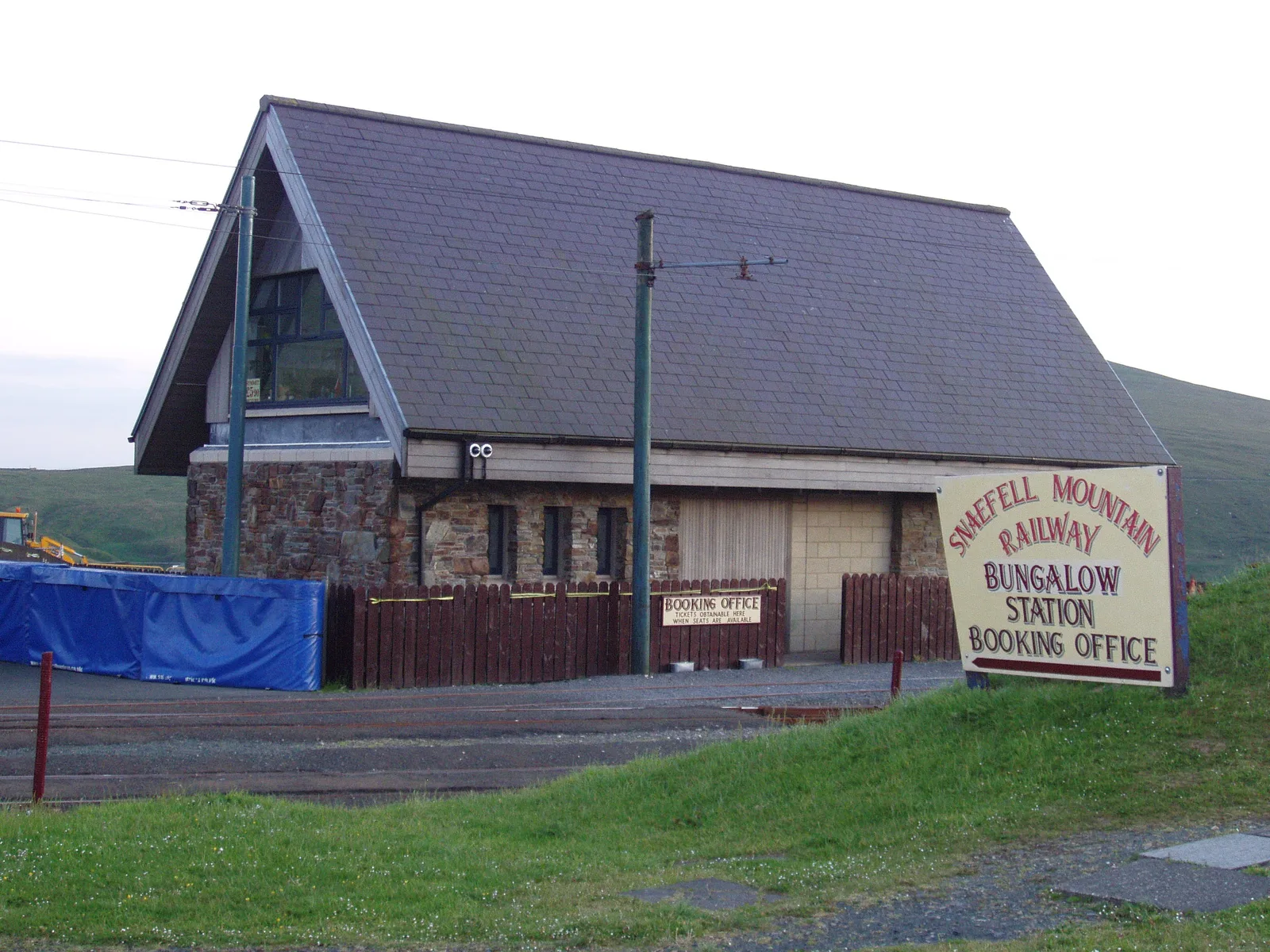
Public transport is the sane answer. Special buses run to the Grandstand and paddock complex, and the organisers say parking there is limited, pushing visitors towards buses and the free car park at St George's. From Laxey, the Snaefell Mountain Railway climbs towards a summit its operator puts at 2,036 feet and crosses the course at the Bungalow – which is how many people reach the mountain without a car.
Six Things to Do During TT Week Besides Watching
Most of the fortnight is not racing. Sessions take part of the day and the rest belongs to you, which is why visitors who plan only around the races end up with unfilled time.
- 1. Walk the paddock. Behind the Grandstand, mechanics work on machines in the open and riders come and go. It is the part of the event that rewards simply turning up.
- 2. Spend an evening in the Fan Park. Food, bars, live music and a daily programme of entertainment run alongside the paddock.
- 3. Take the mountain railway from Laxey. It climbs to the Snaefell summit and crosses the course at the Bungalow: a day out and a way to reach the mountain section at once.
- 4. Claim a village vantage point early. Ballaugh Bridge and Ramsey give you somewhere to sit, somewhere to eat and a corner slow enough to watch riders work.
- 5. Cross to the other side of the island. The course covers the north and east; Peel, Castletown, Port Erin and Port St Mary sit away from it, so castles, beaches and coast paths stay quiet while the crowds are on the circuit.
- 6. Take a grandstand seat once. Roadside spectating shows you speed; the start and finish area shows you pit stops, the podium and the scoreboard.
Our round-up of things to do on the Isle of Man covers what is worth the drive on a closed-roads afternoon.
Is the Isle of Man TT Dangerous?
Yes, and there is no useful way to soften that. The TT is among the most demanding road races in the world for the people competing in it. There is no run-off: a mistake is met by a wall, a kerb, a bank or a building, and the event has claimed the lives of a great many riders across a history going back to 1907. Riders know this and choose it anyway.
For spectators the picture is different but not weightless. The rules exist because people watching have been hurt, and prohibited areas are redrawn as speeds rise. Stand where you are permitted, do what the marshals tell you, and the risk you carry is reasonable. Ignore either and you are a hazard to yourself and to the rider.
The related question – why the event is allowed at all – has a constitutional answer. The Isle of Man is a self-governing Crown Dependency, not part of the United Kingdom, and its own parliament has permitted racing on closed public roads since the early twentieth century. Mainland Britain has no equivalent, which is why closed-road racing in the British Isles happens here and in Northern Ireland.
Turning This Into a Trip
Spectating is free and mostly a matter of turning up in the right place. The hard part is everything around it, so start there rather than with the racing:
- Getting here. Sort out the crossing before anything else.
- The bed. Our guide to booking a bed for race fortnight explains how far ahead the market moves.
- Which side of the course you sleep on. If you want the shortest walk to the Grandstand and the ferry alike, look first at somewhere to stay in Douglas.
Frequently Asked Questions
What does Isle of Man TT stand for?
TT stands for Tourist Trophy, a name dating from the event's origins in the early twentieth century, when manufacturers raced machines derived from touring motorcycles. It is now simply the name of the meeting, run on the 37.73-mile Snaefell Mountain Course over roughly a fortnight in late May and early June.
Is the Isle of Man TT dangerous?
For competitors, yes: it is one of the most demanding road races in the world, run on closed public roads with no run-off, and many riders have died there since racing began in 1907. For spectators the risk is manageable but real, which is why prohibited areas, marshals and the roads-open car are enforced.
Do you need a ticket to watch the Isle of Man TT?
Not for most of the course. Because the circuit is made of public roads, the official site notes that free vantage points can be found all around the island, and most spectators watch from roadside banks, fields and villages. Tickets are needed for the three grandstands on Glencrutchery Road in Douglas.
Can you move around during a road closure?
No. Once the roads close you stay on your side of the course until the roads-open car has passed. Entering the circuit once the roads are closed is an offence. Pick your spot with that in mind, and take food, drink and waterproofs with you.
How do you get to the Bungalow and the mountain section?
Many people take the Snaefell Mountain Railway from Laxey, which crosses the TT course at the Bungalow on its way to a summit the operator gives as 2,036 feet. Driving is constrained: the Mountain Road runs one-way in the racing direction from the Ramsey hairpin to Creg-ny-Baa throughout the event.
What is there to do during TT week besides watching the races?
The paddock and Fan Park behind the Grandstand run daily entertainment, food and live music, and the paddock is open to wander. Away from the course, Peel, Castletown and the southern towns carry on normally, so castles, beaches and coastal walks stay quiet while the crowds are on the circuit.