Quick Navigation
- An Island You Can Cross Before Lunch
- 1. The Great Laxey Wheel
- 2–5. The Railways You Can Still Ride
- 6–8. Castles, and Two Old Capitals
- 9–10. Snaefell, the Sound and the Calf of Man
- 11. Things to Do When It Rains
- Museums and castles under a roof
- Theatre, cinema and soft play in Douglas
- When rain improves the outing
- 12. Going With Children
- After Dark
- What Is the Isle of Man Best Known For?
- So Is the Isle of Man Worth Visiting?
- Frequently Asked Questions
- How many days do you need on the Isle of Man?
- What is there to do on the Isle of Man when it rains?
- Is the Isle of Man good for a family holiday?
- Can you see the Northern Lights from the Isle of Man?
The best things to do on the Isle of Man are a working Victorian waterwheel, four heritage railways that are still public transport rather than museum pieces, two castles that once ran a country, and a headland where grey seals lie in a tide race. It is a small island with a deep bench, and enough of it is indoors that a wet week is not a wasted one.
The short answer
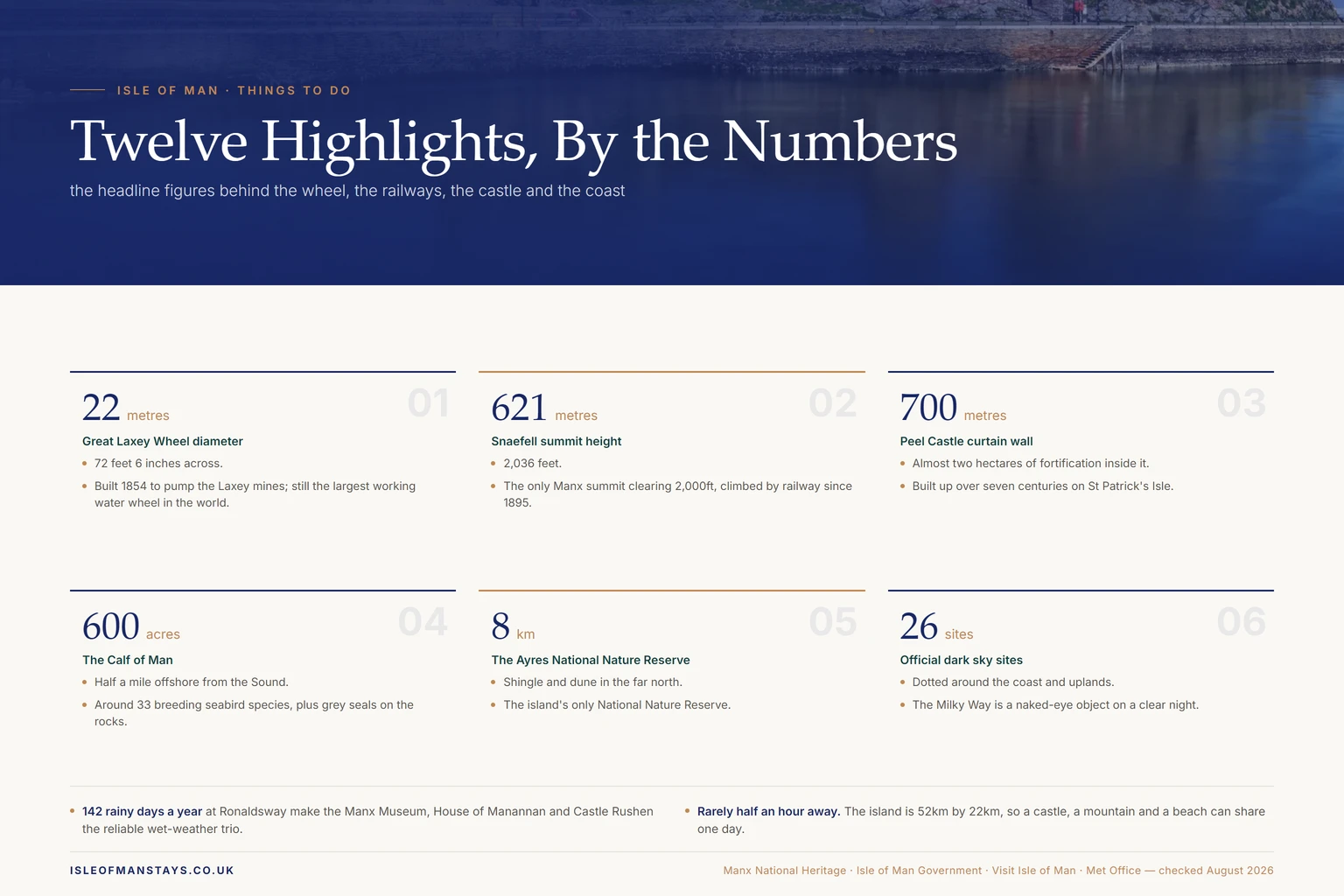
- The Great Laxey Wheel is the largest working water wheel in the world, 22 metres across and pumping since 1854.
- Four heritage railways still carry passengers as real public transport, the longest being the 17½-mile Manx Electric Railway from Douglas to Ramsey.
- Snaefell, at 621 metres, is the island's only summit above 2,000 feet, reached by mountain railway since 1895.
- The Manx Museum, the House of Manannan, Castle Rushen and the Old House of Keys give a wet day four solid indoor options.
- The Sound and Calf of Man hold around 33 breeding seabird species half a mile offshore, and the island has 26 official dark sky sites for after dark.
An Island You Can Cross Before Lunch
Manx National Heritage puts the island at 52 kilometres long and 22 wide – 32 miles by 14 – with about 80,000 people. That matters more than it sounds: you are rarely half an hour’s drive from anything on this list, so one day can hold a castle, a mountain and a beach.
Two things are worth knowing first. This is a self-governing Crown Dependency with its own parliament, Tynwald, which Manx National Heritage describes as the oldest continuous parliament in the world. And the whole island, land and sea, is a UNESCO Biosphere – the first whole jurisdiction to hold the status.
Here are the twelve picks at a glance, with the rest of the article taking each in turn.
| # | Attraction | Where | Best for | Indoor or outdoor |
|---|---|---|---|---|
| 1 | Great Laxey Wheel | Laxey | Victorian engineering at full size | Outdoor |
| 2 | Isle of Man Steam Railway | Douglas to Port Erin | Century-old locomotives | Both |
| 3 | Manx Electric Railway | Douglas to Ramsey | The cliff-top coast run | Both |
| 4 | Snaefell Mountain Railway | Laxey to the summit | The climb more than the view | Both |
| 5 | Douglas horse trams | Douglas promenade | A short ride with children | Outdoor |
| 6 | Peel Castle | Peel | Norse and medieval ruins | Outdoor |
| 7 | House of Manannan | Peel | Wet afternoons and Viking ships | Indoor |
| 8 | Castle Rushen | Castletown | Furnished medieval interiors | Mostly indoor |
| 9 | Snaefell summit | The island’s high ground | A long view, cloud permitting | Outdoor |
| 10 | The Sound and Calf of Man | Southern tip | Grey seals and seabirds | Outdoor |
| 11 | Manx Museum | Douglas | Getting your bearings, and wet days | Indoor |
| 12 | Cregneash | Near Port St Mary | Crofting life and rare sheep | Both |
1. The Great Laxey Wheel
The wheel was not built to be looked at. It was built in 1854 to pump floodwater out of the Great Laxey lead and zinc mines under the hillside below, and it remains the largest working water wheel in the world – 72 feet and 6 inches across, a little over 22 metres. Manx National Heritage credits the design to Robert Casement. The name everyone uses, Lady Isabella, belonged to the wife of the island’s Lieutenant Governor.
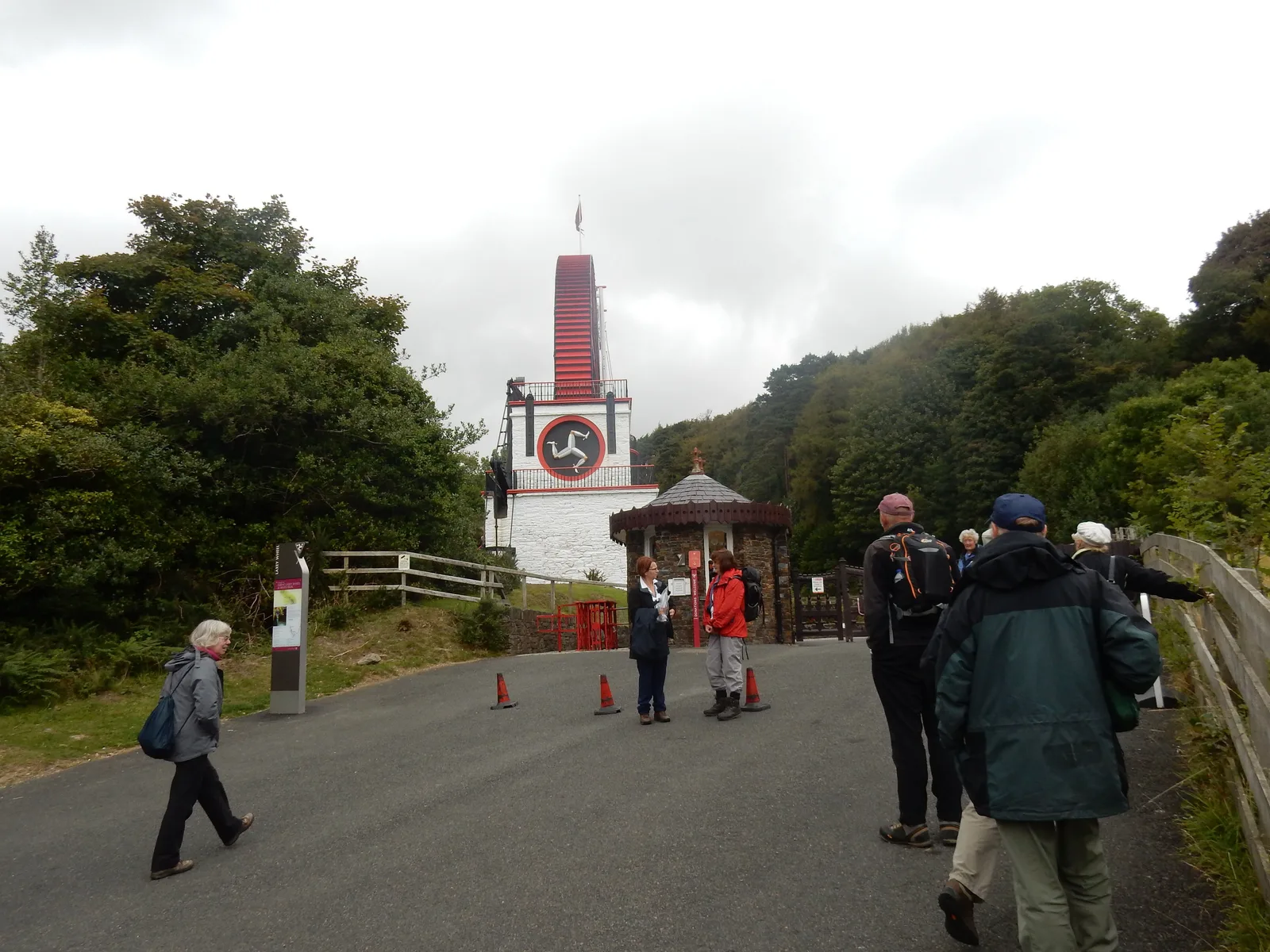
Ninety-five spiral steps take you to a viewing platform above the rim, where you feel the water go over before you see it. The site is more than the wheel: a mines trail runs through the old washing floors, and a volunteer-relaid narrow-gauge line passes through the island’s only railway tunnel. Give it two hours, not twenty minutes.
For the mechanics of how the buckets, the crank and the T-rocker actually pumped the mine dry, the full story is worth reading before you go. To stay within walking distance, the village has a small pool of self-catering places around the harbour and glen.
Planning your trip
Staying overnight? Compare live prices and availability across the Isle of Man on Booking.com.
Compare Isle of Man staysWe earn a small commission if you book through this link, at no extra cost to you.
2–5. The Railways You Can Still Ride
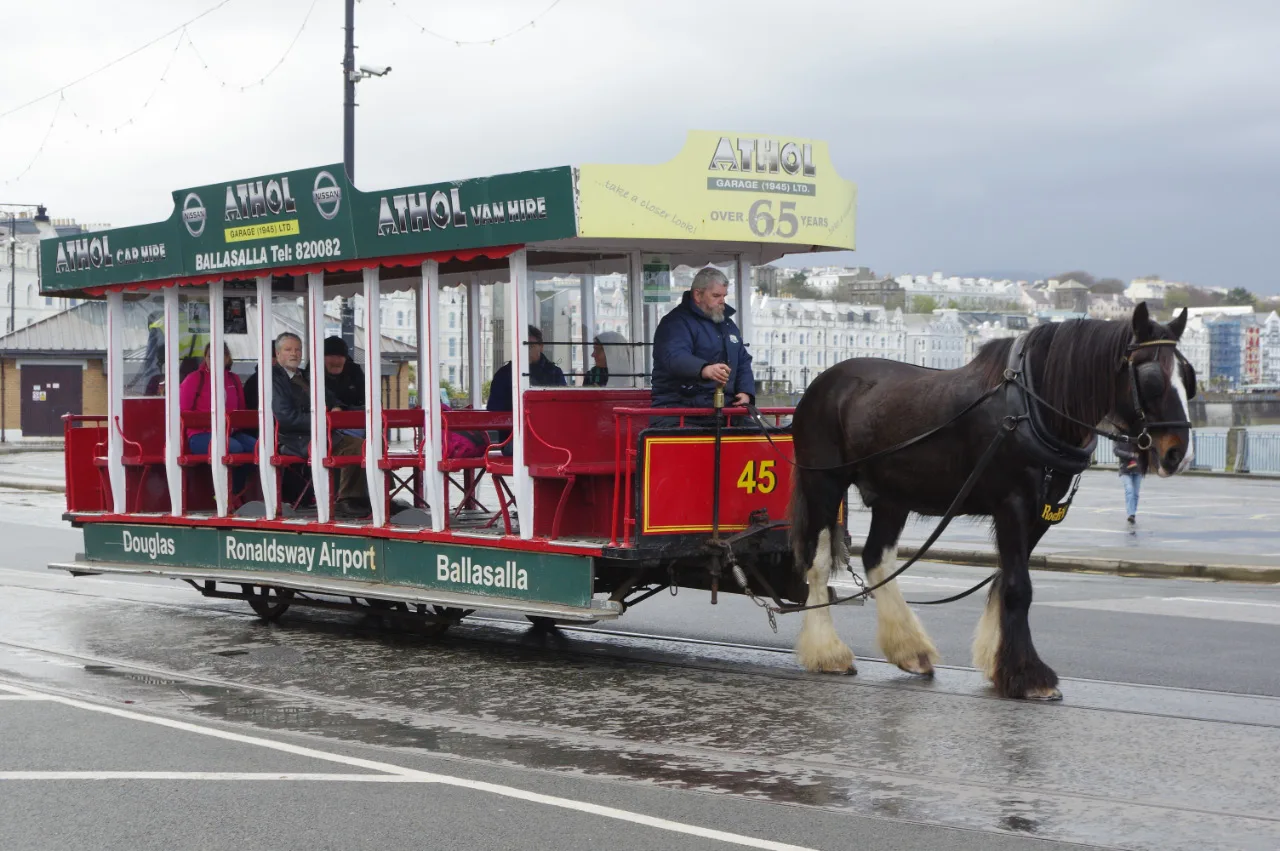
Four historic lines still carry passengers here, and none is a theme-park ride.
- Isle of Man Steam Railway. The first section opened in 1873; the surviving Douglas to Port Erin route dates from 1874 and runs 15½ miles on three-foot gauge, using locomotives over a century old.
- Manx Electric Railway. In service on the east coast since 1893, it runs 17½ miles to Ramsey, and tramcar No. 1 has run since the line opened.
- Snaefell Mountain Railway. Above Laxey, it has climbed to the summit since 1895, a 4½-mile haul of about half an hour.
- Douglas horse trams. Horses have pulled trams along the promenade since 1876 – Clydesdales and Shires on a mile and a half of track down the middle of the road.
These run seasonally rather than year-round, so a winter visit will find some of them shut – worth checking current running days with Isle of Man Transport before you build a day around one.
6–8. Castles, and Two Old Capitals
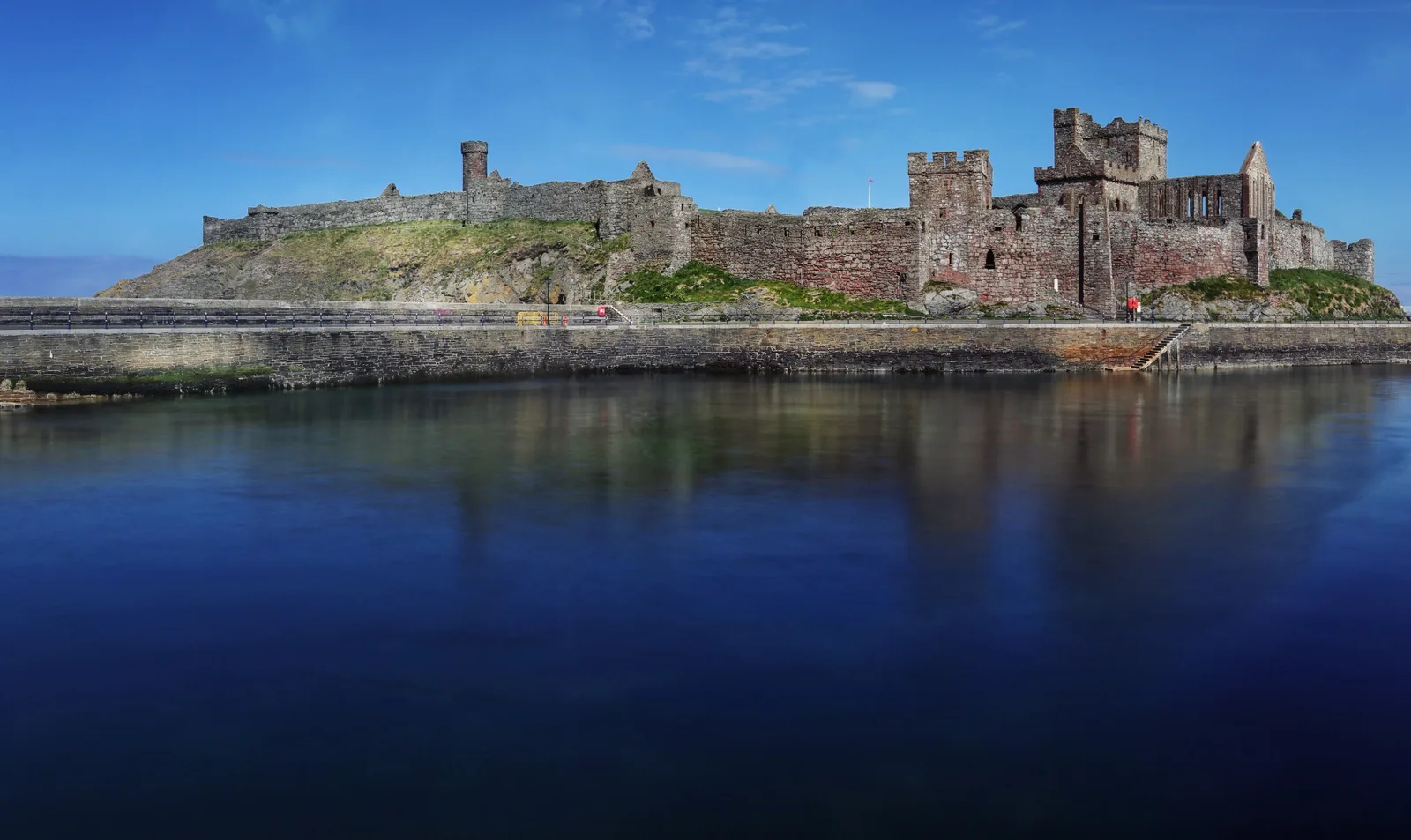
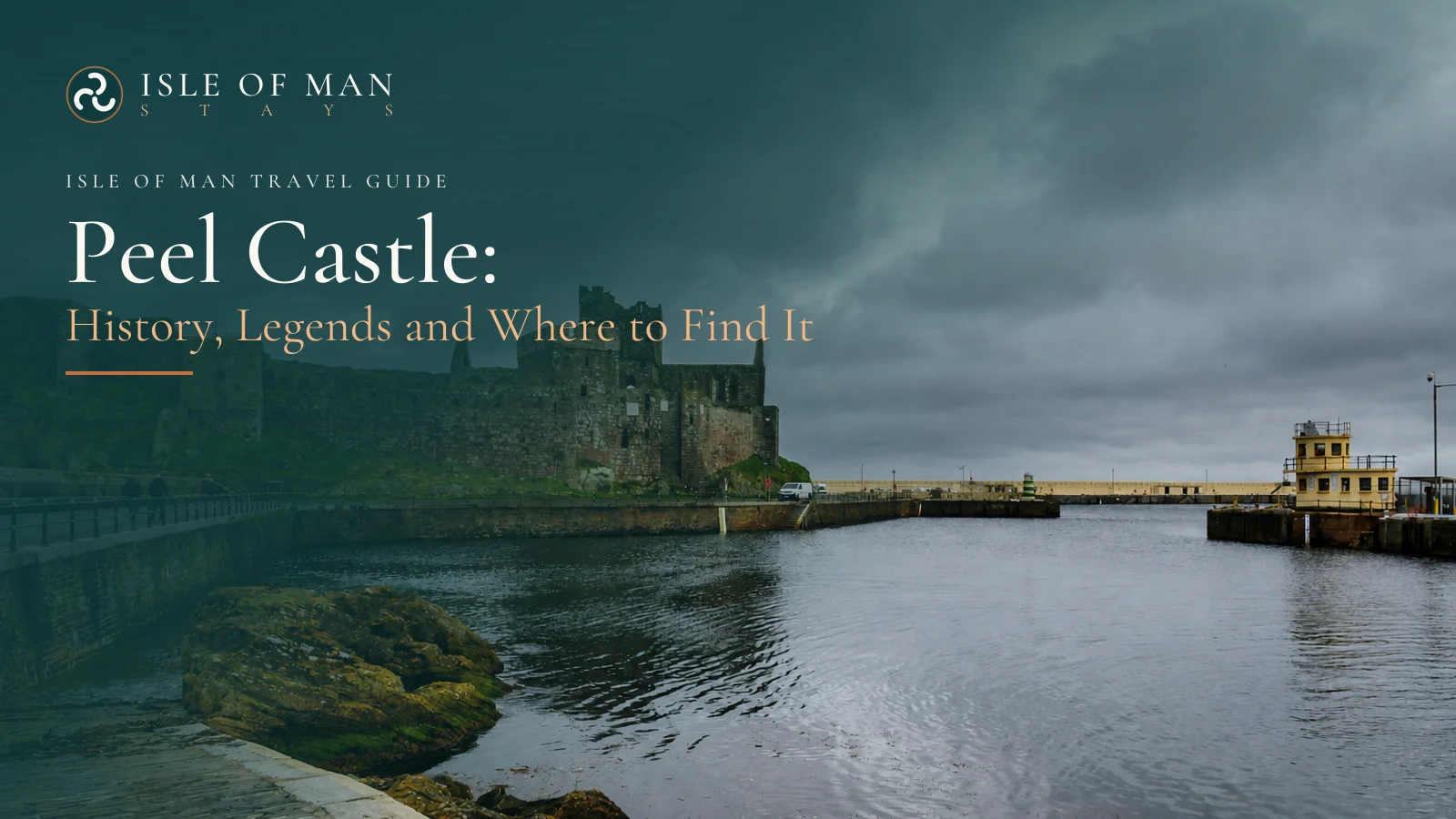
Peel Castle takes up the whole of St Patrick’s Isle, joined to the town by a causeway. Manx National Heritage counts almost two hectares of fortification inside a 700-metre curtain wall, built up over seven centuries, with a cathedral, chapels and cemeteries stacked inside it.
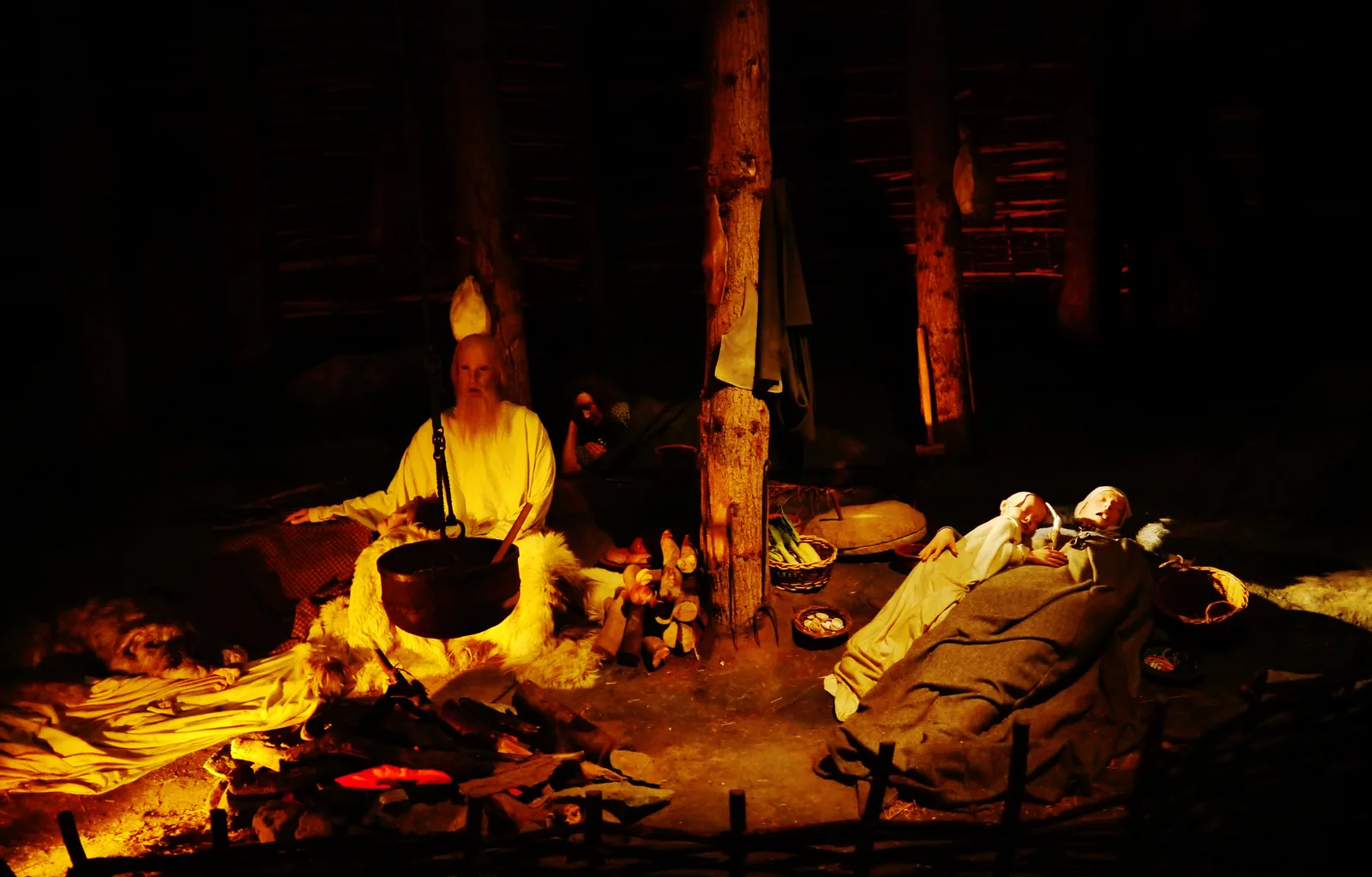
Walk the outer circuit for the view back over the harbour, then cross to the House of Manannan, which runs from an Iron Age roundhouse through a Viking longhouse to a replica longship and the smells of Peel’s port in the 1800s. The town’s harbour-side apartments and holiday homes put both sites inside ten minutes on foot.
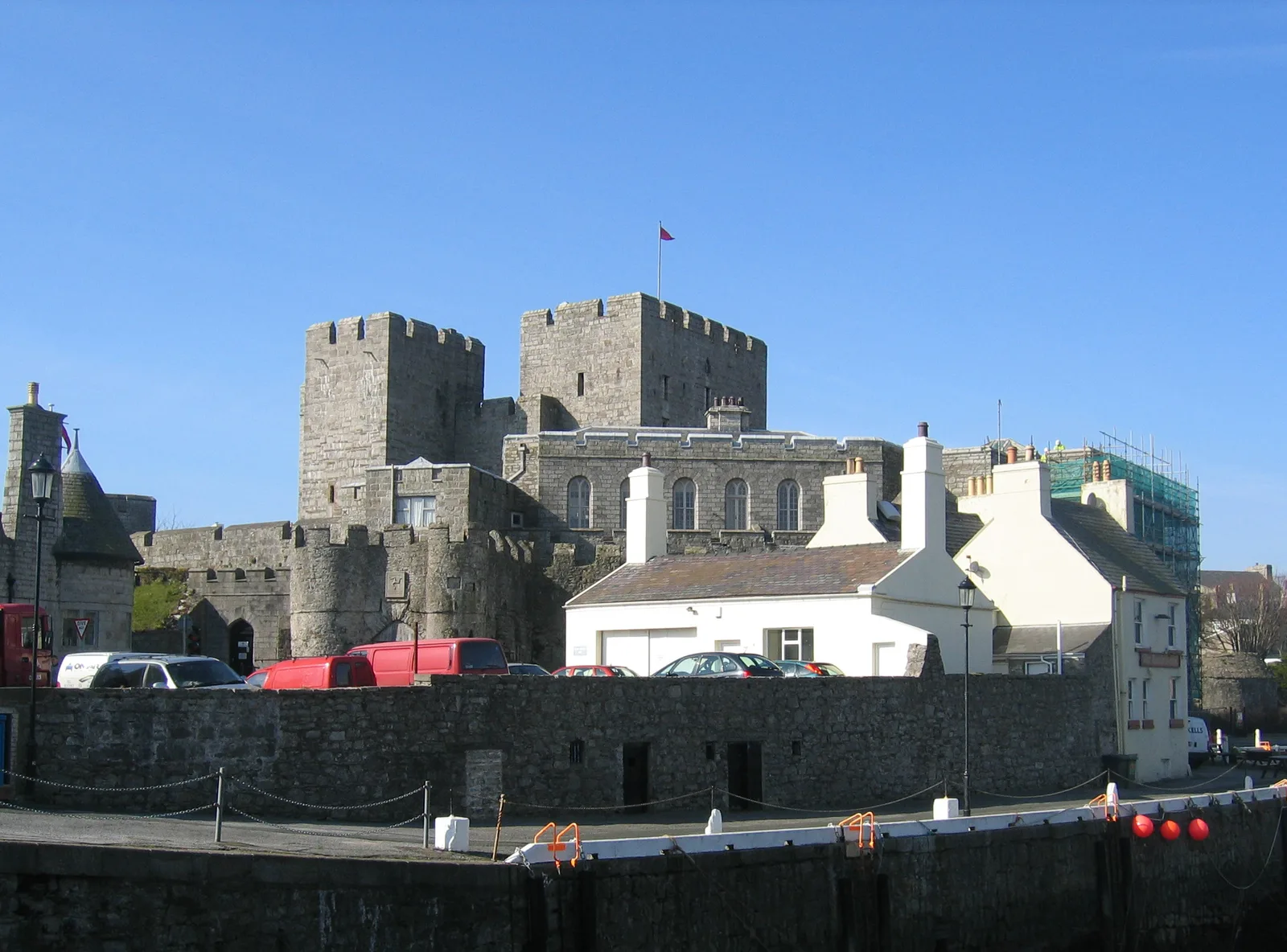
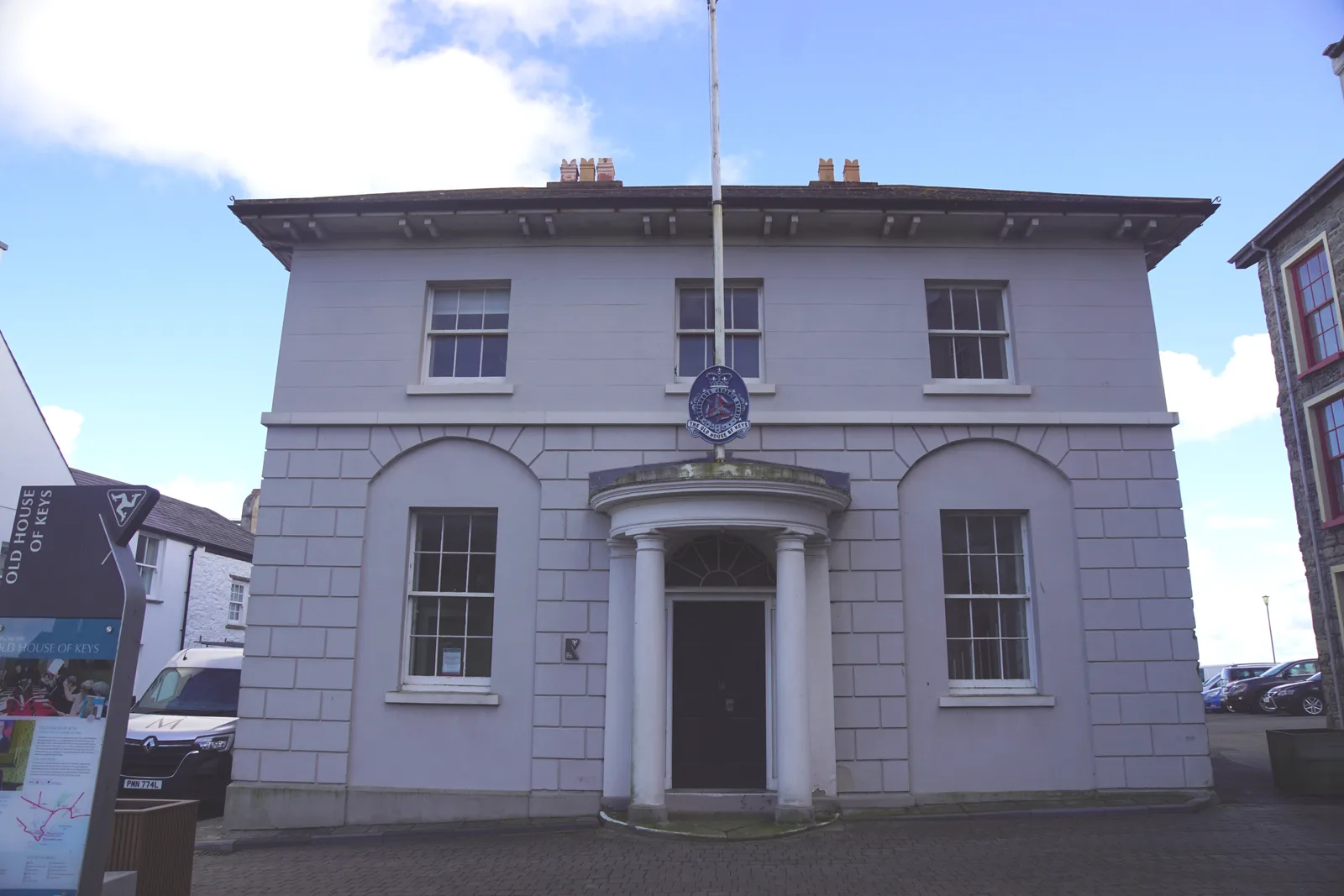
Castletown, at the other end, was the capital until 1869. Castle Rushen dominates it – described by Manx National Heritage as one of the best-preserved medieval castles in the British Isles, built 800 years ago for a Viking king, later a Civil War fortress and then the island’s Victorian prison.
Across the square, the Old House of Keys is a plain restored chamber where the elected half of Tynwald sat until government moved to Douglas. Both make more sense if you have read how the Norse, the Scots and the English each took a turn at running the place.
The third seat of government has no walls at all. Tynwald Hill at St John’s is a grassy mound raised in four circular tiers, traditionally said to hold soil from every parish on the island, and it is where each year’s Acts are proclaimed aloud in English and Manx on 5 July (moved to the following Monday when that date falls on a weekend). Any other day it is a quiet green in the middle of a village, which is much of the appeal.
9–10. Snaefell, the Sound and the Calf of Man
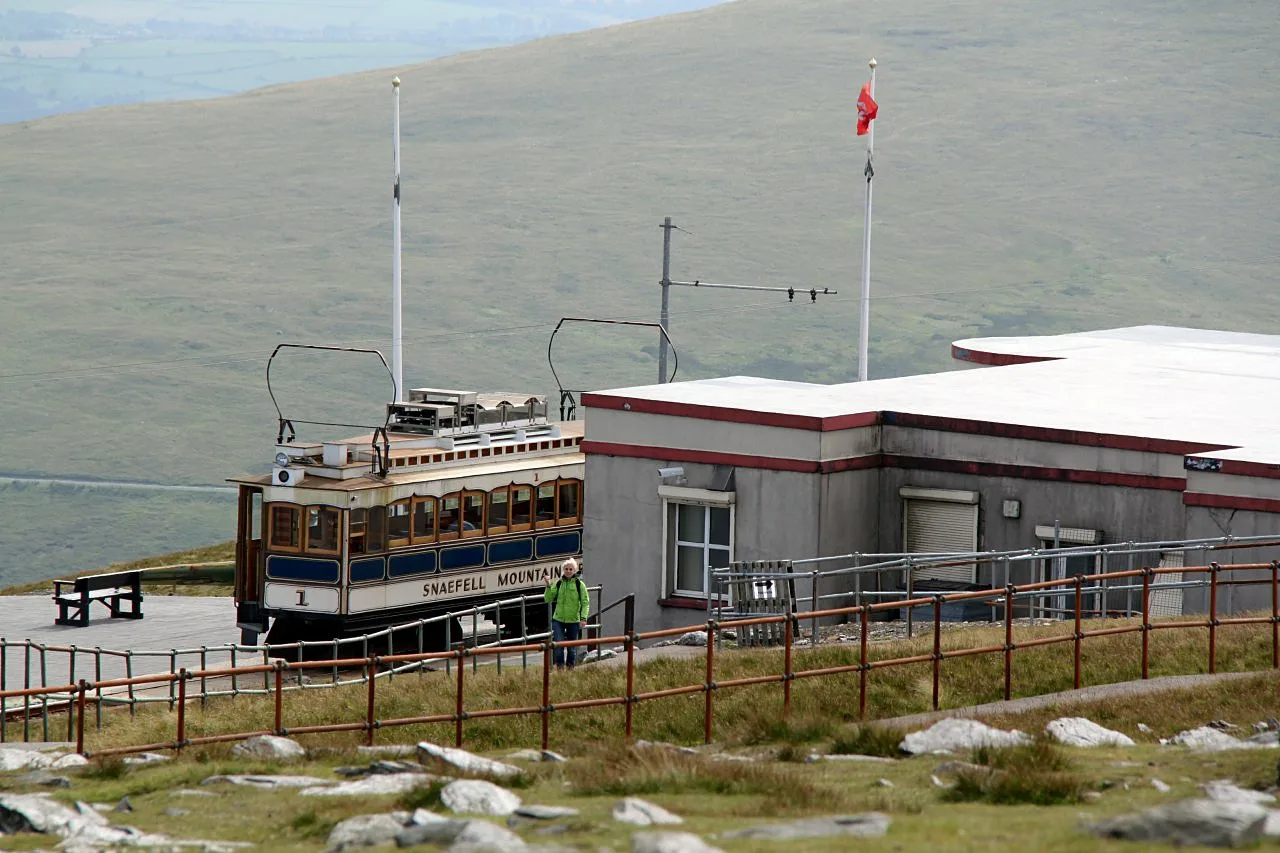
Snaefell is 621 metres, or 2,036 feet, the only Manx summit clearing 2,000. The famous line is that on a clear day you see six kingdoms from the top. Treat that as tradition, not measurement: the count varies with the telling, and the railway’s own operator words it as seven – Mann, England, Scotland, Wales, Ireland, and the kingdoms of heaven and Neptune. What you often get instead is cloud, because the high ground catches whatever the Irish Sea is doing first.
The southern tip is the other essential. At the Sound, the tide races through a narrow strait towards the Calf of Man, and grey seals haul out on the rocks below in numbers that need no patience to find.
Manx National Heritage puts the Calf at roughly 600 acres, half a mile offshore, with around 33 breeding seabird species including the Manx shearwater – the bird that carries this coastline in its name. Small boats cross from Port Erin and Port St Mary, weather and tide permitting; sailings are seasonal and operators take bookings direct – check with Manx National Heritage first. Our full guide to the Calf has the history behind the seabirds and the rest of the crossing details.
Beaches, briefly:
- Peel faces west, and its sandy bay under the castle is the one people photograph.
- Port Erin sits in a horseshoe below Bradda Head.
- The Ayres in the far north is eight kilometres of shingle and dune, the island’s only National Nature Reserve.
11. Things to Do When It Rains
Ronaldsway records measurable rain on roughly 142 days a year. Planning around that is not pessimism, it is arithmetic.
The useful question on a wet morning is not only what is indoors but what is open. Several heritage sites keep a season rather than a year-round calendar: Manx National Heritage opens Castle Rushen, the Old House of Keys and the Nautical Museum from spring into autumn, so a rainy day in winter shortens the list. Check the current season on Manx National Heritage’s site before you cross the island for one of them.
Museums and castles under a roof
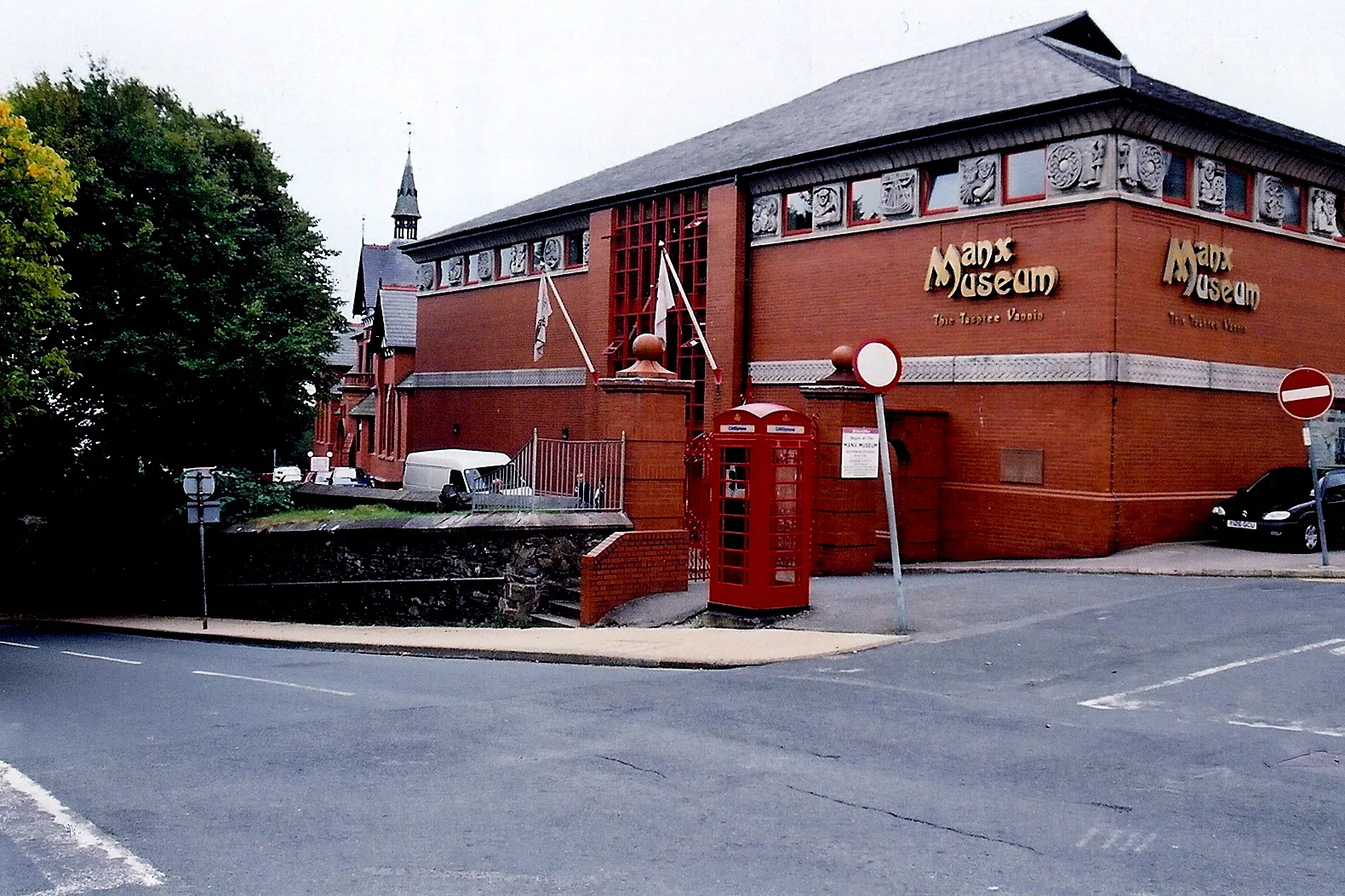
The best wet-weather move is the Manx Museum in Douglas, which doubles as the sensible first stop of any trip. It runs from the Stone Age to the 20th-century internment camps, and Manx National Heritage claims more Viking silver per square kilometre here than in England, Wales, Scotland or Ireland.
After that: the House of Manannan in Peel is almost entirely indoors, which makes it the reliable choice on a wet day, unlike the open-air castle sites. Castle Rushen has furnished chambers and a working medieval kitchen under a roof.
Castletown rewards a wet half-day beyond the castle:
- Old House of Keys. Restored to its 1866 interior, it lets you take a seat in the chamber the Keys used from 1821 to 1874, hear a debate and vote on the topic of the day; sittings must be booked.
- Nautical Museum. This is Captain George Quayle’s 18th-century private dock and boathouse, home for more than two centuries to the Peggy, which Manx National Heritage describes as the earliest surviving schooner.
Theatre, cinema and soft play in Douglas
On Douglas promenade, the VillaGaiety venues cover most rainy-day needs between them. The Gaiety Theatre, opened in 1900 and counted among the finest surviving work of the theatre architect Frank Matcham, runs theatre tours as well as shows. Its neighbour, the Villa Marina, holds the Broadway Cinema and Dragon’s Castle, a soft-play area for children up to seven with a sensory area for babies and children with additional needs. Play sessions are booked through VillaGaiety.
When rain improves the outing
Some of the island is better wet. The glens are wooded stream valleys, and a day of rain fills their waterfalls. Dhoon Glen, five miles south of Ramsey on the coast road, is one of the steepest on the island, and its waterfall, the Inneen Vooar or Big Girl, drops more than 40 metres in two falls, according to the Isle of Man Government.
Glen Maye, three miles south of Peel, has a bridged gorge and waterfall inside sheltered, fern-filled woodland. Wear boots with grip, because steep glen paths are slippery after rain.
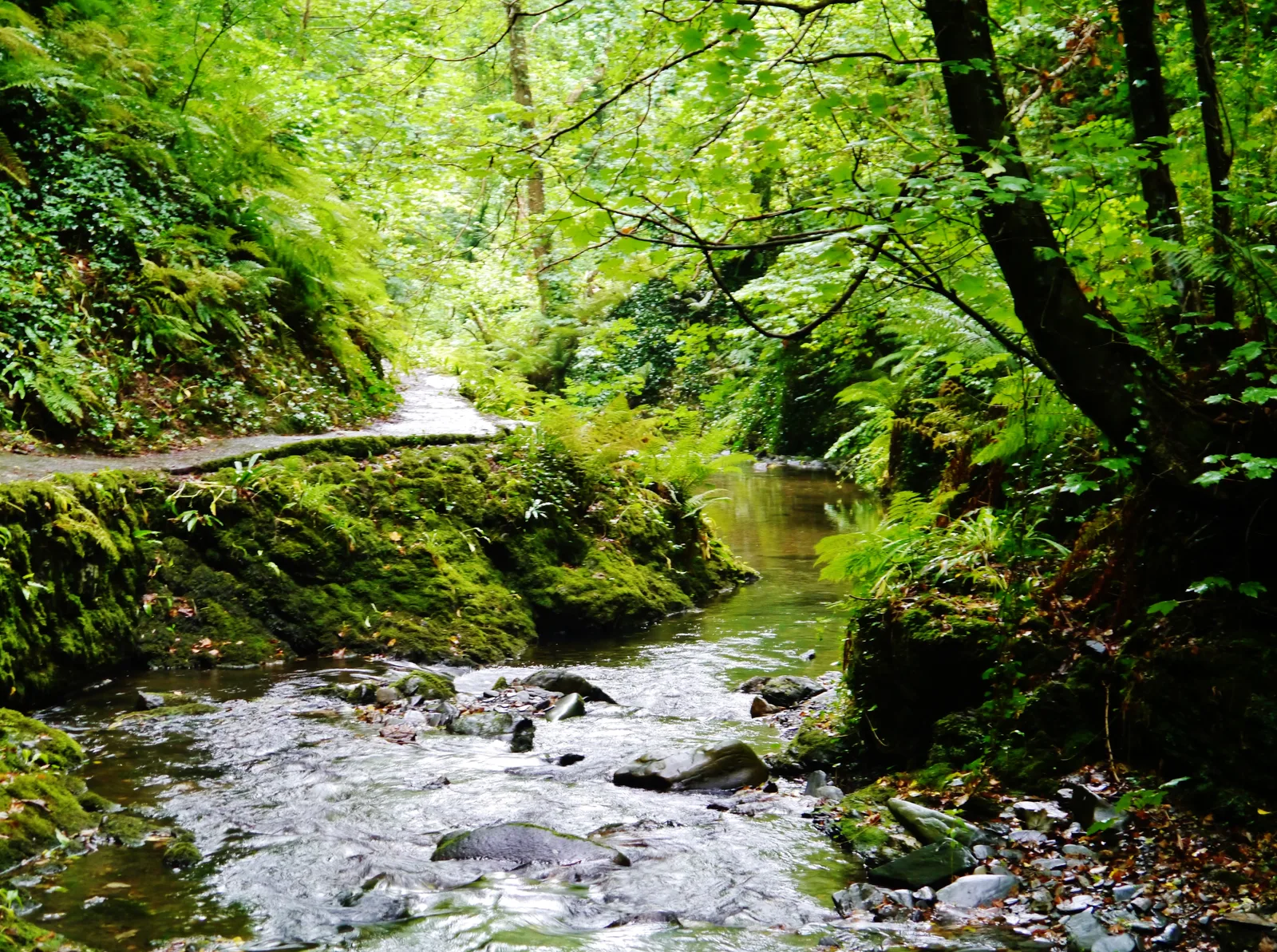
The Curraghs Wildlife Park near Ballaugh has walk-through enclosures and boardwalks into the wet woodland it is built in – arguably better in drizzle than in sun.
12. Going With Children
Children take to the transport before they take to the castles. The horse trams are ten minutes end to end and involve an actual horse; the Groudle Glen Railway, a volunteer-run miniature line north of Douglas, drops through a wooded glen to the coast at Sea Lion Rocks; and the Curraghs Wildlife Park has a half-mile miniature steam railway that runs seasonally – check with the park before you go.
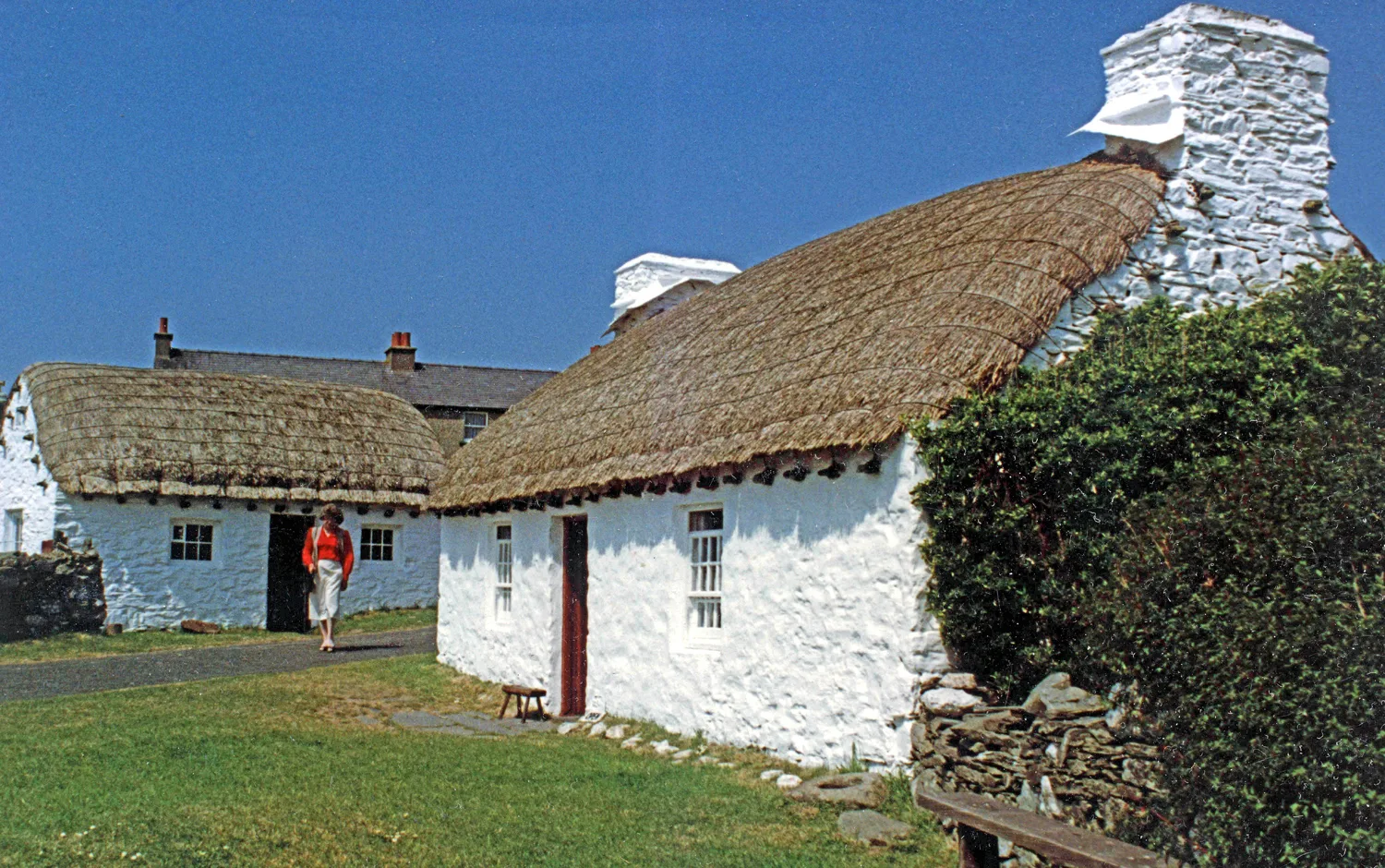
For older children, Cregneash is the surprise: a preserved crofting village at the southern tip, generally counted the oldest open-air folk museum in the British Isles, with thatched cottages and a flock of four-horned Loaghtan sheep native to the island. It is where Ned Maddrell, the last native speaker of Manx, lived. The Sound is fifteen minutes on, and seals make a reliable finish.
After Dark
The island is unusually good at night. Visit Isle of Man lists 26 official dark sky sites around the coast and uplands, which for a place 32 miles long is a lot of unlit horizon. The Milky Way and the Andromeda Galaxy are naked-eye objects on a clear night.
Take a red-filtered torch and pick a site well away from Douglas.
Indoors, the Gaiety Theatre is the draw – a restored Victorian house on Douglas promenade with its own Wurlitzer, running drama, music and comedy beside the cinema next door. For something odder in daylight, the Great Union Camera Obscura on Douglas Head was built in 1892 purely as a seaside attraction, has eleven lenses rather than one, and is opened by volunteers seasonally and when the weather allows – check ahead before making the trip out to Douglas Head.
What Is the Isle of Man Best Known For?
For most people the first answer is the TT. The Tourist Trophy races are run on what iomtt.com describes as a 37.73-mile course of public roads through towns, villages and over a mountain, and for TT fortnight, from late May into early June, the island organises itself around them. If the racing is what brings you, finding a bed for the fortnight is the part to settle first.
The rest of the island’s reputation is older, and odder:
- The Three Legs of Mann. Manx National Heritage says the emblem appears to have been adopted in the 13th century as the royal arms of the island’s kings, and that its Latin motto, Quocunque Jeceris Stabit (“whithersoever you throw it, it will stand”), has gone with it since about 1300.
- Tynwald. Established by Norse settlers, it is described by Manx National Heritage as the world’s oldest continuous parliament, and it still proclaims the year’s new laws in the open air at St John’s each July.
- The tailless cat. The Manx cat is either completely tailless or has only a small stub, as Visit Isle of Man puts it.
- The Great Laxey Wheel, the largest working water wheel in the world, and number one on the list above.
- Running its own affairs. The island is a self-governing Crown Dependency with its own parliament, government and laws. The Isle of Man Government is plain that it is not, and never has been, part of the United Kingdom, nor was it part of the European Union, and that its economy is led by international financial services.
- A language of its own. Manx is a Celtic language, a relative of Irish and Welsh, and the government notes it can still be heard on the island.
Visit Isle of Man adds a newer claim to that list: the largest concentration of dark sky sites in the British Isles, which is why the section above on evenings is worth reading before you pack a torch.
So Is the Isle of Man Worth Visiting?
It depends what you want. If you need reliable sun or a wide restaurant scene, there are better-value places two hours further south. If you want a compact island with a strange history, working Victorian machinery you can ride and empty cliff path, it is hard to beat for the flying time.
Give it four days minimum. Two is enough for Douglas and one castle, and you will leave feeling you skimmed it. Our island-wide guide to attractions, walks and wildlife spots goes site by site, and it is worth fixing where you will stay across the island before you fix what you will see – with one ferry route and one airport, beds go before attractions do.
Frequently Asked Questions
How many days do you need on the Isle of Man?
Four is the realistic minimum without rushing: one for Douglas and the Manx Museum, one for Laxey and Snaefell, one for Peel, one for Castletown and the far south. A week lets you add coastal path sections, the northern beaches and a boat trip.
What is there to do on the Isle of Man when it rains?
The Manx Museum in Douglas, the House of Manannan in Peel and the interiors of Castle Rushen are all substantial indoor visits. The Curraghs Wildlife Park works in drizzle, and the Gaiety Theatre and Broadway Cinema cover a wet evening. Wet days here are common, not exceptional, and the glen waterfalls are at their fullest after rain.
Is the Isle of Man good for a family holiday?
Yes, particularly for children who like transport. Horse trams, steam trains, a mountain tramway and two volunteer-run miniature railways sit within one small island, alongside the Curraghs Wildlife Park and the seals at the Sound. Distances are short enough that nobody is stuck in a car.
Can you see the Northern Lights from the Isle of Man?
Occasionally. Visit Isle of Man notes the aurora is sometimes visible from the north-eastern coast, though it is far from reliable at this latitude. What is dependable is the darkness: the island holds 26 officially recognised dark sky sites, and the Milky Way is easy to pick out on a clear moonless night.