Quick Navigation
- Where Is Peel Castle?
- Where is Peel Castle?
- A Site Older and Holier Than the Fortress
- Who Built Peel Castle, and When?
- Who built Peel Castle, and when?
- The Round Tower and the Cathedral of St German
- The Moddey Dhoo: Peel Castle's Black Dog
- Peel Castle Today, on St Patrick's Isle
- Peel Castle Among the Island's Other Old Strongholds
- Frequently Asked Questions
- What is the Moddey Dhoo?
- Can you visit Peel Castle?
- What is the round tower at Peel Castle?
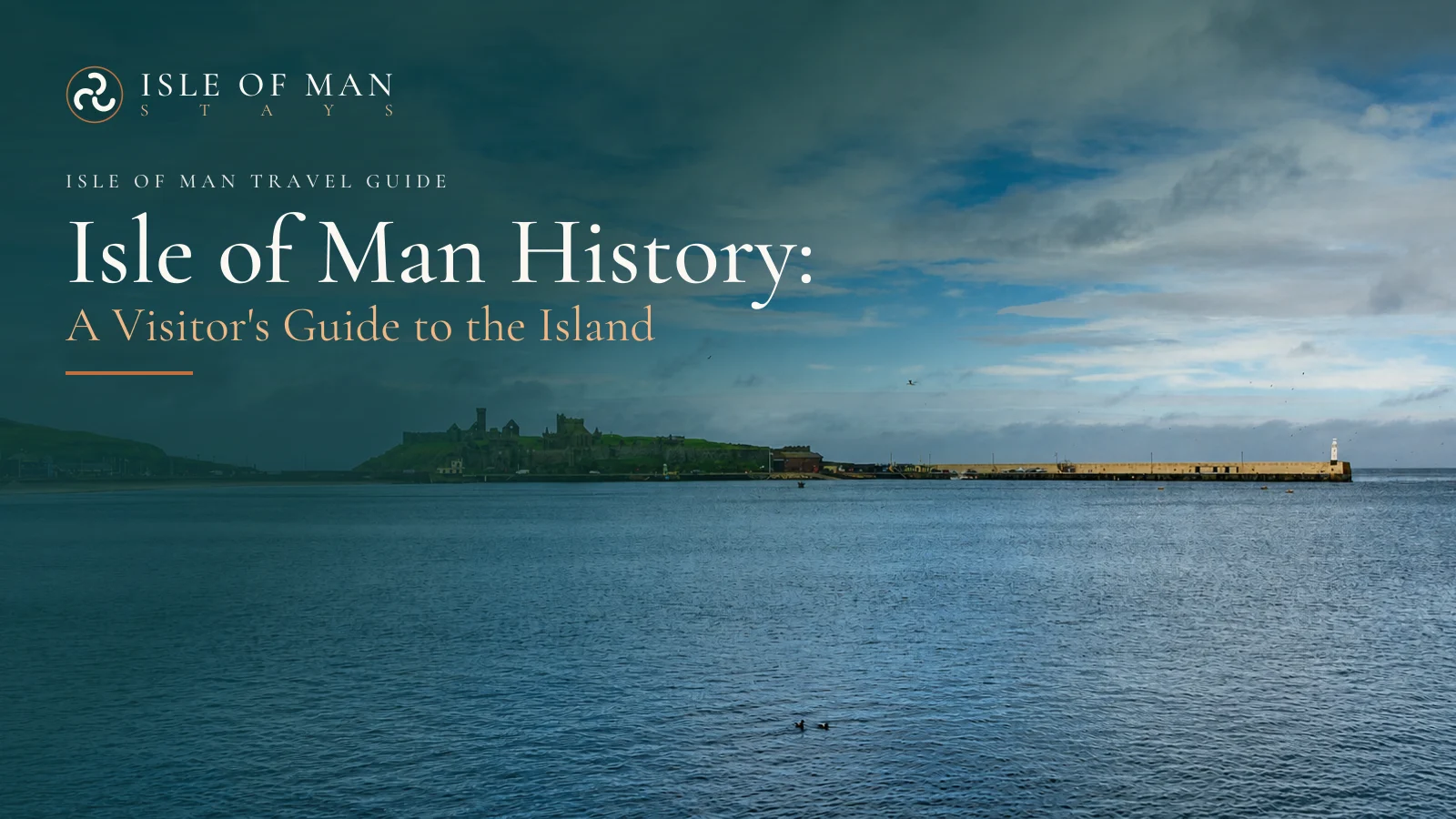
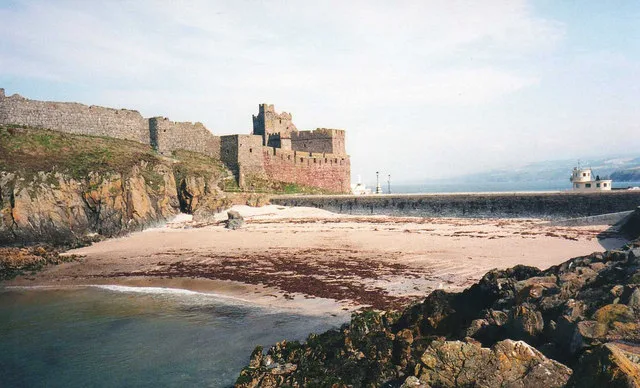
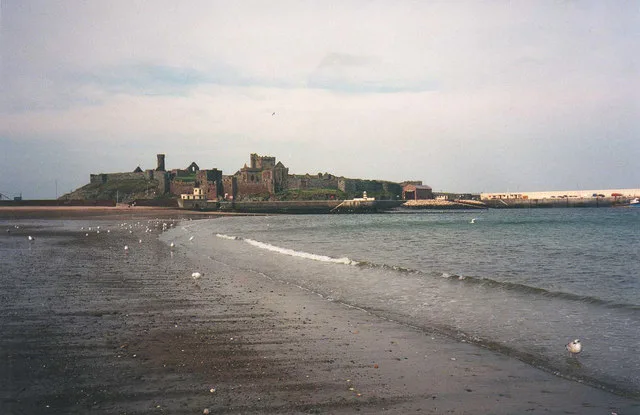
Peel Castle stands on St Patrick's Isle, a small tidal islet joined to the harbour town of Peel by a stone causeway on the Isle of Man's west coast. Behind its red sandstone curtain walls sit the ruins of a Norse-era stronghold, a roofless medieval cathedral and a round tower older than either, all built up over roughly seven centuries. It is also home to the island's best-known ghost story: the Moddey Dhoo, a phantom black dog said to have haunted its guardroom passage.
Where Is Peel Castle?
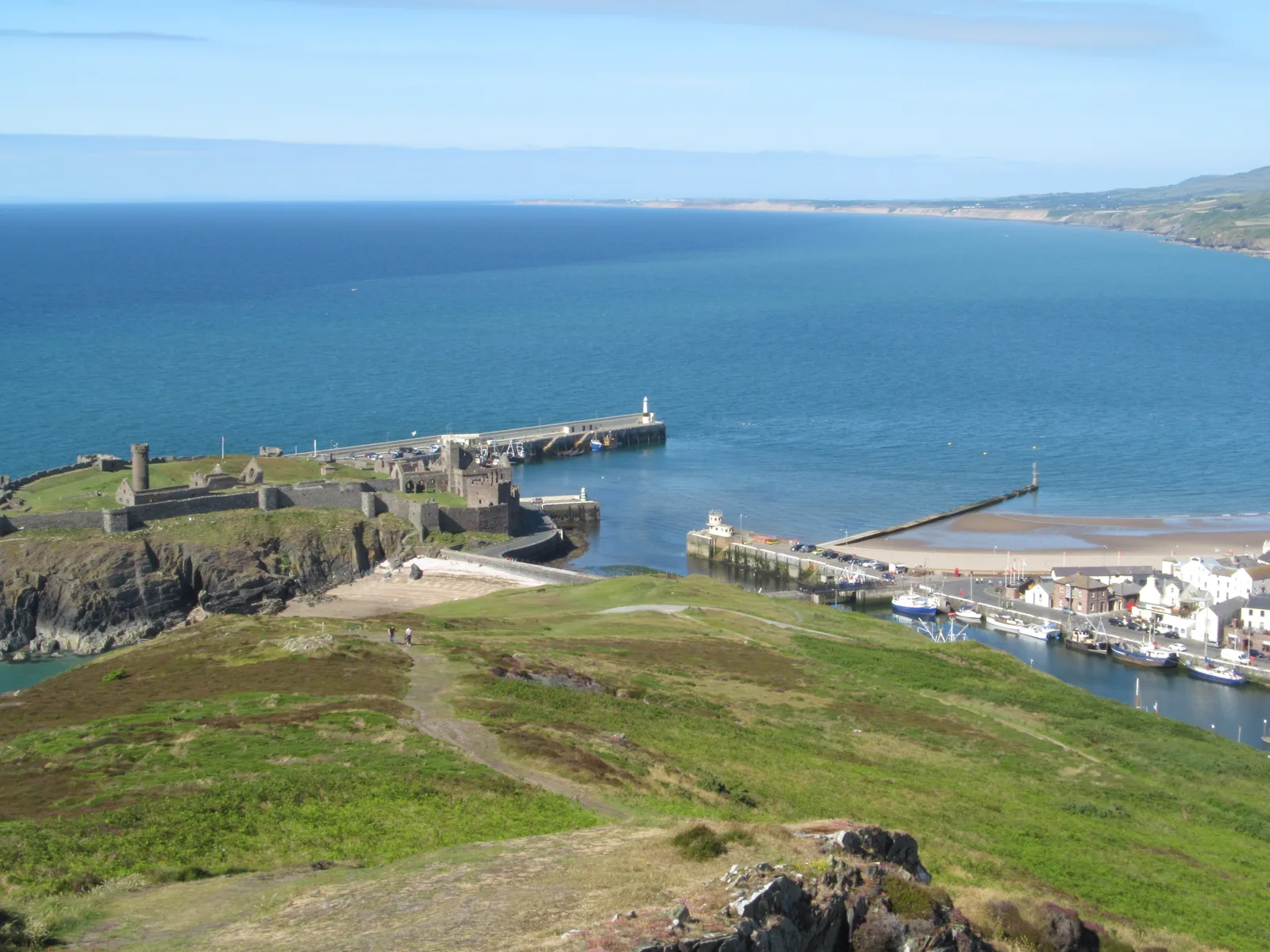
Peel Castle occupies the whole of St Patrick's Isle, directly across the harbour mouth from the town of Peel on the island's west coast. A short stone causeway carries the road out to it across what is now called Fenella Beach — a beach that only exists because the causeway was built across it.
The beach's name comes from Sir Walter Scott's 1823 novel Peveril of the Peak, part of which is set at the castle, and it stuck to the sand long after the book itself fell out of fashion.
If you are basing a trip around it, holiday homes in Peel put the castle, the harbour and the rest of the town within easy walking distance, with the isle itself just a few minutes across the causeway.
The site's Manx name is Cashtal Phurt ny h-Inshey, and you will sometimes see it written that way on maps and signs around Peel.
A Site Older and Holier Than the Fortress
People were on St Patrick's Isle long before anyone thought to fortify it. Archaeological work has found evidence of occupation reaching back to the Late Bronze Age, and by the early medieval period the islet had become a Christian settlement in its own right — the reason a castle here comes with a cathedral and a graveyard built into it, rather than sitting beside them.
Tradition holds that St Patrick himself landed here in the year 444, on a journey between Ireland and Britain, and that he founded a church and appointed Germanus as the island's first bishop. It is a good story rather than a documented one: as the historical record for the islet sets out, the name "St Patrick's Isle" probably dates no earlier than the 13th century, so treat the saint's visit as legend layered onto a site whose Christian roots are real, even if the founding date is not.
What is solid is the round tower that still stands inside the walls. Manx National Heritage, which now looks after the site, dates it to roughly 900 years ago, built in the Irish tradition of round towers as a place of refuge and a lookout against raiders, with battlements added later once it was drawn into the castle's defences.
Planning your trip
Staying overnight? Compare live prices and availability across the Isle of Man on Booking.com.
Compare Isle of Man staysWe earn a small commission if you book through this link, at no extra cost to you.
Who Built Peel Castle, and When?
The first fortification on the isle was a timber fort, raised by the Norse rulers who then controlled the Isle of Man as part of the wider Kingdom of Mann and the Isles. It is traditionally linked to King Magnus Barefoot of Norway, who campaigned around the Irish Sea and held the island in the years either side of 1100.
Excavations carried out on the isle between 1982 and 1987 uncovered the remains of that wooden fort, along with a much older pagan burial — a woman's grave dated by Manx National Heritage's own research to around 950, furnished with a fine necklace and identified as belonging to a traveller who was not island-born. She is known today as the "Pagan Lady," and her grave, in a Christian cemetery, is a reminder that Norse settlers were on the isle for a century or more before anyone built a stronghold there.
The stone castle visitors see today came later and in stages. Most of the standing curtain wall and towers date from the early 14th century, raised in the local red sandstone that gives the ruins their colour, and further defensive work continued on and off for centuries after that, with new positions still being added as late as the 1860s.
The Round Tower and the Cathedral of St German
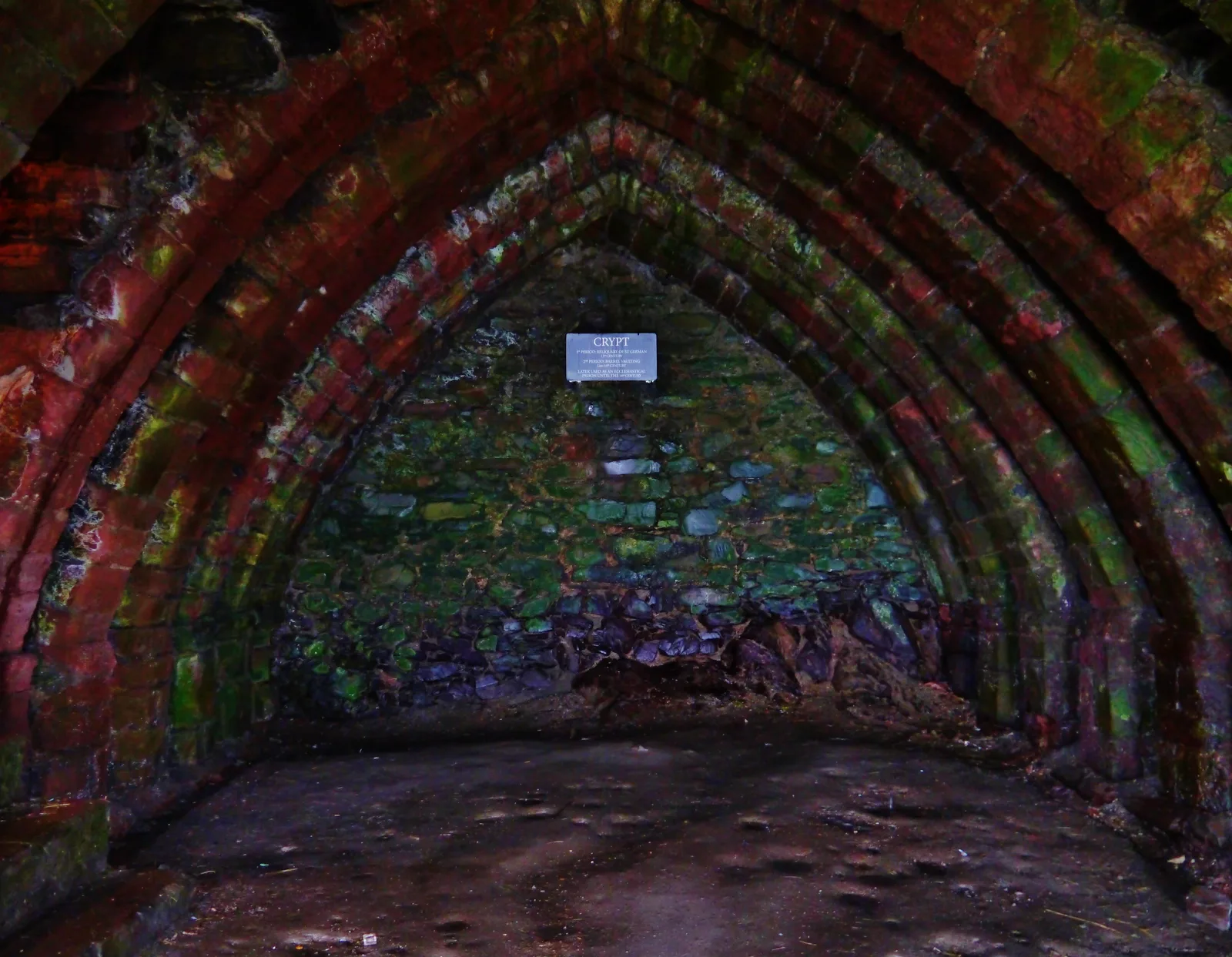
Two religious buildings sit inside the walls, from two different centuries. The round tower is the older of the pair, part of the Celtic Christian settlement that predates the Norse fort by generations. The Cathedral of St German is the later addition, its crypt dated by Manx National Heritage to roughly 800 years ago, and for centuries it served as the seat of the Diocese of Sodor and Man — a bishopric that at its widest once covered the Hebrides as well as the Isle of Man.
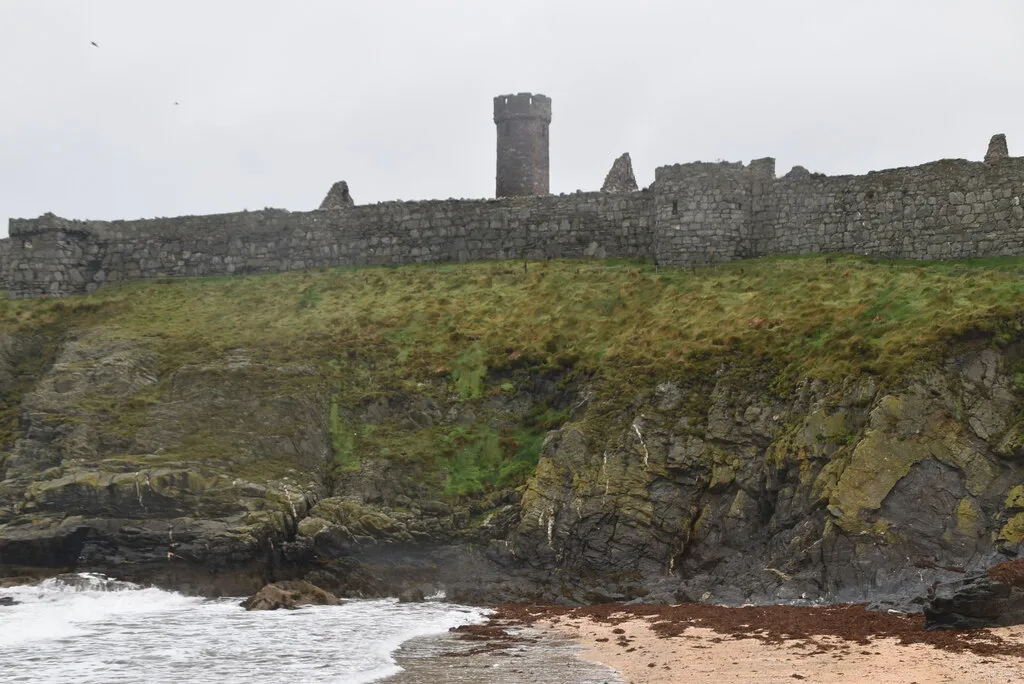
The cathedral has been roofless for a long time, but the crypt beneath it survives intact, reached down a narrow flight of stone steps. Bishop William Rutter, one of the diocese's own bishops, was buried there in 1661. The see itself only left the isle in 1980, when the parish was formally transferred to a newer cathedral on Albany Road in Douglas — so for most of its working life, this small roofless ruin on a tidal islet was the cathedral of the whole Isle of Man.
The Moddey Dhoo: Peel Castle's Black Dog
No account of Peel Castle is complete without its ghost. The Moddey Dhoo — Manx for "black dog" — is described as a large, shaggy black spaniel that appeared each evening in the guardroom, lying down by the fire as soon as the candles were lit, and slipping away again at dawn along a passage that ran through the church grounds to the Captain of the Guard's quarters.
The earliest written version comes from George Waldron's History and Description of the Isle of Man, published in 1713 — not a modern campfire invention, but a story already old enough to be recorded as local fact three centuries ago.
The best-known telling is set in 1666, when Peel Castle was a working garrison. A soldier, made bold by drink, mocked the others for being afraid of the dog and insisted on locking up alone one night rather than in the customary pair. Soon after he left, the men in the guardroom heard him scream. He came back grey-faced and unable to speak, and died three days later without ever describing what he had seen. The dog, the story goes, was never seen in the guardroom again.
Whatever actually happened to that soldier, the tale has outlasted the garrison itself by centuries, and it is still the first thing many islanders mention when Peel Castle comes up.
Peel Castle Today, on St Patrick's Isle
The castle is now cared for by Manx National Heritage, and its silhouette is familiar enough to islanders that it appears on the Manx ten-pound banknote. It sits alongside the neighbouring House of Manannan, Peel's Viking- and Celtic-themed heritage centre, so the two make a natural pairing for a morning spent on the island's Norse and early Christian history — our own guide to visiting the castle covers what else is worth seeing on the isle itself.
Peel also sits on the Raad ny Foillan coastal path, so the isle makes a natural stop if you are walking a stage of the route rather than driving in specifically to see it.
Peel Castle Among the Island's Other Old Strongholds
Peel Castle is not the only medieval stronghold on the Isle of Man — Castle Rushen, in the old capital of Castletown, is the other major survivor, and the two are often mentioned in the same breath. Where Castle Rushen is a single compact keep, still largely roofed and complete, Peel Castle is a whole fortified islet.
It is a much larger enclosure of walls, towers, a cathedral and a graveyard, more ruin than building, and shaped by thirteen centuries of use rather than any single design. The island's wider list of things worth doing covers both castles alongside the rest of the old capitals.
Combined with the harbour, the beach and the rest of the town across the causeway, the wider harbour town of Peel is a fuller day out than the castle alone suggests.
Frequently Asked Questions
Where is Peel Castle?
Peel Castle occupies the whole of St Patrick's Isle, a small tidal islet on the west coast of the Isle of Man, joined to the harbour town of Peel by a short stone causeway across Fenella Beach.
Who built Peel Castle, and when?
The first fortification was a Norse timber fort, traditionally linked to King Magnus Barefoot around 1100. The stone curtain walls and towers visitors see today were mostly built in the early 14th century from local red sandstone, with further defensive work added over the centuries that followed.
What is the Moddey Dhoo?
The Moddey Dhoo is a phantom black dog said to have haunted Peel Castle's guardroom. The earliest written account dates to 1713, and the best-known version of the story is set in 1666, when a soldier who mocked the legend and locked up alone died three days after a terrifying encounter in the guardroom passage.
Can you visit Peel Castle?
Yes — the castle is cared for by Manx National Heritage and welcomes visitors on a seasonal basis. Seasonal dates and current visiting details change from year to year, so check Manx National Heritage's own listing before you travel rather than relying on an old figure.
What is the round tower at Peel Castle?
The round tower is the oldest structure on the site, dated by Manx National Heritage to roughly 900 years ago and built in the Irish tradition of round towers as a refuge and lookout point, predating the Norse stone castle built up around it.