Quick Navigation
- Which Country Does the Isle of Man Belong To?
- Which country does the Isle of Man belong to?
- Stone Age Farmers, and the Tombs They Left
- The Vikings, and the Kingdom of Mann and the Isles
- Tynwald, and What "Oldest Parliament" Actually Means
- What Happens on the Hill Each July
- Scotland, England, the Stanleys and Revestment
- The Three Legs of Man
- Ellan Vannin: The Island's Manx Name and Language
- The Boarding Houses, the Camps, and the Island Now
- Frequently Asked Questions
- Is the Isle of Man part of the UK?
- Is Tynwald really the oldest parliament in the world?
- Who built Peel Castle?
- What is Tynwald Day?
- Do people still speak Manx?
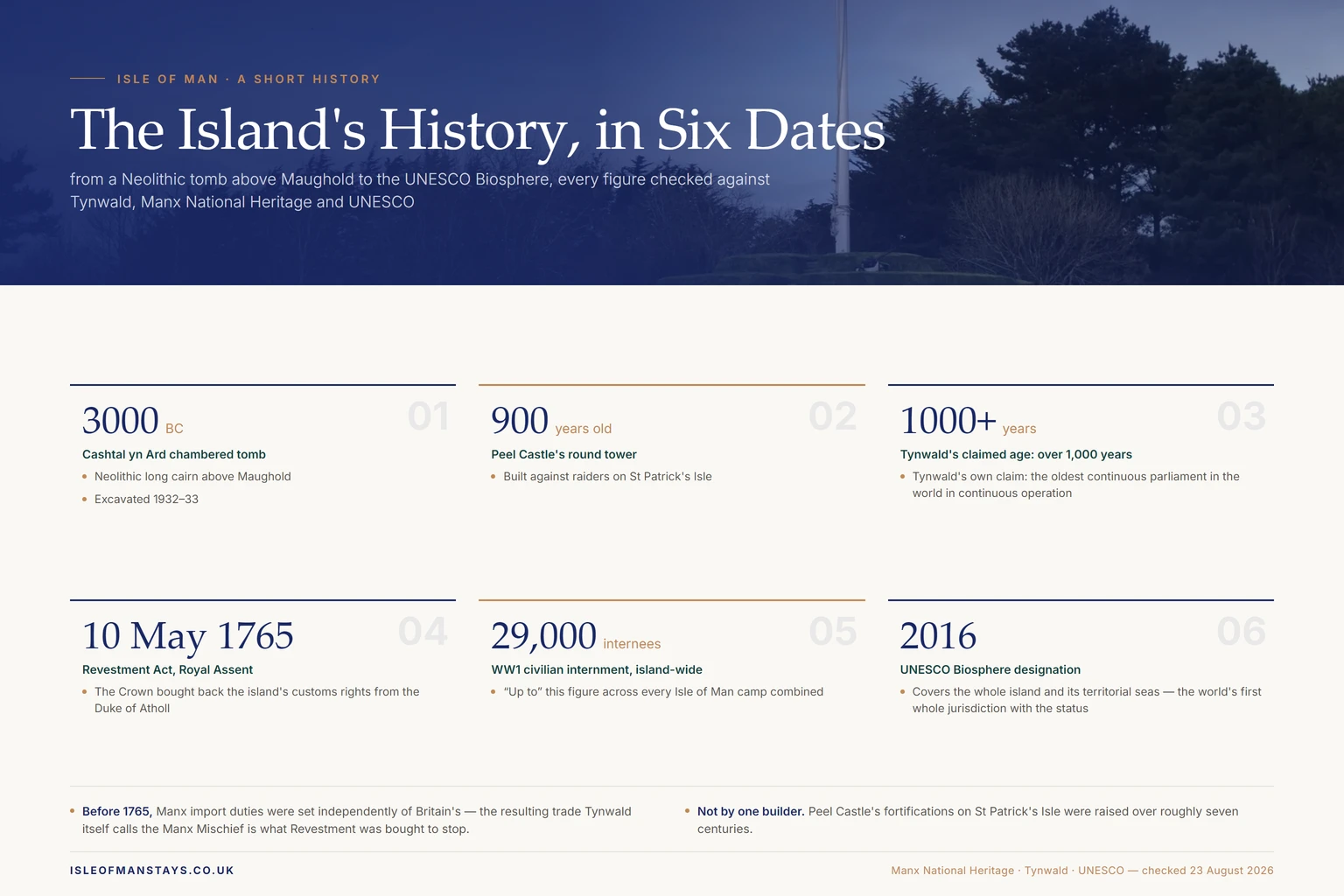
The Isle of Man's history runs from Celtic and early Christian settlement, through Norse rule as the Kingdom of Mann and the Isles from 1079 to 1265, spells under the Scottish and then English crowns, to self-government as a Crown Dependency after the Crown bought back the island's rights in 1765. It has never been part of England, Britain or the United Kingdom in its own right, and today it has its own parliament, Tynwald, its own government and its own laws. This is that story told through the places you can actually visit.
The short answer
- Not part of the UK or the EU. The Isle of Man is a self-governing Crown Dependency with its own parliament, government and laws.
- Tynwald calls itself the oldest continuous parliament in the world. Its name comes from the Norse Thingvollr, assembly field, though Tynwald notes there is no documentary evidence for a first sitting in 979.
- Norse rule ran from 1079 to 1265. Godred Crovan took the island at the third attempt and his successors ruled as the Kingdom of Mann and the Isles until Magnus Olafsson's death.
- Revestment came on 10 May 1765. The Crown bought back the island's customs rights from the Duke of Atholl, ending the Running Trade.
- The triskelion became the official flag in the early 1930s. Before that the island flew the Union Flag.
- UNESCO named the whole island a Biosphere in 2016. It was the first whole jurisdiction anywhere to hold the status.
Which Country Does the Isle of Man Belong To?
The Manx government puts it about as plainly as a government ever does. "The Isle of Man is not, and never has been, part of the United Kingdom, nor is it part of the European Union. It is not represented at Westminster or in Brussels." It is a self-governing British Crown Dependency, like Jersey and Guernsey, with its own parliament, government and laws.
What the UK does hold is the outward-facing side. The UK government, on behalf of the Crown, is ultimately responsible for the island's international relations, and by convention it is also responsible for defence and for consular services — a convention, note, rather than a statute. The island makes an annual contribution towards those common services.
The King is Manx Head of State under the title Lord of Mann, represented on the island by a Lieutenant Governor appointed for a five-year term. The precise legal formula is that the island is part of the British Islands but not part of the United Kingdom, and is a territory for whose international relations the UK is responsible.
That settles the other ways the question gets asked:
- Is the Isle of Man in England? No: England is part of the United Kingdom, and the island is not.
- Is it in the EU? No, and the government notes that the post-Brexit UK–EU Trade and Cooperation Agreement applies to the island only so far as it relates to trade in goods and certain fisheries matters.
- Is it independent? Not in the full sense. The government describes it as "an internally self-governing dependency of the British Crown" whose people are British citizens, and it is consulted before the UK extends an international treaty to cover it.
So it is a country in the everyday sense, with its own parliament, flag and language, without being a sovereign state.
Practically, for a visitor: no passport control from Britain, a currency of its own alongside sterling, its own laws on everything from speed limits to tax, and a parliament that predates Westminster.
Stone Age Farmers, and the Tombs They Left
Manx National Heritage dates the first people to leave traces here to the Mesolithic, between 8000 and 4000 BC, by which time the island was already cut off from the British mainland. They lived in small camps, hunted deer and boar in dense woodland, and worked flint pebbles left on the northern beaches by glaciers.
What survives above ground is Neolithic and it is worth the detour. Three sites carry the story:
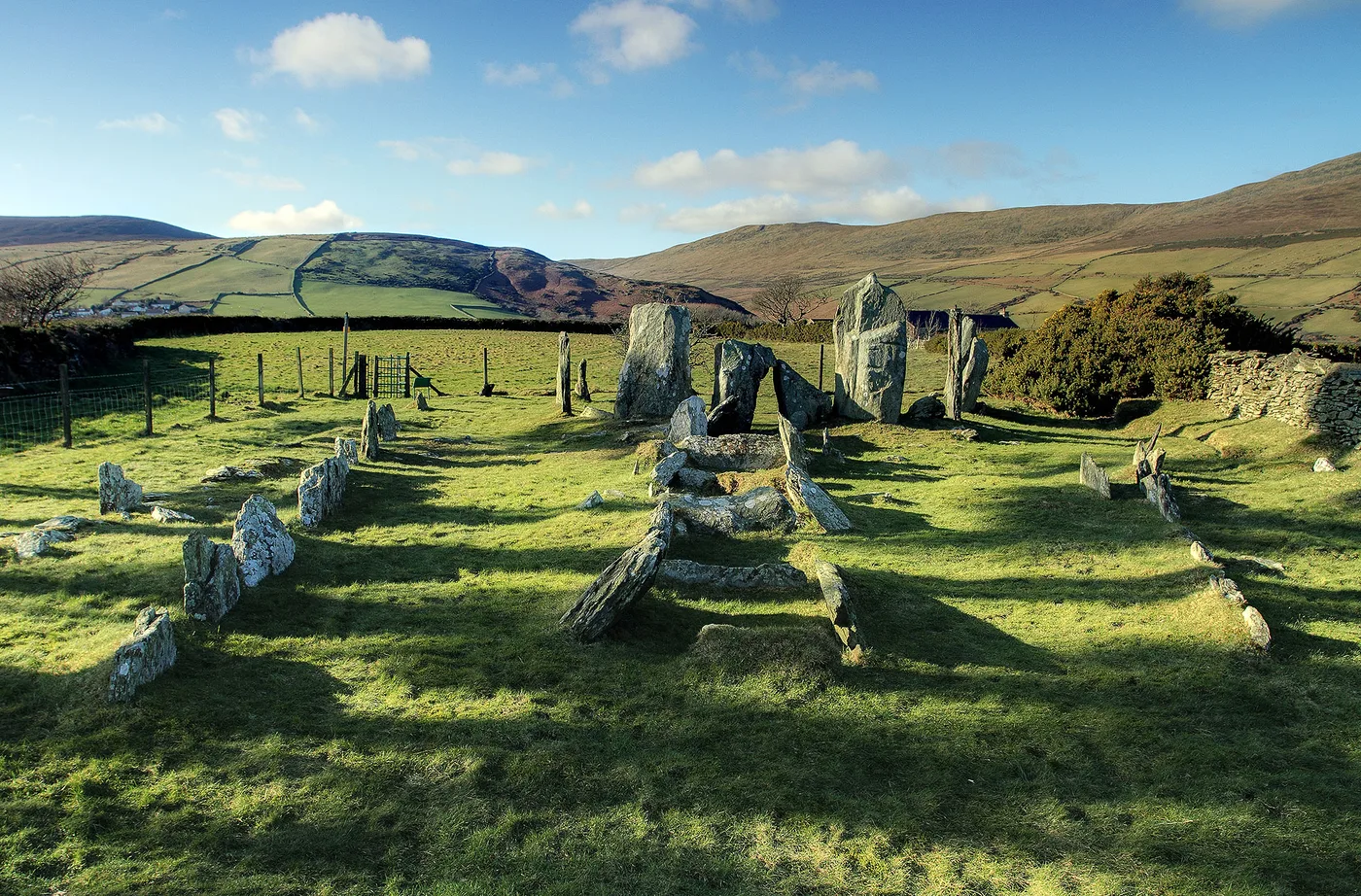
- Cashtal yn Ard above Maughold — "castle of the height" — was shown by excavation in 1932–33 to be a Neolithic long cairn dating to around 3000 BC; the covering stones were stripped away centuries ago, leaving the big set stones standing bare against a view across to Cumbria.
- King Orry's Grave near Laxey, below the great wheel is two chambered cairns with a road between them, and nobody knows whether they were ever one monument.
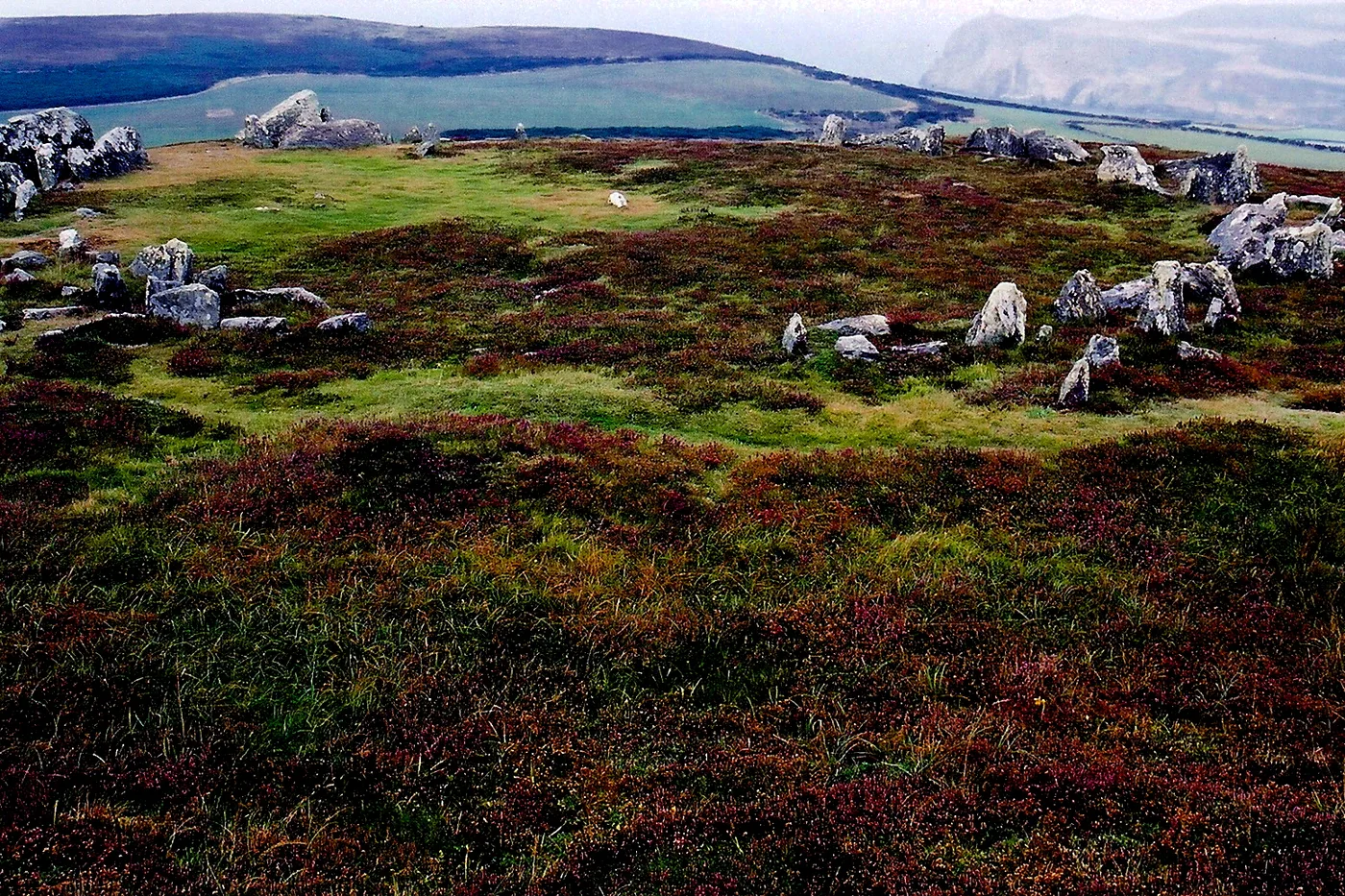
- Meayll Circle above Cregneash is the strangest, and its name misleads: Manx National Heritage classes it as a passage grave, not a stone circle, with six pairs of burial chambers set radially in a ring.
Planning your trip
Staying overnight? Compare live prices and availability across the Isle of Man on Booking.com.
Compare Isle of Man staysWe earn a small commission if you book through this link, at no extra cost to you.
The Vikings, and the Kingdom of Mann and the Isles
Norsemen reached the Irish Sea towards the end of the eighth century and, on Tynwald's own account, began settling and integrating here through the ninth and tenth. The archaeology suggests a merging rather than a conquest: Norse pagan graves were dug inside existing Christian graveyards, and within perhaps a single generation the incomers had themselves become Christian.
The best evidence is buried at Peel. The Pagan Lady of Peel was a woman buried around 950 AD on St Patrick's Isle with a necklace whose beads were already three hundred years old when she wore them. Manx National Heritage calls it one of the richest Viking Age female burials outside Scandinavia, and notes the detail that matters: she was laid, with pagan rites, inside an established Christian cemetery.
In 1079 Godred Crovan — the King Orry of Manx folklore — landed at Skye Hill in the north of the island and, at the third attempt, took it. He and his successors ruled until the death of the last Norse king, Magnus Olafsson, in 1265. Their realm, the Kingdom of Mann and the Isles, took in four Hebridean groups — Lewis, Skye, Mull and Islay — which the Norse called the Sudreys.
Two things from that era are still in daily use:
- The sheadings, the island's administrative divisions, from the Norse word for "sixth".
- The word Tynwald itself, from Thingvollr, assembly field.
The carved cross-slabs are the other survival; the archetype is Gautr's cross at Kirk Michael, with more at Braddan and Malew.
Tynwald, and What "Oldest Parliament" Actually Means
Here is the claim, stated exactly as Tynwald states it: "Tynwald is over 1000 years old. The parliament of Iceland, known as the Althing, is slightly older than Tynwald but has not operated continuously throughout its history. Tynwald is therefore the oldest continuous parliament in the world in continuous operation." Elsewhere on its own site it phrases it more cautiously still: Tynwald "claims to be the oldest continuous parliamentary assembly in the world".
And Tynwald volunteers the caveat itself, which is more than most tourist literature manages: "Although the Millennium of Tynwald was celebrated in the Isle of Man in 1979, there is no documentary evidence confirming the date of a first sitting in 979. It is, however, likely that assemblies on the Scandinavian model were taking place in the Island by the late 10th century." So 979 is a traditional date, celebrated in 1979, not a documented one. What Tynwald rests its claim on is continuity, and that is the stronger claim anyway.
Tynwald has two branches sitting as one court. The House of Keys is directly elected, with 24 members from twelve constituencies; the Legislative Council has eleven, eight elected by the Keys and three by office, including the Bishop of Sodor and Man. Together the 35 form Tynwald Court, whose upper branch traces to 1208, when Reginald Godredsson promised "to take Counsel with his men". Two other dates are worth carrying: the laws were first written down in 1417, and in 1881 Tynwald became the first national parliament to give women the vote in a general election.
What Happens on the Hill Each July
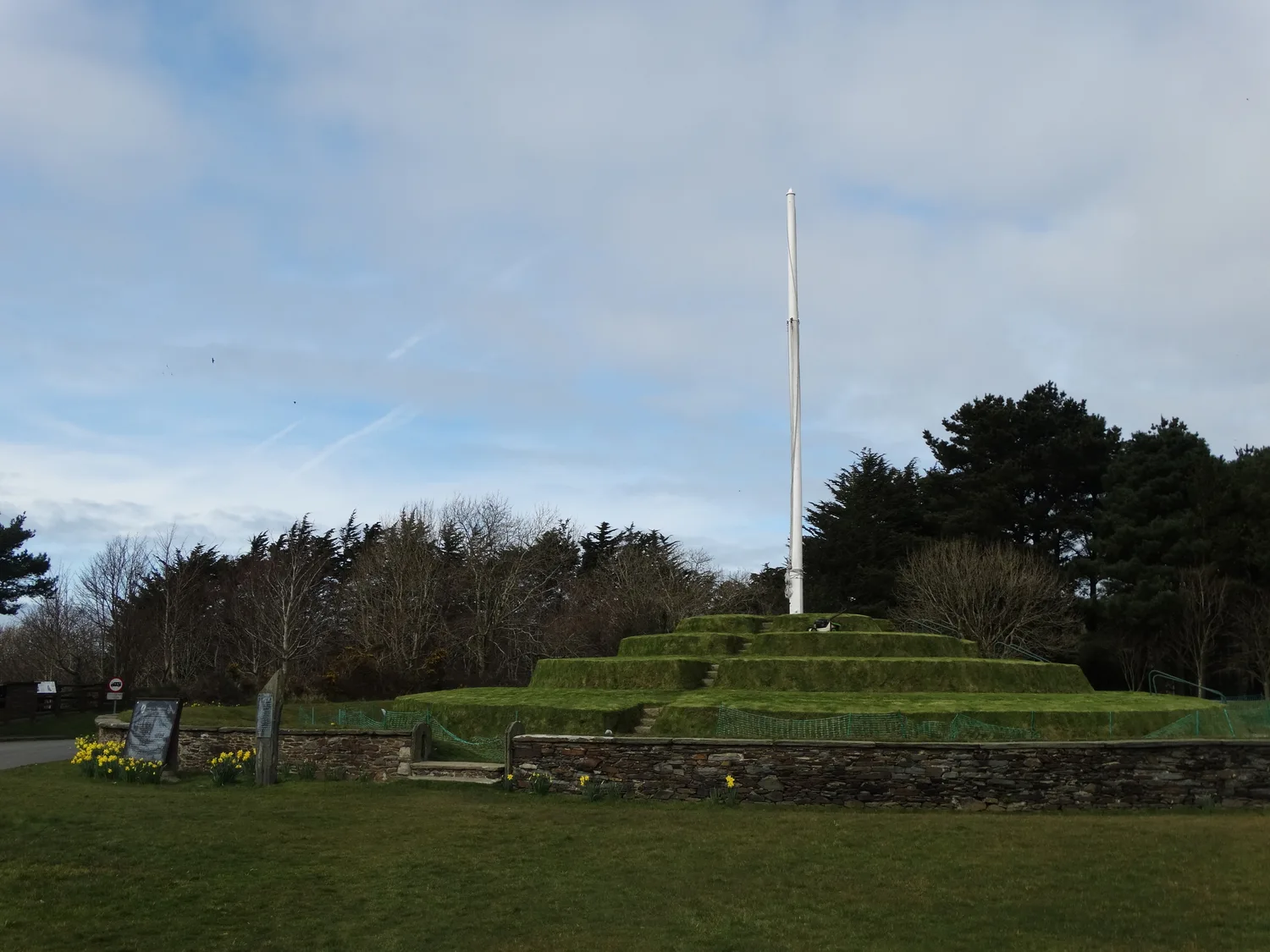
On Tynwald Day, usually 5 July and moved to the following Monday if it falls at a weekend, the whole parliament decamps to the village of St John's and does its business outdoors. After a service in the Royal Chapel of St John the Baptist, members process along a path strewn with rushes to Tynwald Hill: a grassed mound about twelve feet high with four circular tiers, each rising three feet above the last.
The seating is the ceremony. The Lieutenant Governor sits on the top tier facing east with the Sword of State before him, alongside the Bishop and the Legislative Council; the Keys sit below, then clergy and officials, then Deemsters, Captains of the Parishes and Coroners on the lowest. This matches, almost point for point, a written order of ceremony from 1417 specifying the chair, the royal cloth, the visage "into the East" and the sword "holden with the Point upward".
Then the Deemsters read out, in Manx and English, the title and a short description of every Act passed in the previous session. This is not pageantry: by statute each Act of Tynwald must be promulgated on Tynwald Hill within eighteen months of enactment or it ceases to have effect. Afterwards anyone at all may walk up and hand in a Petition for Redress. Tynwald is honest that this right, though considered ancient, does not appear in the 1417 procedure and was revitalised in the 1950s.
A law passed in a modern committee room does not fully exist until somebody has read its title aloud, in Manx, on a grass mound in a field.
Scotland, England, the Stanleys and Revestment
After Magnus Olafsson died in 1265 the islands were ceded to Scotland by the Treaty of Perth, and the island entered a long unstable spell of passing between Scottish and English hands. Edward III granted it to William de Montacute around 1333; it was sold on in 1392, forfeited in 1405, and granted that year by Henry IV to Sir John Stanley. The Stanleys, later Earls of Derby, held it for over three hundred years, mostly at a distance. Their feudal rent was to render homage and send two falcons to each future King of England at his coronation.
The title slid from King to Lord across that period rather than changing on a single date — the 1417 records use both — before Edward Stanley, 3rd Earl of Derby, settled on Lord of Man, probably in deference to Henry VIII. In 1736 the line failed and the island passed to the Dukes of Atholl.
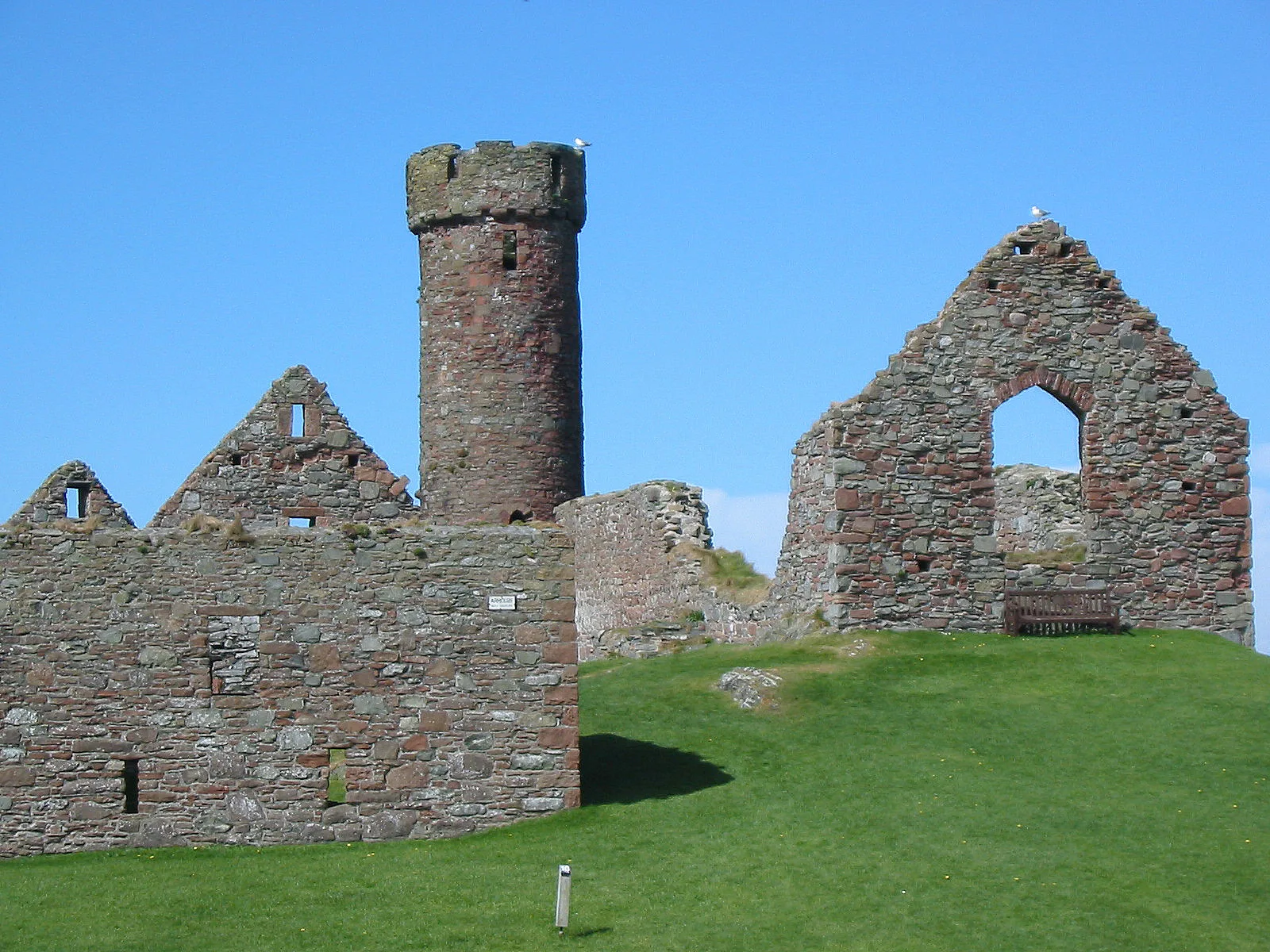
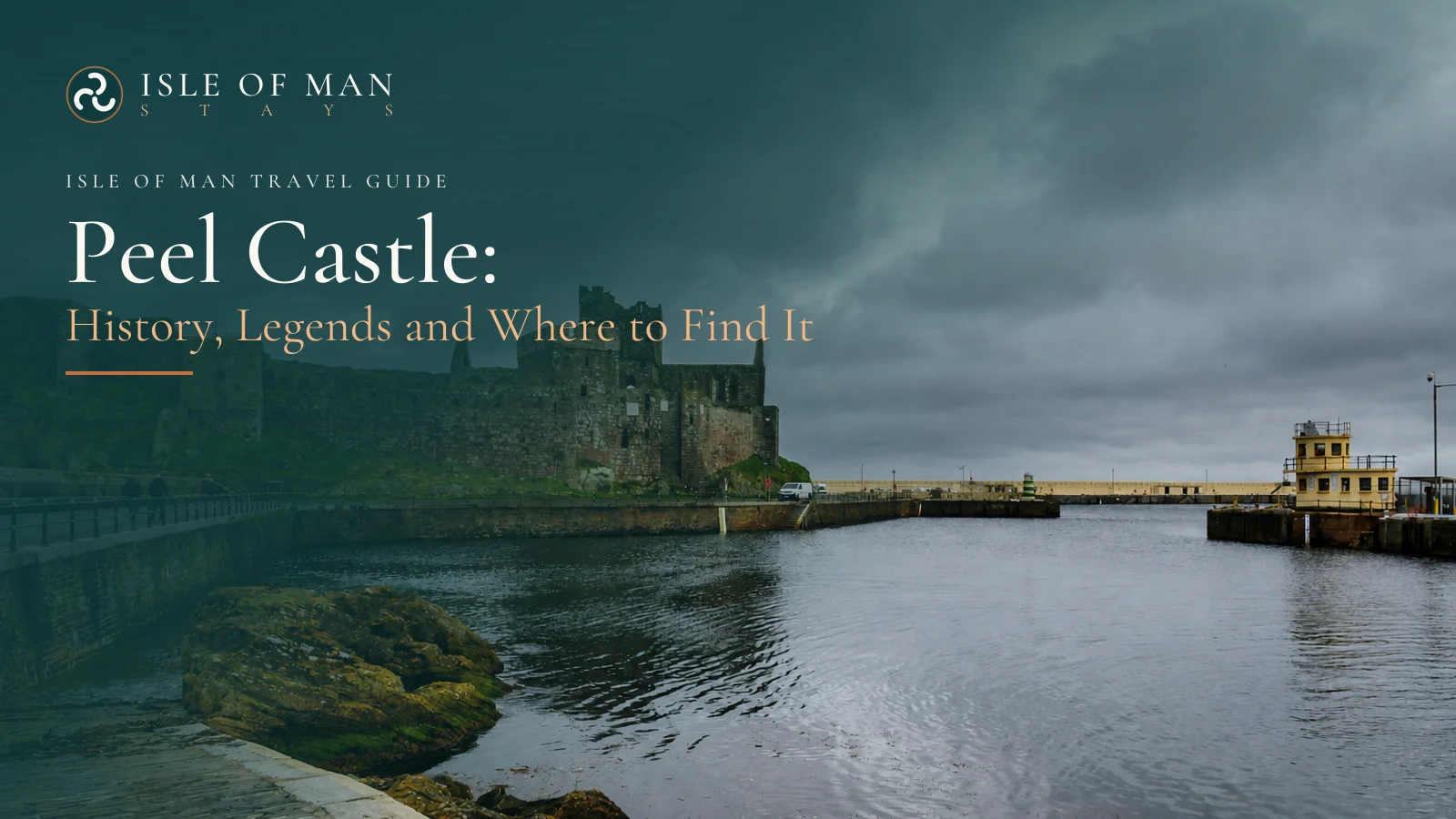
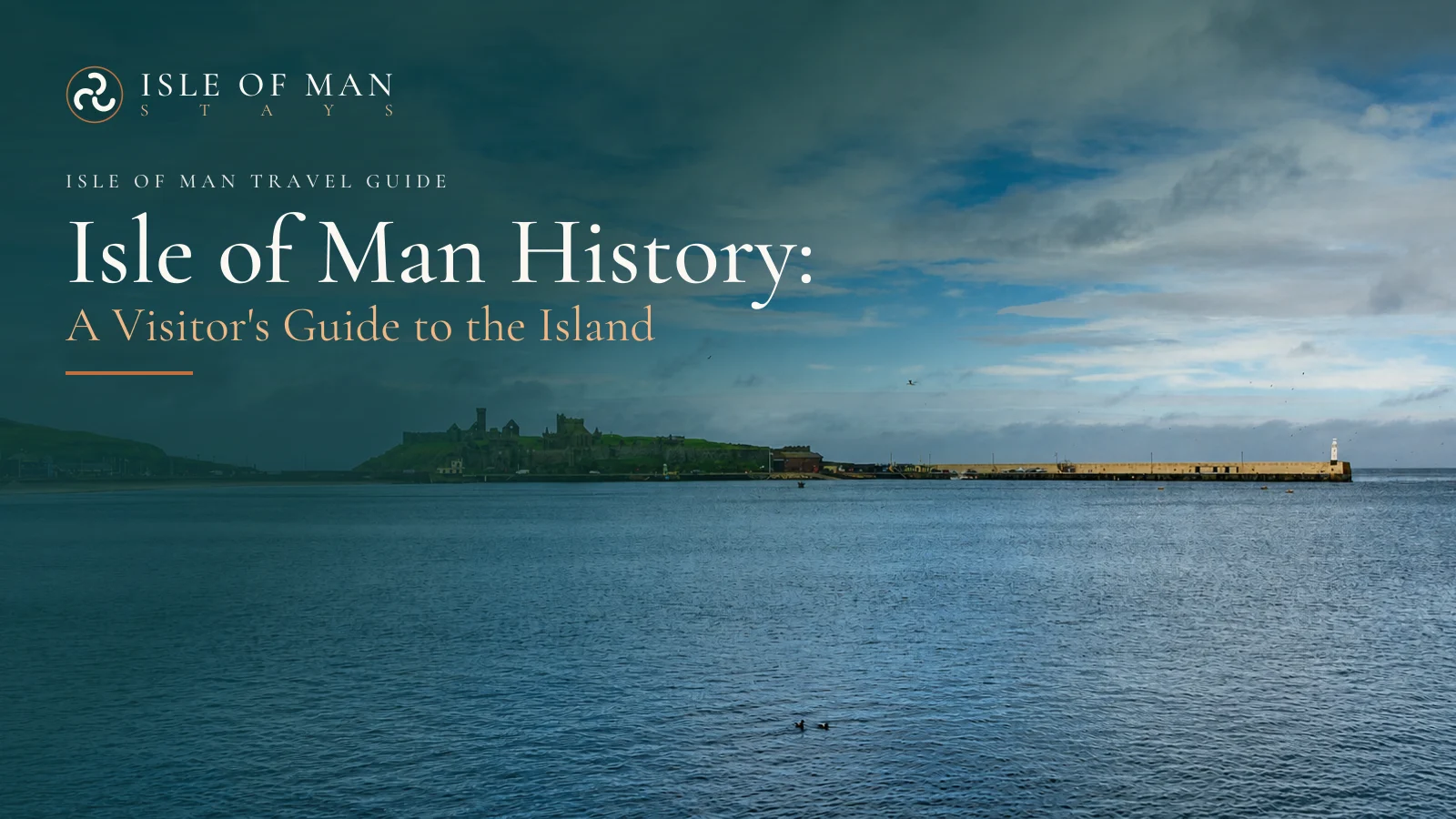
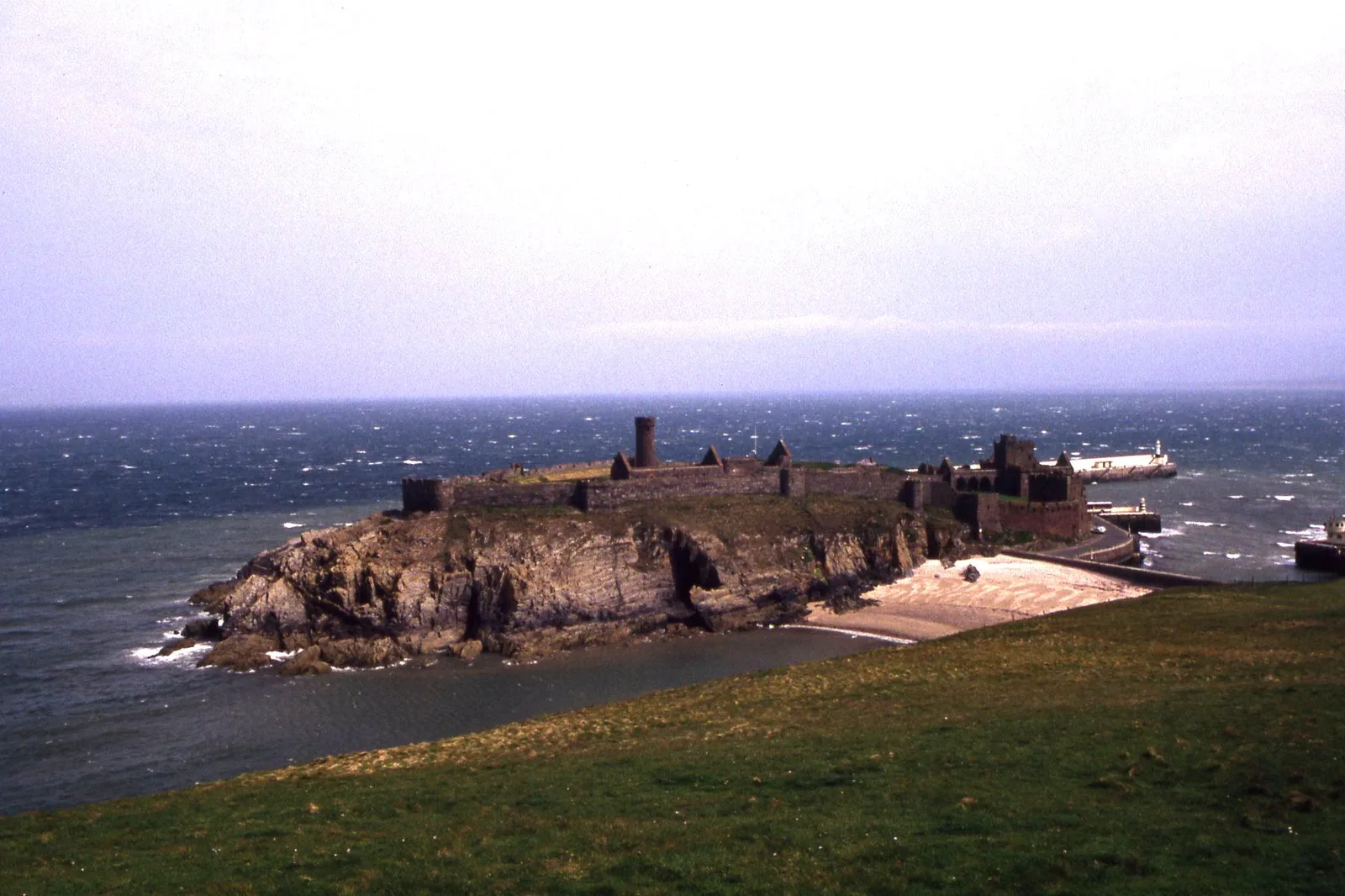
Both of the island's great castles date from this long middle. Peel Castle stands on St Patrick's Isle, a religious site long before it was a military one: a round tower built nine hundred years ago against raiders, the crypt of St German's Cathedral from eight hundred years ago, and almost two hectares of fortification raised over seven centuries inside a 700-metre curtain wall. The town below still huddles under its walls, which makes staying in Peel, beneath the castle exactly as atmospheric as it sounds.
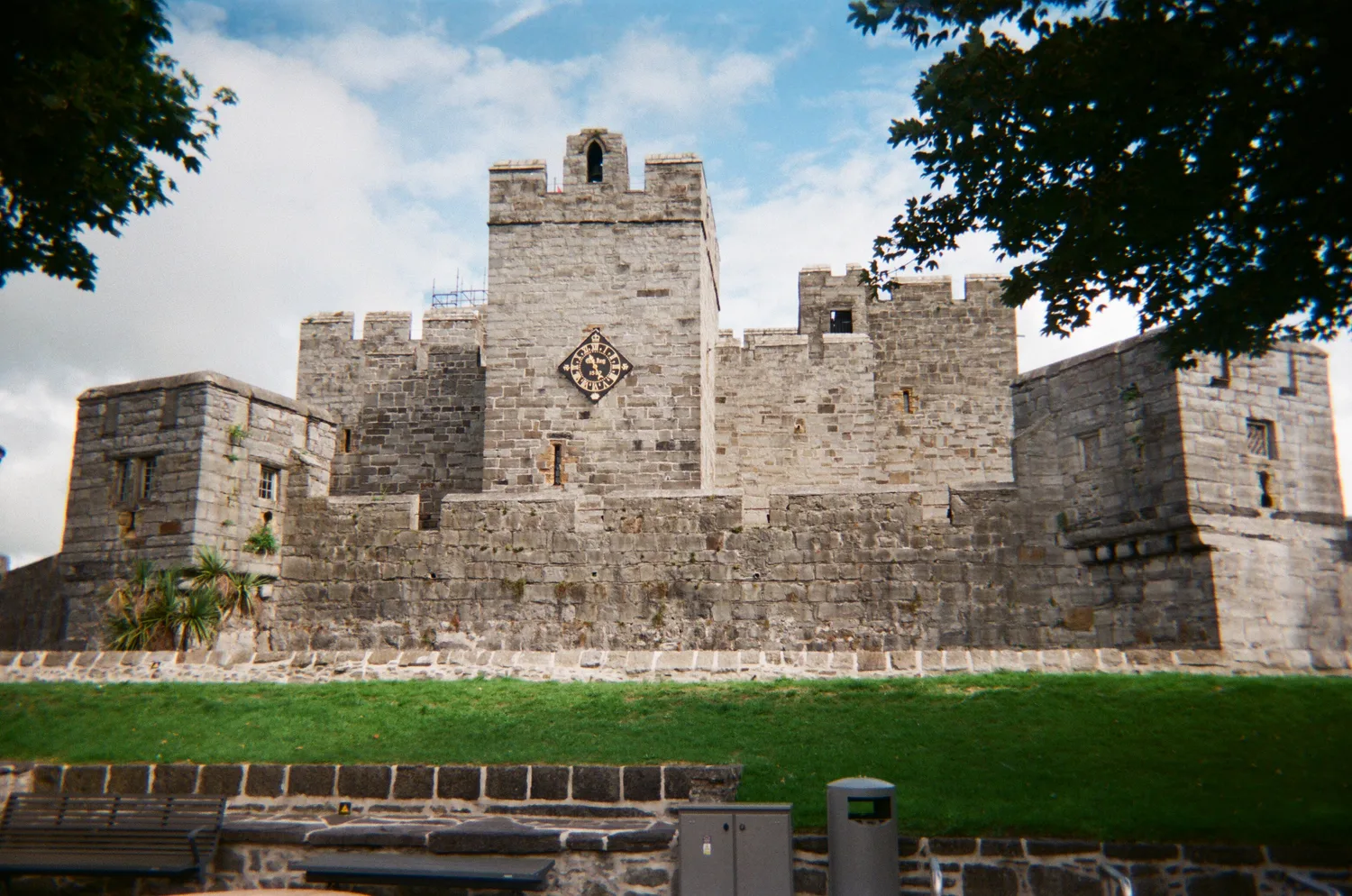
Castle Rushen at Castletown was, in Manx National Heritage's phrase, "built 800 years ago for a Viking king", and went on to be a Civil War fortress and then the island's Victorian prison. Two newspaper editors were gaoled in it in the nineteenth century for campaigning against the self-elected House of Keys. The castle still dominates the harbour, and staying in Castletown puts you beneath its walls.
The turning point is 1765. Manx import duties were low and set independently, so brandy, wine, rum, tobacco and tea were landed here perfectly legally, Manx duty paid, and then quietly moved on. Britain called it smuggling and the Manx called it the Running Trade; Tynwald calls it the Manx Mischief.
After the Seven Years War the British government needed the revenue back, so it simply bought the island's rights from the Duke of Atholl. The Revestment Act received Royal Assent on 10 May 1765, and the Act was read out at Castle Rushen that July. The Atholls kept their landed property and church patronage, which the Crown bought out in stages over the following sixty years.
The Three Legs of Man
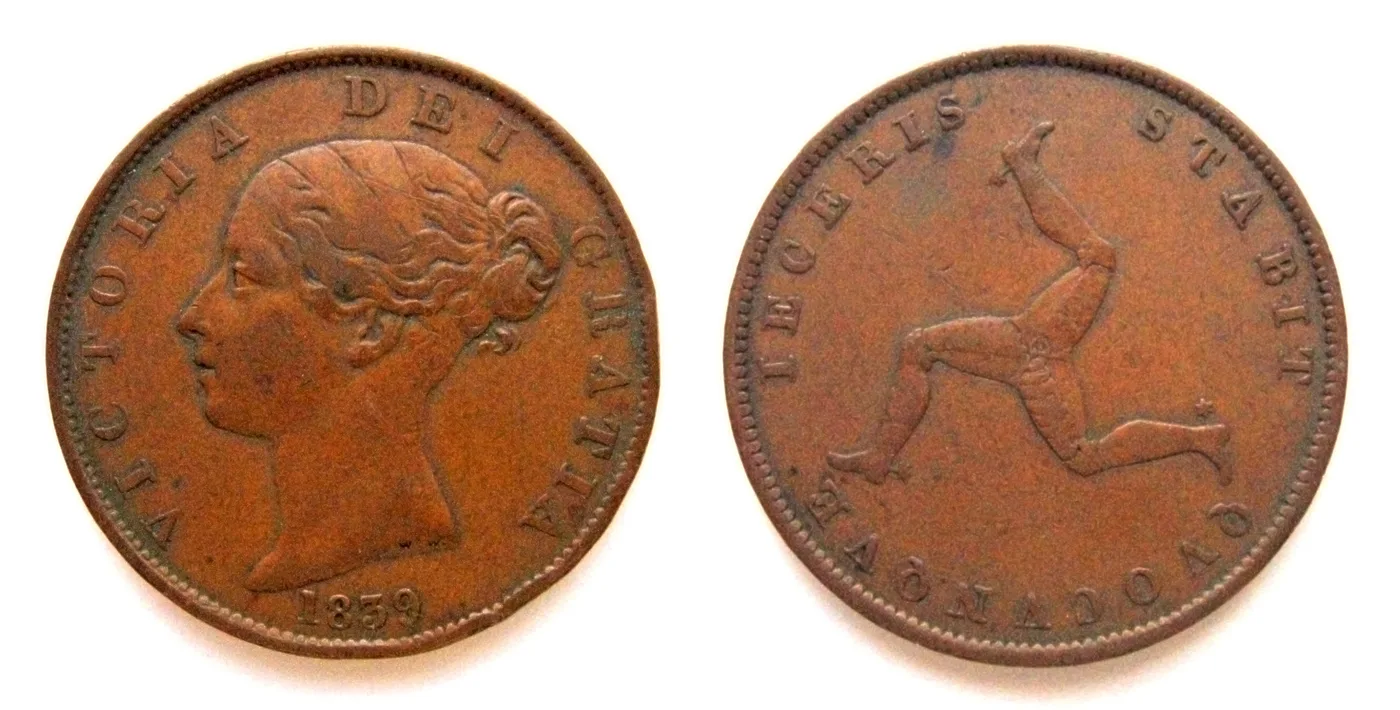
The triskelion is documented in heraldic compilations from about 1270, and the earliest illustration is in Segar's Roll of around 1280: three mailed legs, running clockwise, joined at the thigh. The timing is the interesting part. The earlier arms of the Manx kings were a ship under sail, and the switch happens within a few years of the Norse kingdom ending. Whether the design came from a sun symbol, from the Norse triple-knot on tenth-century York coinage, or from the same source as Sicily's trinacria is still argued.
The motto Quocunque Jeceris Stabit first appears on a Manx brass penny of 1668, which suits it — on a coin it reads as "however it is tested, it will pass". The usual translation is "whichever way you throw it, it will stand". One surprise: as an official national flag, three legs on red dates from the early 1930s. Before that the island flew the Union Flag.
Ellan Vannin: The Island's Manx Name and Language
In Manx the island is Ellan Vannin, or simply Mannin. The Manx government's own page on the language glosses the name as "Manannan's Island", after the Celtic sea god who, it says, is believed to have lived on South Barrule. The older English spelling survives in the formal titles you have already met in this story: the Kingdom of Mann and the Isles, and the King as Lord of Mann.
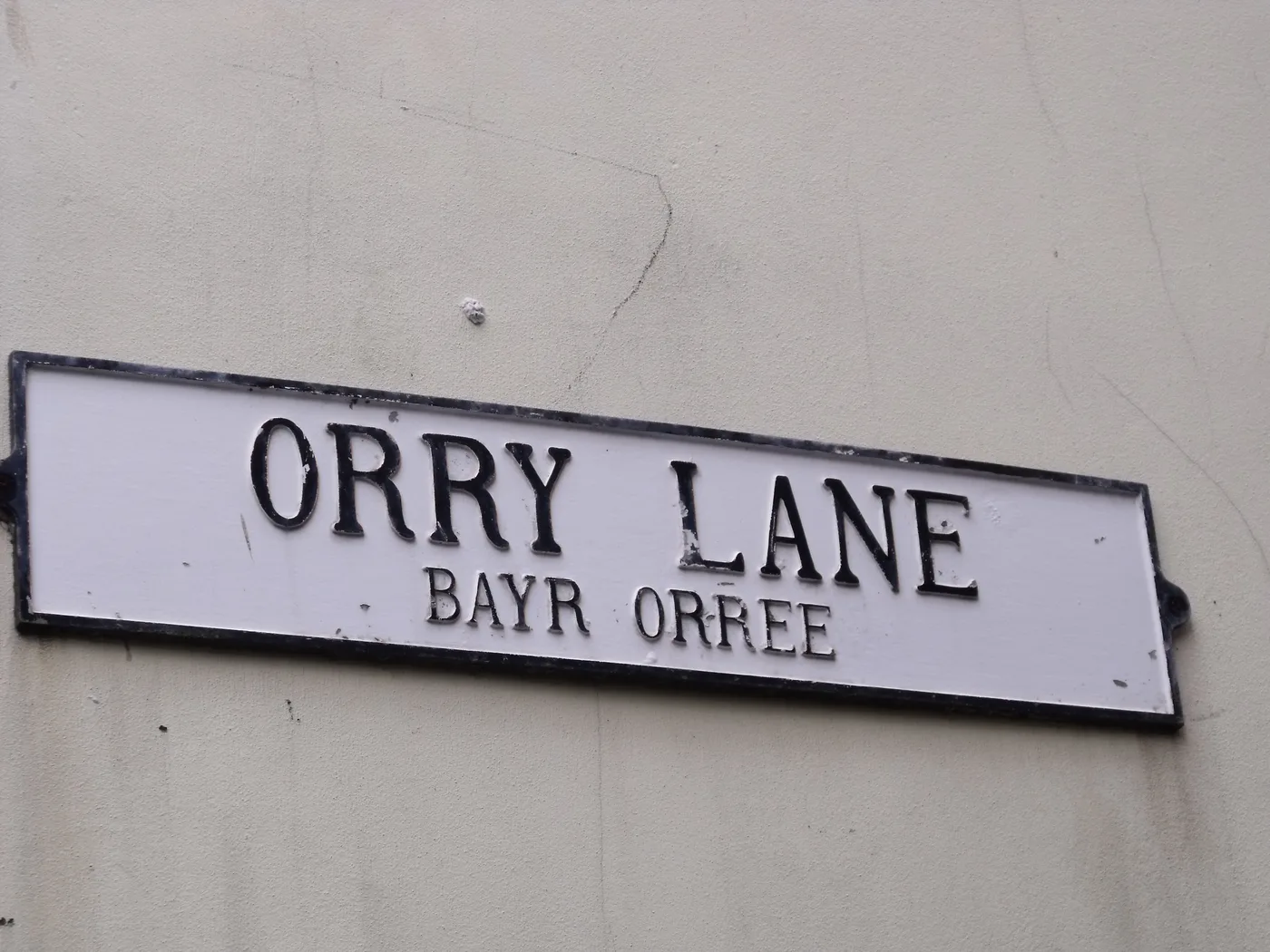
So what language do people speak? English, day to day. Manx Gaelic is one of six Celtic languages and is closely related to Irish and Scottish Gaelic, and it has never dropped out of the landscape. Many street and office names are bilingual, and place names carry it everywhere: Ballabeg is "small homestead", Ballasalla the "place of the willow trees". Surnames do the same work, with Cain, Kinley, Kelly and Quilliam all reflecting the island's Gaelic roots. How the spoken language nearly died, and came back, is part of the island's more recent story, told below.
The Boarding Houses, the Camps, and the Island Now
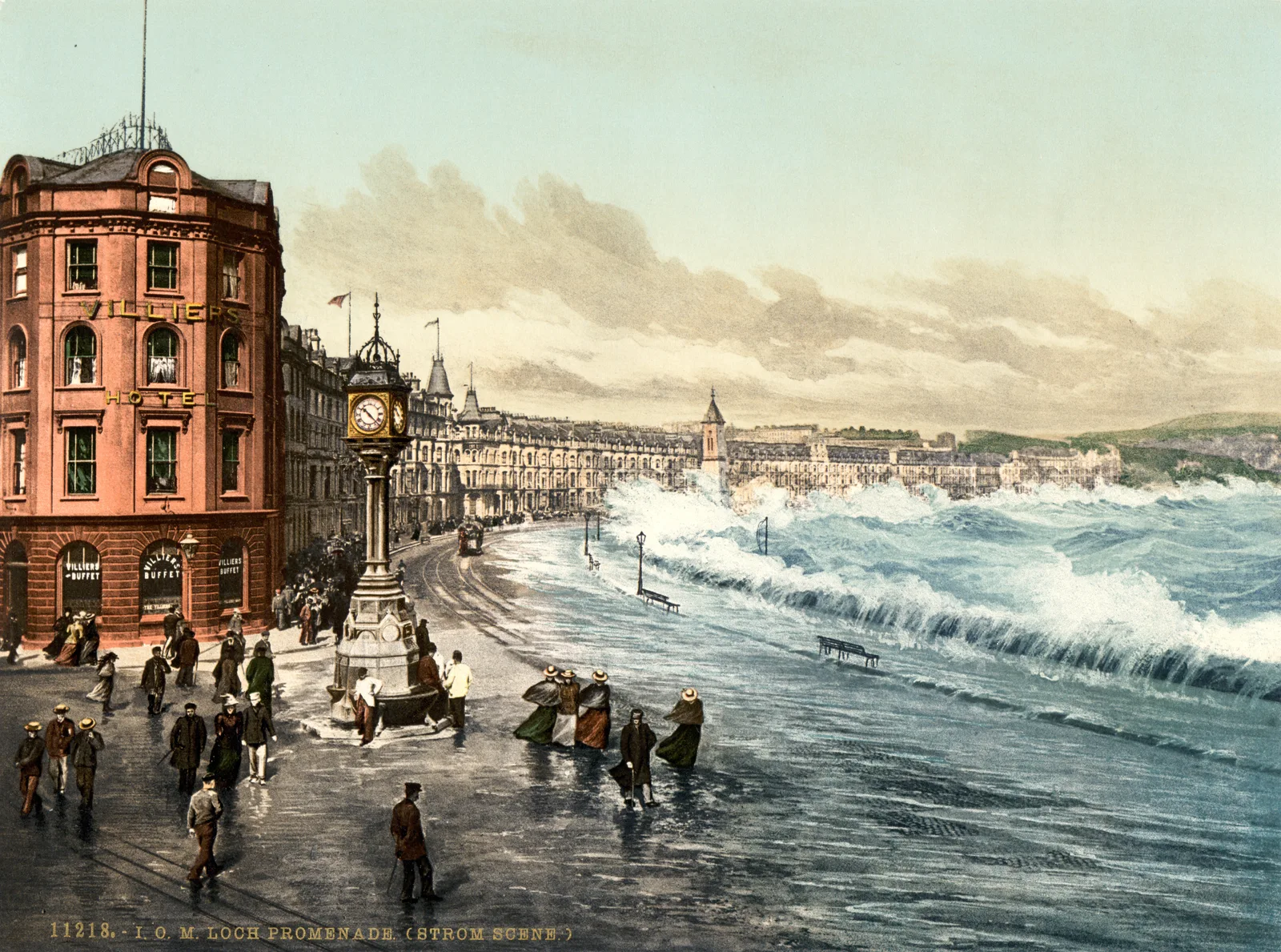
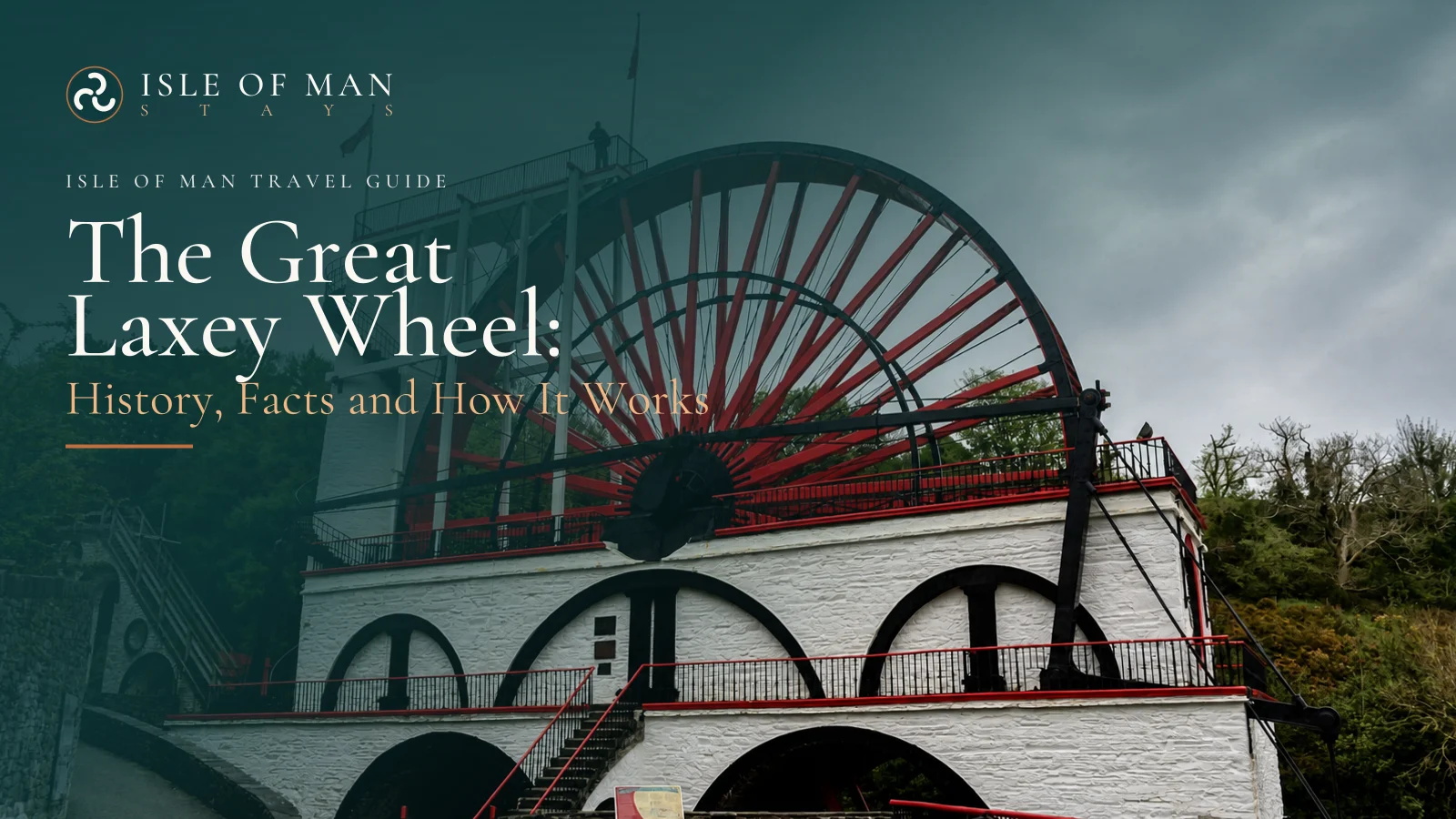
The Victorian tourist boom built the island you see. An average of sixty thousand visitors a year between 1867 and 1873 became 182,000 by 1884 and nearly 350,000 in Queen Victoria's Golden Jubilee year of 1887. Loch Promenade was constructed in 1878; the steam railway opened between Douglas and Peel in 1873, the electric railway in 1893, the Snaefell Mountain Railway in 1895. The Great Laxey Wheel, 72 feet 6 inches across and designed by Robert Casement to drain the mines, still turns — how it actually pumped water out of the mine is worth its own detour.
That infrastructure had a second life nobody wanted. In the First World War the island held up to 29,000 civilian internees; Knockaloe, on farmland near Peel, was the largest internment camp in Britain, holding around 23,000 men in a compound three miles round — a camp town with a bigger population than Douglas. Josef Pilates was interned there.
In the Second World War the boarding houses themselves were requisitioned: Douglas held seven of the island's ten camps, with sections of the promenade fenced off. Hutchinson Camp, thirty-nine houses around a square, became the artists' camp; among its internees, most of them Jewish or anti-Nazi refugees, was Kurt Schwitters, and the inmates ran what amounted to a university within weeks of arriving.
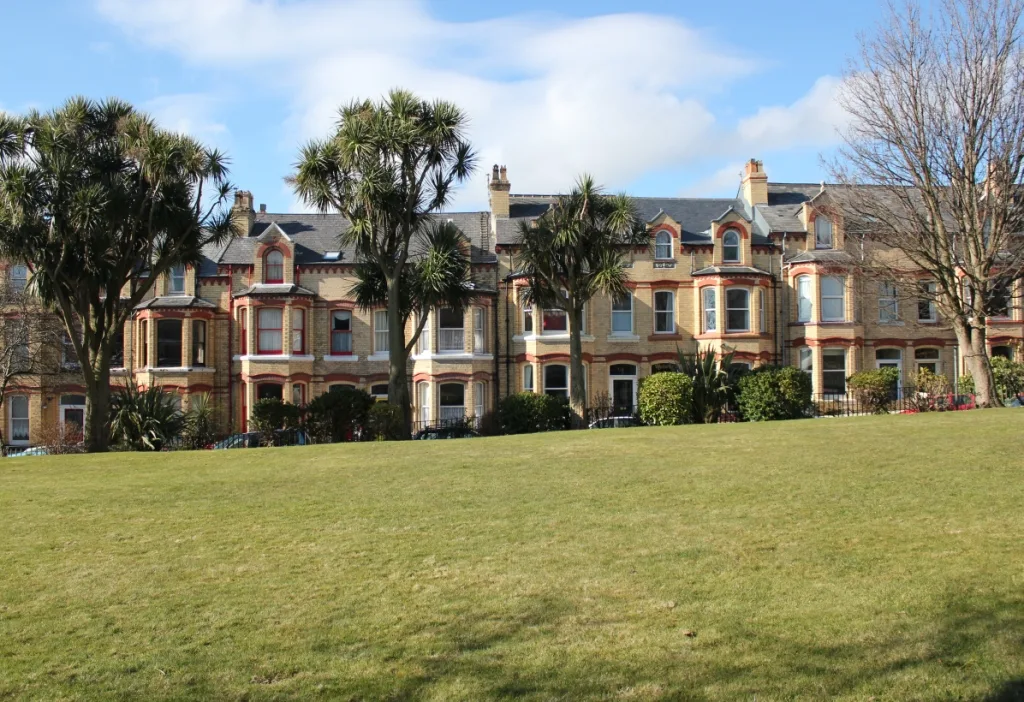
The modern island is quieter and richer, its economy resting on financial and professional services. In 2016 it was designated a UNESCO Biosphere covering the whole island and its territorial seas — the first whole jurisdiction anywhere to hold the status.
The Manx language has come back from the edge: the last person who had spoken it from childhood, the Cregneash fisherman Ned Maddrell, died in 1974, but a Manx-medium primary school, Bunscoill Ghaelgagh, has been running at St John's since 2003 and became a fully government-run school in 2020. It stands a few hundred metres from Tynwald Hill, which is about as neat a summary of this island as you could ask for.
| Period | What happened | What you can still see |
|---|---|---|
| c. 3000 BC | Neolithic farmers build chambered tombs | Cashtal yn Ard, Maughold; Meayll Circle above Cregneash |
| 9th–10th c. | Norse settlement and integration with the Manx | The Pagan Lady's grave site at Peel; cross-slabs at Kirk Michael |
| 979 (traditional) | Tynwald's assemblies begin, on the Scandinavian model | Tynwald Hill, St John's — four grassed tiers |
| 1079–1265 | Godred Crovan and his successors rule the Kingdom of Mann and the Isles | Castle Rushen, Castletown, built for a Viking king |
| 1265–1405 | The island passes from Norway to Scotland to England | Peel Castle's curtain wall and round tower |
| 1405–1736 | The Stanleys rule as Lords of Mann; laws written down 1417 | Castle Rushen and the Old House of Keys, Castletown |
| 1765 | Revestment: the Crown buys the island to stop the Running Trade | Castle Rushen, where the Act was read out that July |
| 1870s–1900s | The tourist boom builds Douglas and the railways | Loch Promenade; the steam, electric and mountain railways |
| 1914–1945 | Two wars of civilian internment | The Knockaloe site near Peel; Hutchinson Square, Douglas |
| 2016 | UNESCO designates the whole island a Biosphere | The island and its territorial seas |
Most of this is walkable, and a good deal of it is coastal. If you would rather take the island in at ground level, the coastal path around the whole island passes castle, harbour and camp site in turn, and the wider list of things worth doing covers the museums and railways in more detail.
Frequently Asked Questions
Which country does the Isle of Man belong to?
None. The Isle of Man is a self-governing British Crown Dependency with its own parliament, government and laws. Its government states that it is not, and never has been, part of the United Kingdom, and is not part of the European Union. The UK is responsible for its international relations and, by convention, its defence.
Is the Isle of Man part of the UK?
No. It is part of the British Islands, a legal term that includes the UK and the Crown Dependencies, but it is not part of the United Kingdom itself and has no representation at Westminster. It sets its own taxes and laws. The King is Head of State under the title Lord of Mann.
Is Tynwald really the oldest parliament in the world?
Tynwald describes itself as the oldest parliament in continuous operation, noting that Iceland's Althing is slightly older but has not run continuously. It also states there is no documentary evidence of a first sitting in 979; that date is traditional, celebrated in 1979, rather than proven.
Who built Peel Castle?
The fortifications on St Patrick's Isle were raised over some seven centuries rather than by one builder, beginning in the Norse period when the islet was fortified as a probable royal residence. The round tower dates from around nine hundred years ago and the crypt of St German's Cathedral from around eight hundred — our fuller history of Peel Castle covers who built it, and the guardroom legend of the Moddey Dhoo.
What is Tynwald Day?
Tynwald Day is the island's national day, usually 5 July, when parliament meets in the open air at Tynwald Hill in St John's. The Deemsters read out the titles of the past year's Acts in Manx and English — a legal requirement, not a pageant — and any member of the public may present a Petition for Redress.
Do people still speak Manx?
Yes. Ned Maddrell, the last person who had spoken Manx from childhood, died in 1974, but second-language speakers never disappeared and the revival is now well established. Bunscoill Ghaelgagh at St John's teaches the primary curriculum through Manx, and 2026 is being marked as Blein ny Gaelgey, the Year of the Manx Language.