Quick Navigation
- Does Anyone Actually Live There?
- What the Calf of Man Actually Is
- From Private Island to Protected Reserve
- The Recovery That Won an Award
- The Wildlife You Come For
- Three Lighthouses, Built to Warn of One Rock
- Getting There: Boats from Port Erin and Port St Mary
- Pairing a Crossing with the Rest of the Coast
- Frequently Asked Questions
- Does anyone live on the Calf of Man?
- How do you get to the Calf of Man?
- What is the Calf of Man known for?
- Can you stay overnight on the Calf of Man?
- How many lighthouses are on the Calf of Man?
- Who owns the Calf of Man?
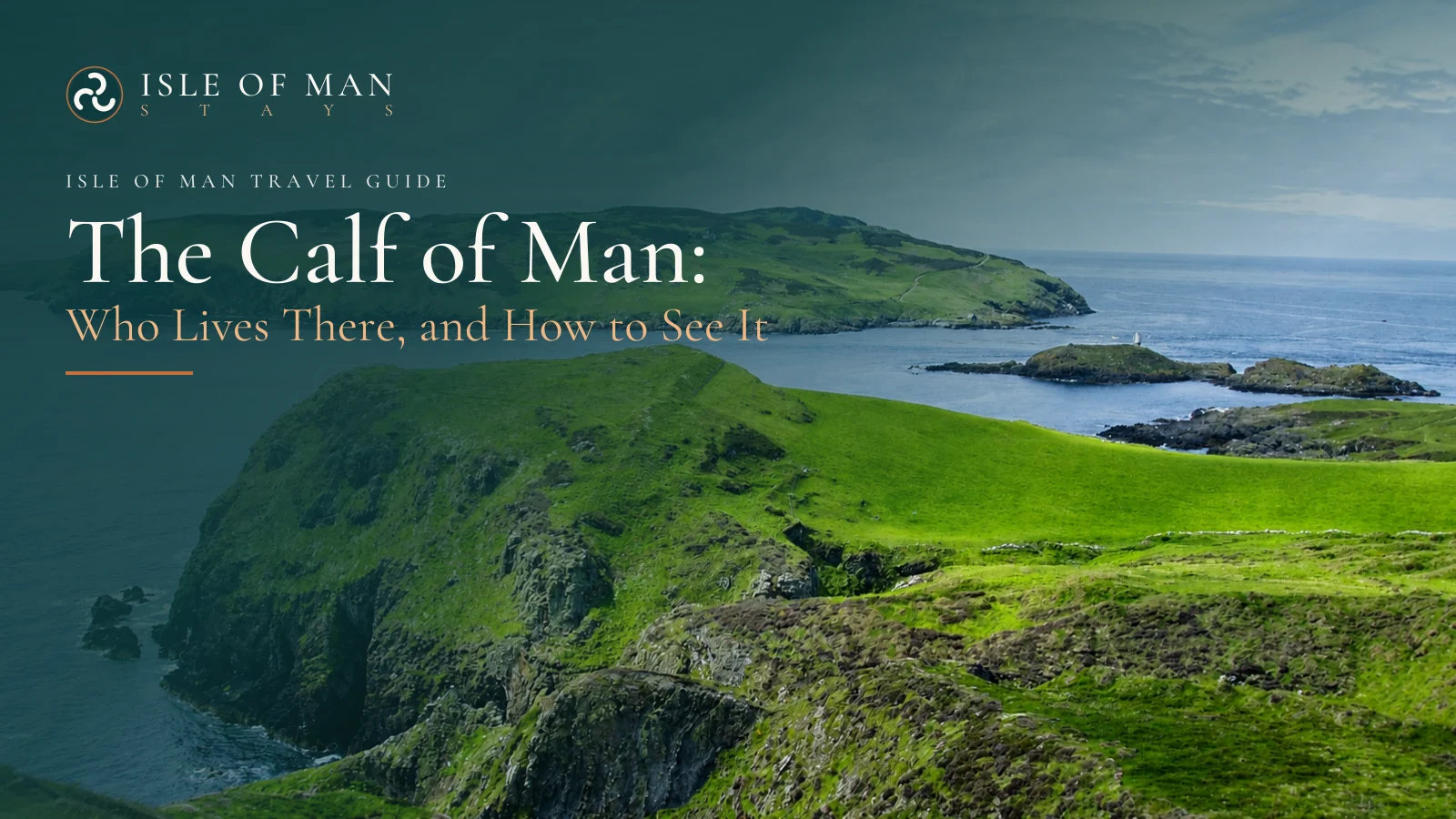
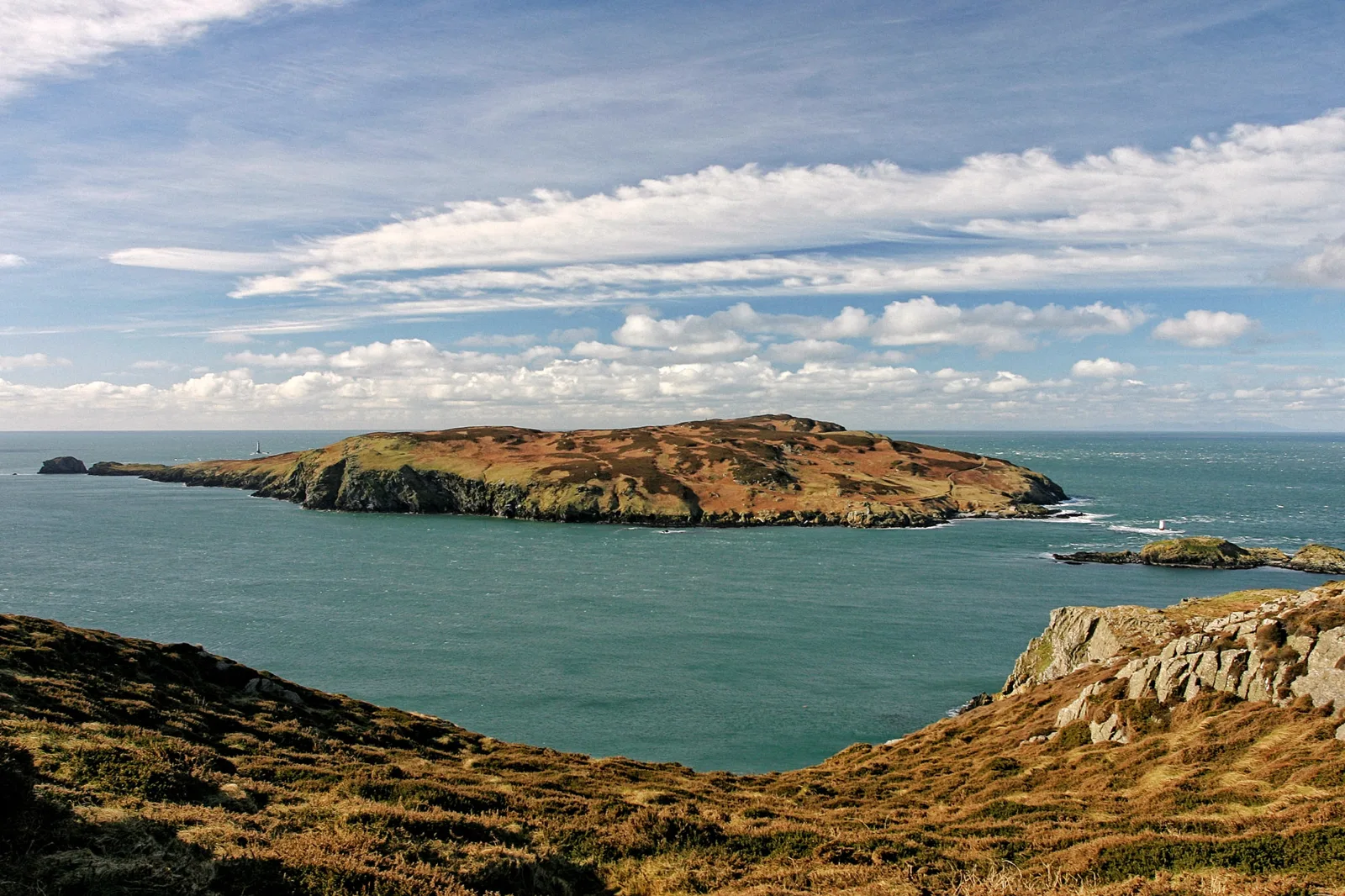
Nobody lives on the Calf of Man year-round. A small rotating team of wardens and volunteers moves in each spring to staff its bird observatory and moves out again in autumn, and for the rest of the year the island belongs to the seals, the seabirds and the weather. It sits half a mile off the island's southern tip, reached only by small boat from the harbour village of Port Erin or its neighbour Port St Mary, and only when the sea allows it.
Does Anyone Actually Live There?
Not permanently, no. The Calf has been run as a bird observatory since 1959, and each season it is staffed by a small team of wardens and volunteers rather than a settled population. Manx Wildlife Trust has provided that warden service since 2006, though Manx National Heritage has owned the island outright since well before that.
The observatory can also put visitors up overnight, in basic self-catering accommodation for up to eight people during the summer season. Bookings for a stay go through Island Escapes rather than the observatory directly — it is not somewhere you can simply turn up.
So the honest answer to "does anyone live on the Calf of Man" is: a small team, on rotation, for part of the year, doing conservation work rather than settling down. The rest of the time the island runs itself.
What the Calf of Man Actually Is
It is a small island of around 600 acres (roughly 2.5 square kilometres), separated from the mainland by the tidal Calf Sound. The name has nothing to do with cattle: "calf" comes from the Old Norse kalfr, used across the Norse world for a small island lying close to a larger one. Locally it is Yn Cholloo, its Manx name.
Between the Calf and the mainland, in the middle of the Sound itself, sits the small rocky islet of Kitterland — the thing you actually look at from the mainland's own visitor centre, with the Calf as the backdrop beyond it. It is a working piece of geography as much as a view: the tide races through that gap hard enough to be dangerous, which is exactly why the crossing to the Calf itself needs a boat, a boatman, and the right conditions rather than a straightforward paddle across.
Planning your trip
Staying overnight? Compare live prices and availability across the Isle of Man on Booking.com.
Compare Isle of Man staysWe earn a small commission if you book through this link, at no extra cost to you.
From Private Island to Protected Reserve
The Calf spent centuries in private hands. The historical record shows it was owned by the Keig family until 1939, when it was bought outright by F. J. Dickens, a benefactor from Silverdale in Lancashire, and given away rather than kept.
- 1939. Dickens buys the Calf and donates it to the National Trust as a bird sanctuary, ending private ownership.
- 1951. The Manx Museum and National Trust — the body that becomes Manx National Heritage — is established, and rents the Calf from the National Trust for a nominal, peppercorn annual rent.
- 1986. Ownership passes outright to Manx National Heritage, ending the rental arrangement.
- 2006. Manx National Heritage appoints Manx Wildlife Trust as the Calf's warden service provider, a role it still holds, while Manx National Heritage keeps ownership of the island itself.
That two-charity arrangement — one body owning the island, the other running the day-to-day conservation work on it — is still exactly how the Calf is managed today.
The Recovery That Won an Award
Since 2012, Manx National Heritage and Manx Wildlife Trust have run a long-term programme to remove invasive brown rats from the Calf and restore the ground-nesting seabirds the rats had been preying on. In December 2025 the partnership won Environmental or Sustainable Initiative of the Year at the Media Isle of Man Awards for Excellence, for what the judges called a vital effort to reverse centuries of ecological decline.
Manx shearwaters had been declared locally extinct on the Calf. Since the rats were removed, the population has recovered to around 1,500 breeding pairs — and in 2025 the island logged its highest number of puffin sightings in three decades.
The recovery is still a work in progress rather than a finished job. A confirmed puffin breeding attempt in 2021 has not yet been repeated, though wardens are hopeful the 2025 numbers are a sign it will be, and the Calf now follows biosecurity measures brought in to keep avian influenza away from birds that took over a decade to bring back.
The Wildlife You Come For
Manx National Heritage counts around 33 species of seabird breeding on the Calf, among them Manx shearwater — the bird that gave this stretch of water its scientific name — along with kittiwake, razorbill and shag. Peregrine, hen harrier and chough are also regularly seen. The waters around the island carry their own statutory protection as the Calf of Man & Wart Bank Marine Nature Reserve.
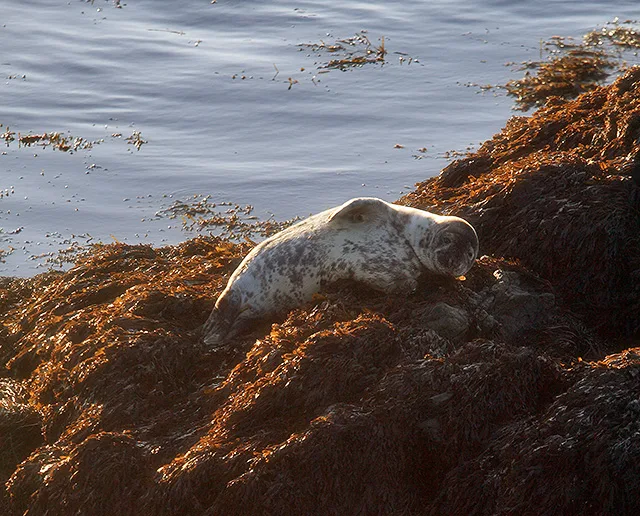
Below the birds, a sizeable colony of grey seals hauls out on the rocks year-round, and a flock of Manx Loaghtan sheep also grazes the island — the same rare, often multi-horned breed you meet at the crofting village of Cregneash and behind the island's protected Loaghtan lamb.
Three Lighthouses, Built to Warn of One Rock
Almost a mile southwest of the Calf, Chicken Rock marks the most southerly point of Manx territory, and it has been dangerous enough to shipping that three separate lighthouse towers have stood guard over it in turn.
| Year | What happened |
|---|---|
| 1818 | Two lighthouses — a lower and a higher light — are built on the Calf itself, authorised by an 1815 Act of the UK Parliament and designed by engineer Robert Stevenson. |
| 1875 | Fog kept obscuring the Calf's two lights, so a new lighthouse is built directly on Chicken Rock, designed by Robert Stevenson's sons David and Thomas. The Calf's lower light is retired. |
| 1960 | Fire damages the interior of the Chicken Rock lighthouse; its keepers are rescued by the Port St Mary lifeboat. It is repaired and automated the following year. |
| 1968–2007 | The Calf's higher light is modified in 1968 and stays in service until it is finally retired in 2007. |
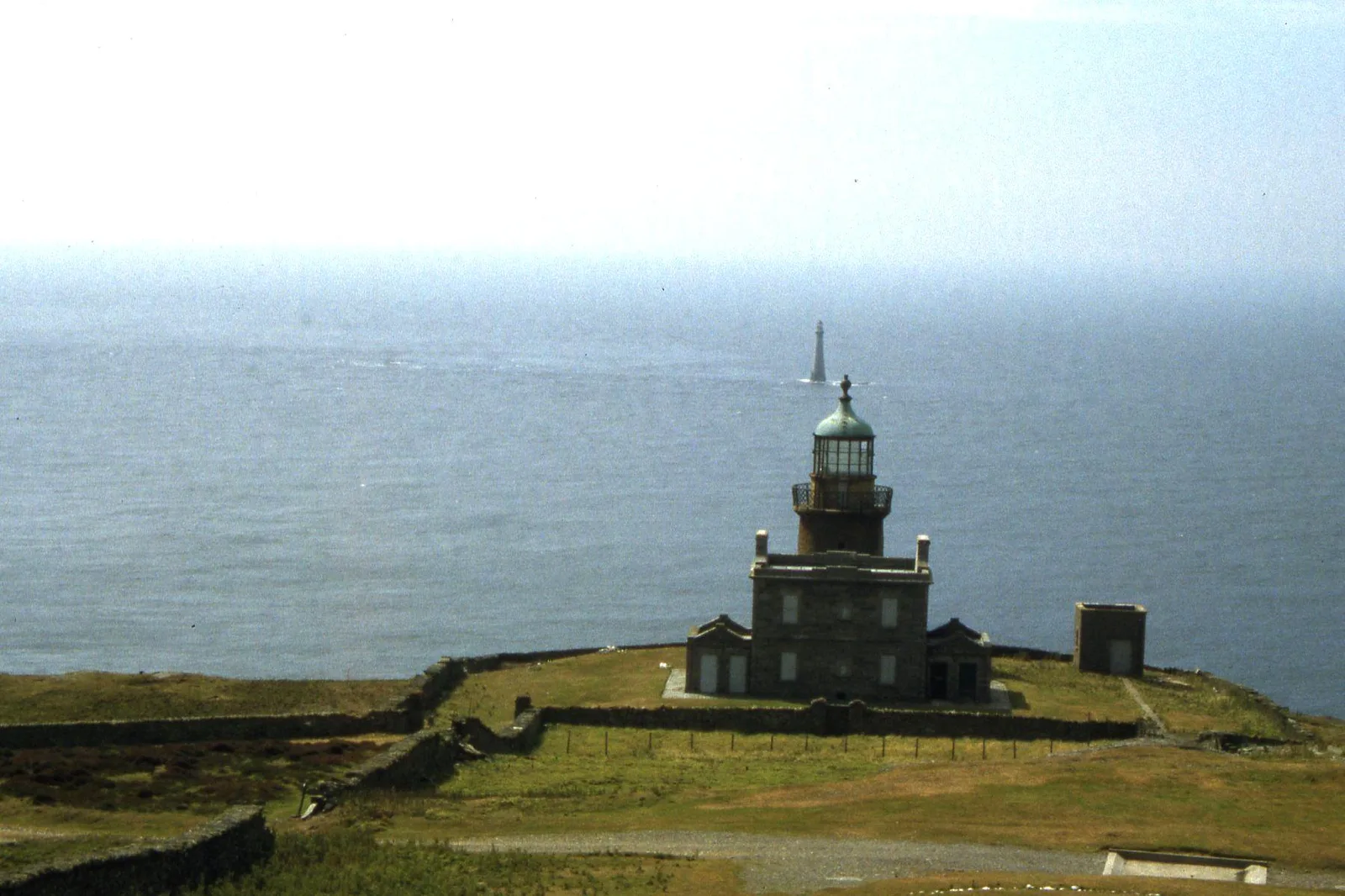
The Chicken Rock light still operates today, run by the Northern Lighthouse Board. Both of the Calf's own towers are retired now — monuments rather than working aids to navigation, on a small island with a genuinely disproportionate lighthouse history for a genuinely dangerous stretch of water.
Getting There: Boats from Port Erin and Port St Mary
Small boat operators run the crossing from both towns: the Shona Elizabeth out of Port Erin, and the Scraayl from the fishing town of Port St Mary. Both run during the summer only, both depend on suitable weather, tide and the boatman being available on the day, and Manx National Heritage is explicit that every crossing must be booked in advance rather than turned up for on spec.
There is no fixed sailing schedule to quote, because there isn't really one — crossings run when conditions allow, which is one reason a summer visit gives you far better odds than a shoulder-season one. Confirm directly with the boat operators or Manx National Heritage before you build a day around it.
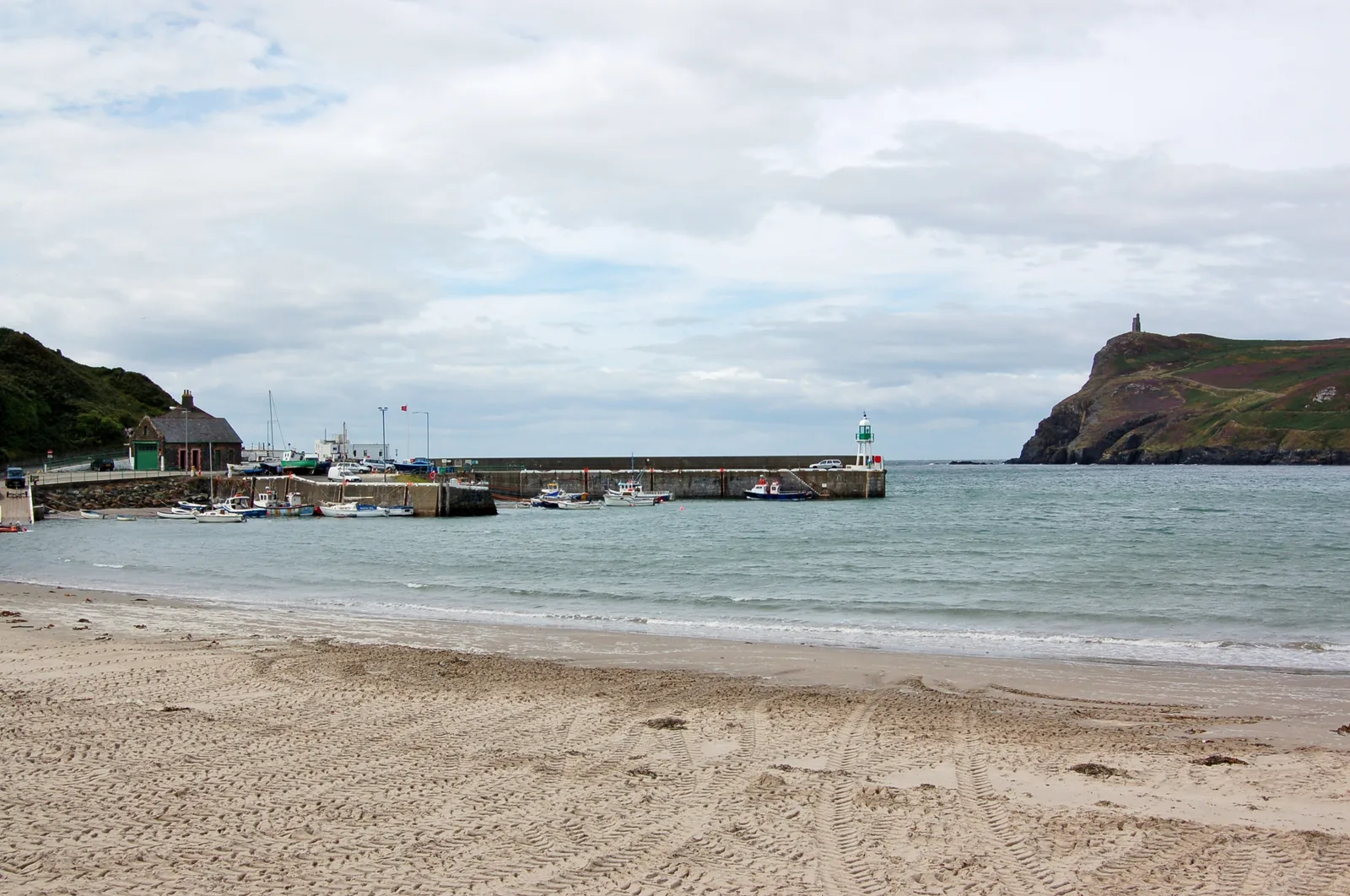
Most visits are day trips, out on one boat and back on a later one, though the observatory's own overnight accommodation is there for anyone who wants longer than a few hours among the seabirds. Either way, treat the crossing itself as part of the plan rather than a formality: a choppy day can mean no crossing at all, whatever the calendar promised.
Pairing a Crossing with the Rest of the Coast
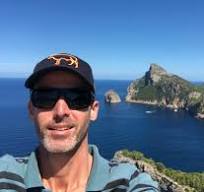
You do not have to board a boat to get something out of the Calf. From the mainland side, the visitor centre at the Sound looks straight across the strait to Kitterland and the Calf beyond, with seals visible in the water below on most days without any crossing at all. The island's southern bays and the coastal path itself both pass within sight of it, so it works as one stop on a longer day rather than a special trip on its own.
If you are planning around the crossing, basing yourself in the south makes the whole day simpler — you are minutes from either departure point rather than driving down for a single sailing. If the south doesn't end up being where you stay, the rest of the island's accommodation is worth comparing before you book, since where you sleep decides how easy this particular day trip turns out to be.
Frequently Asked Questions
Does anyone live on the Calf of Man?
Only seasonally. Manx Wildlife Trust wardens and volunteers staff the island's bird observatory from spring through autumn, but nobody lives there permanently, and the island has no year-round population.
How do you get to the Calf of Man?
By small boat from Port Erin or Port St Mary. Crossings run during the summer, depend on weather, tide and the boat operator's availability, and must be booked in advance rather than arranged on the day.
What is the Calf of Man known for?
It is best known as a bird observatory and nature reserve, home to around 33 breeding seabird species including Manx shearwater, plus a large grey seal colony. A long-running rat-removal and habitat-restoration programme run jointly by Manx National Heritage and Manx Wildlife Trust has recently won an award for reversing decades of decline in its seabird numbers.
Can you stay overnight on the Calf of Man?
Yes. The bird observatory offers basic self-catering accommodation for up to eight guests during the summer season, booked through Island Escapes rather than arranged with the observatory directly.
How many lighthouses are on the Calf of Man?
Three towers in total. Two lighthouses were built on the Calf itself in 1818, but fog kept obscuring them, so a third was built directly on Chicken Rock in 1875 and took over as the main warning. Only the Chicken Rock light still operates; both of the Calf's own towers have since been retired.
Who owns the Calf of Man?
Manx National Heritage, which has owned the island outright since 1986 after decades of renting it from the National Trust for a nominal, peppercorn annual rent. Manx Wildlife Trust has run the day-to-day warden service since 2006.