
Quick Navigation
- What the Weather Actually Does
- Spring: the Quiet Window, Then the Loud One
- Summer: Warmest, Busiest, Longest Days
- Autumn: the Underrated Half of the Shoulder
- Winter: Short Days, Open Museums
- The Events That Decide Your Dates
- What Is Actually Running, and When
- So Which Month Should You Pick?
- Frequently Asked Questions
- What is the best month to visit the Isle of Man?
- What is the weather like on the Isle of Man?
- When is the Isle of Man TT?
- Is the Isle of Man worth visiting in winter?
- Does it snow on the Isle of Man?
- When is Tynwald Day?
The best time to visit the Isle of Man is May, or the first half of September. May is the sunniest and driest month at Ronaldsway by a clear margin, September still holds the summer’s warmth in the sea, and both sit outside the two fortnights when the island fills with motorcycles and places to stay across the island are hardest to find. The rest depends on what you are prepared to trade – and on whether you want the TT or want to avoid it.
The short answer
- Best overall: May, the sunniest month at Ronaldsway (235 hours) and the driest (54.6 mm of rain).
- Best alternative: the first half of September – daytime maxima of 16.6 °C, barely below June, with the crowds gone.
- Warmest months: July and August, both averaging 18.2 °C by day, with nights around 12.5 °C.
- The TT: runs from late May into early June on the 37.73-mile Mountain Course – the island’s busiest fortnight, avoid it if racing isn’t the draw.
- Winter upside: just ten days of air frost a year on the coast, and 26 official dark sky sites for the long nights.
- Wettest stretch: October and November, when rainfall nearly doubles May’s total and rain falls on 13 to 16 days a month.
What the Weather Actually Does
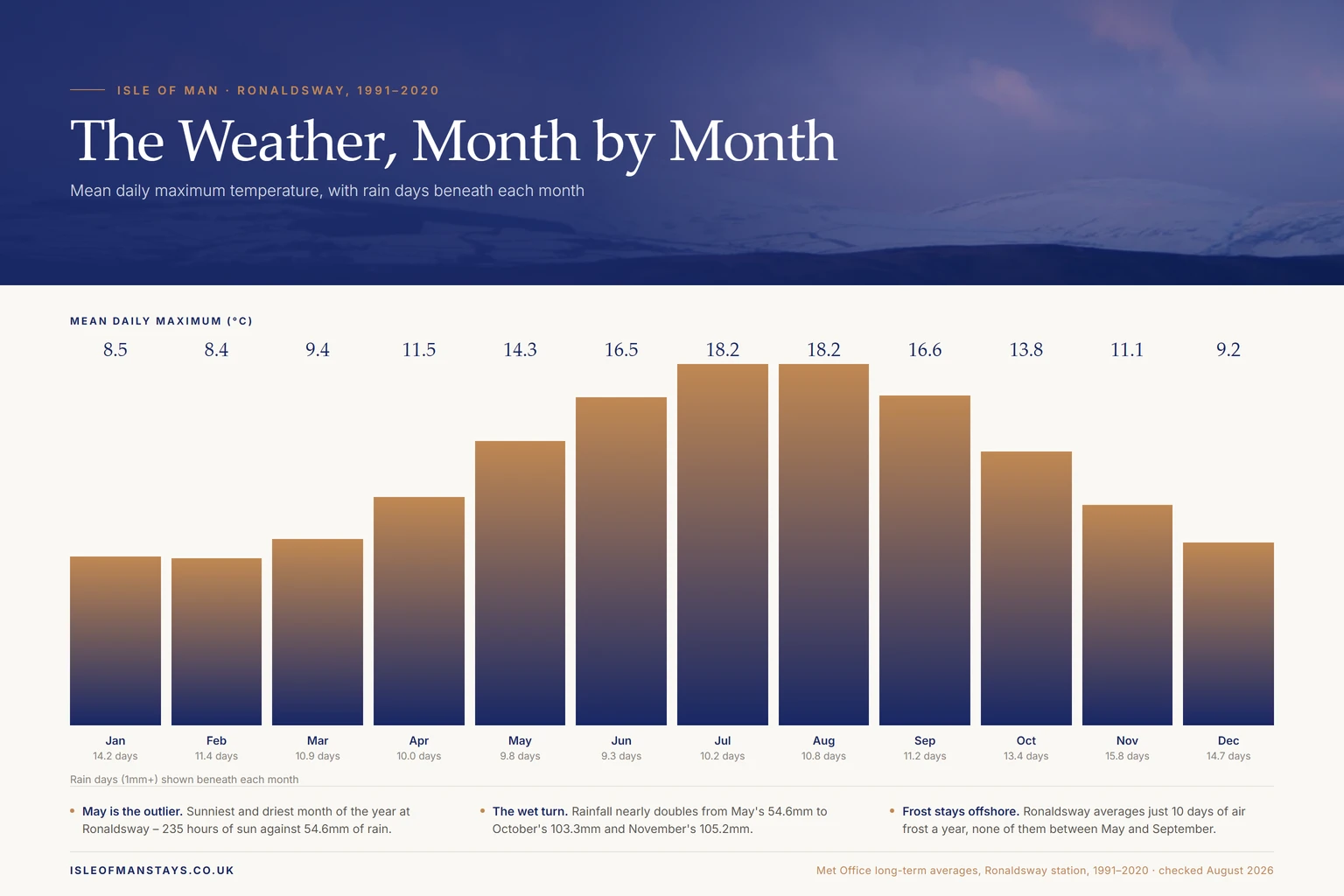
Every number below comes from the Met Office long-term averages for Ronaldsway, the island’s long-running station at the southern end, over the 1991–2020 averaging period. Ronaldsway sits on the coast, so the uplands around Snaefell are colder, wetter and cloudier than this – treat the table as a floor, not a promise.
| Month | Mean daily max °C | Mean daily min °C | Sunshine hours | Rainfall mm | Days with 1 mm+ rain |
|---|---|---|---|---|---|
| January | 8.5 | 4.3 | 55 | 82.5 | 14.2 |
| February | 8.4 | 3.9 | 83 | 65.5 | 11.4 |
| March | 9.4 | 4.5 | 127 | 62.5 | 10.9 |
| April | 11.5 | 5.8 | 182 | 55.1 | 10.0 |
| May | 14.3 | 8.1 | 235 | 54.6 | 9.8 |
| June | 16.5 | 10.6 | 213 | 62.4 | 9.3 |
| July | 18.2 | 12.5 | 204 | 59.1 | 10.2 |
| August | 18.2 | 12.7 | 190 | 67.4 | 10.8 |
| September | 16.6 | 11.4 | 146 | 70.6 | 11.2 |
| October | 13.8 | 9.2 | 105 | 103.3 | 13.4 |
| November | 11.1 | 6.7 | 64 | 105.2 | 15.8 |
| December | 9.2 | 4.9 | 47 | 95.0 | 14.7 |
Two things in that table are worth arguing about. May is the sunniest month, not July – 235 hours against 204 – and it is also the driest, at 54.6 mm. And the wet half of the year is unmistakably October to January, when Ronaldsway logs rain on 13 to 16 days a month. Summer is not dry here so much as briefly warm; it rains on about ten days in every summer month too, just less heavily.
May is the sunniest and driest month on the island’s longest weather record. It is also the fortnight the TT fills the island for. That single collision decides most Manx trips.
That last figure is the one people find surprising. Ronaldsway averages ten days of air frost a year, none of them between May and September – the Irish Sea keeps the coast mild in a way inland Britain is not. Daylight swings hard, though. Sun-times calculations for Douglas put the summer solstice at around 17 hours 10 minutes of daylight and the winter solstice at about 7 hours 20 minutes, with useful twilight either side of both – the Met Office doesn’t publish day-length data, so treat these as close approximations rather than an official figure.
Spring: the Quiet Window, Then the Loud One
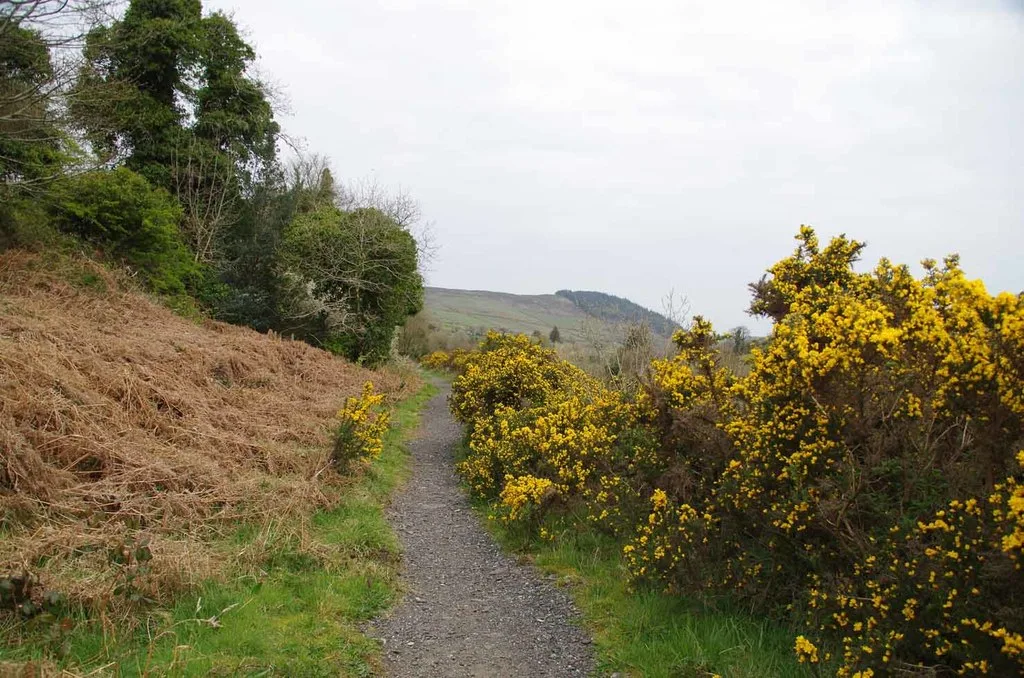
Spring is when the island reopens. The heritage railways and the Manx National Heritage castle sites – Peel Castle, Castle Rushen, Cregneash – run seasonally rather than year-round, reopening through spring and closing again for the winter; check the operator’s current dates before you build a day around one. Gorse comes out on the hillsides, the coastal path dries, and until late May you have most of it to yourself.
Then the TT arrives and the island becomes a different country for a fortnight. Book as far ahead as you possibly can – the island is small and race fortnight draws tens of thousands of visitors on top of a population of around 84,000 – and expect roads on the Mountain Course to close for practice and racing throughout.
If that is what you are here for, our guide to TT beds and when to book them covers the timing. If it is not, avoid the last week of May and the first of June entirely, and take the rest of May instead.
Planning your trip
Staying overnight? Compare live prices and availability across the Isle of Man on Booking.com.
Compare Isle of Man staysWe earn a small commission if you book through this link, at no extra cost to you.
Summer: Warmest, Busiest, Longest Days
July and August are the warmest months by a whisker, both averaging a daily maximum of 18.2 °C, with nights around 12.5 °C. Everything is open: boats run to the Calf of Man from Port Erin and Port St Mary, all four heritage lines are working, and the sea has finally caught up with the air, which matters if you intend to swim from any of the island’s beaches and the coast around them.
The trade is company and cloud. Sunshine falls month on month through the summer, from May’s 235 hours to August’s 190, and August is measurably wetter than May or June. Early July brings Tynwald Day, which is the single best reason to be here in high summer – more on that below.
Autumn: the Underrated Half of the Shoulder
September is the sleeper pick. Daytime maxima average 16.6 °C, barely below June, sunshine holds at 146 hours, the crowds have gone and the outdoor sites are still open before their winter closure begins. It is also when the light on the west coast starts doing the thing that makes people photograph Peel.
October is where it turns. Rainfall jumps to 103 mm and November to 105 mm – nearly double May – and rain falls on 13 to 16 days a month. It is still good walking weather if you are equipped for it, and Hop-tu-Naa on 31 October, the Manx version of Halloween with carved turnips rather than pumpkins, is one of the genuinely distinctive things on the calendar.

Winter: Short Days, Open Museums
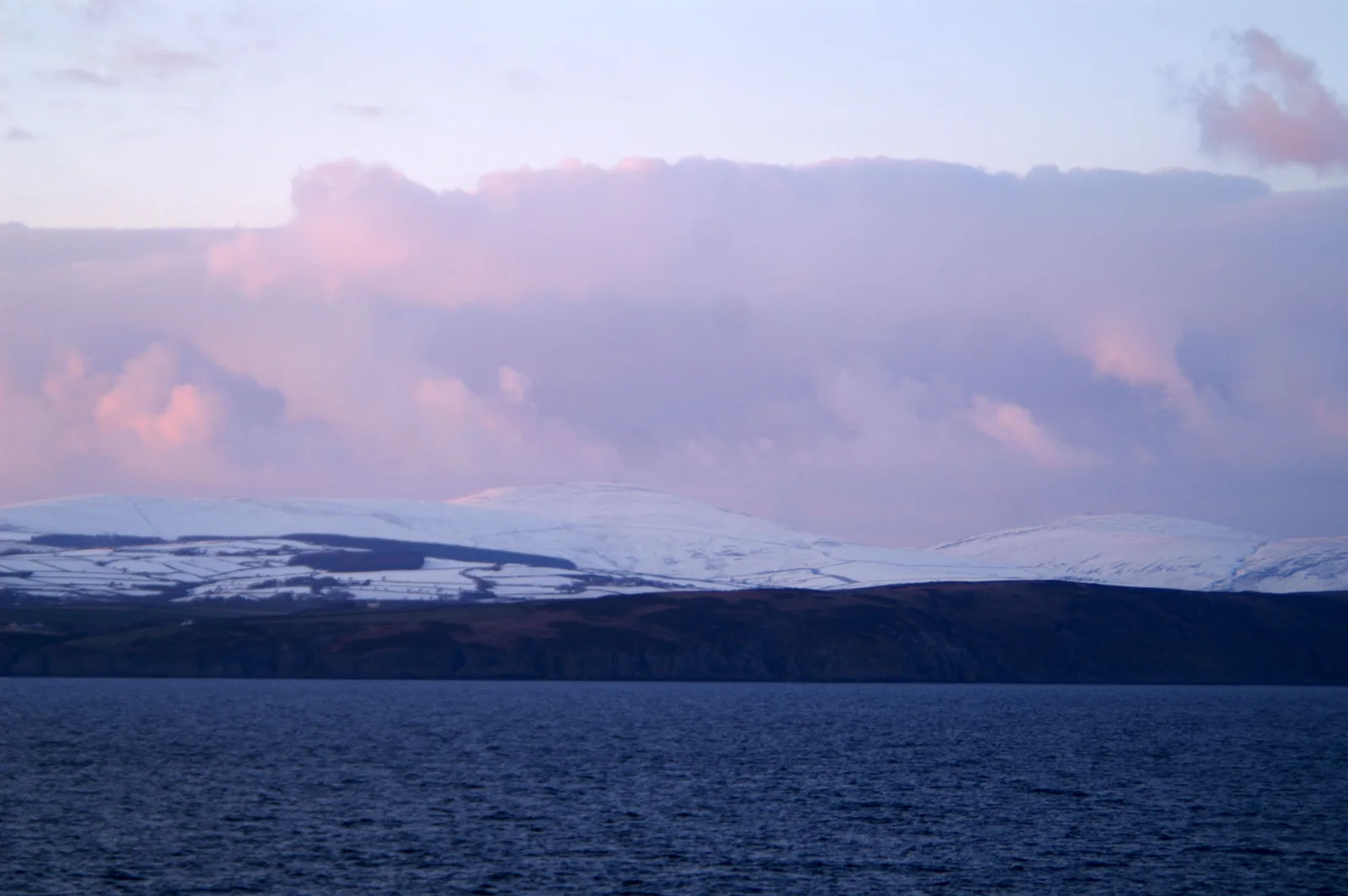
Be clear about what closes. As winter draws in, the heritage railways stop running and the outdoor Manx National Heritage sites shut for the season – check the operator for the current dates before you plan around one. What stays open through the winter is the indoor half: the Manx Museum in Douglas and the House of Manannan in Peel both run year-round, and they are substantial visits rather than fillers.

What you get in exchange is an empty island with as little as around seven and a half hours of daylight at the darkest point of the year, mild coastal temperatures – January and February still average daily maxima of around 8.5 °C – and some of the darkest skies in the British Isles, with 26 official dark sky sites and long nights to use them in.
Snow is infrequent, and rarely lies for more than a day or two when it does fall. New Year’s Eve in Douglas is a genuine occasion, and walking Snaefell on New Year’s Day is a local habit worth borrowing.
The Events That Decide Your Dates
- The TT runs from late May into early June, split across a qualifying week and a race week on the 37.73-mile Mountain Course. The island keeps a dedicated TT bank holiday during it. Dates move every year, so check the current schedule on the official race website before you book anything.
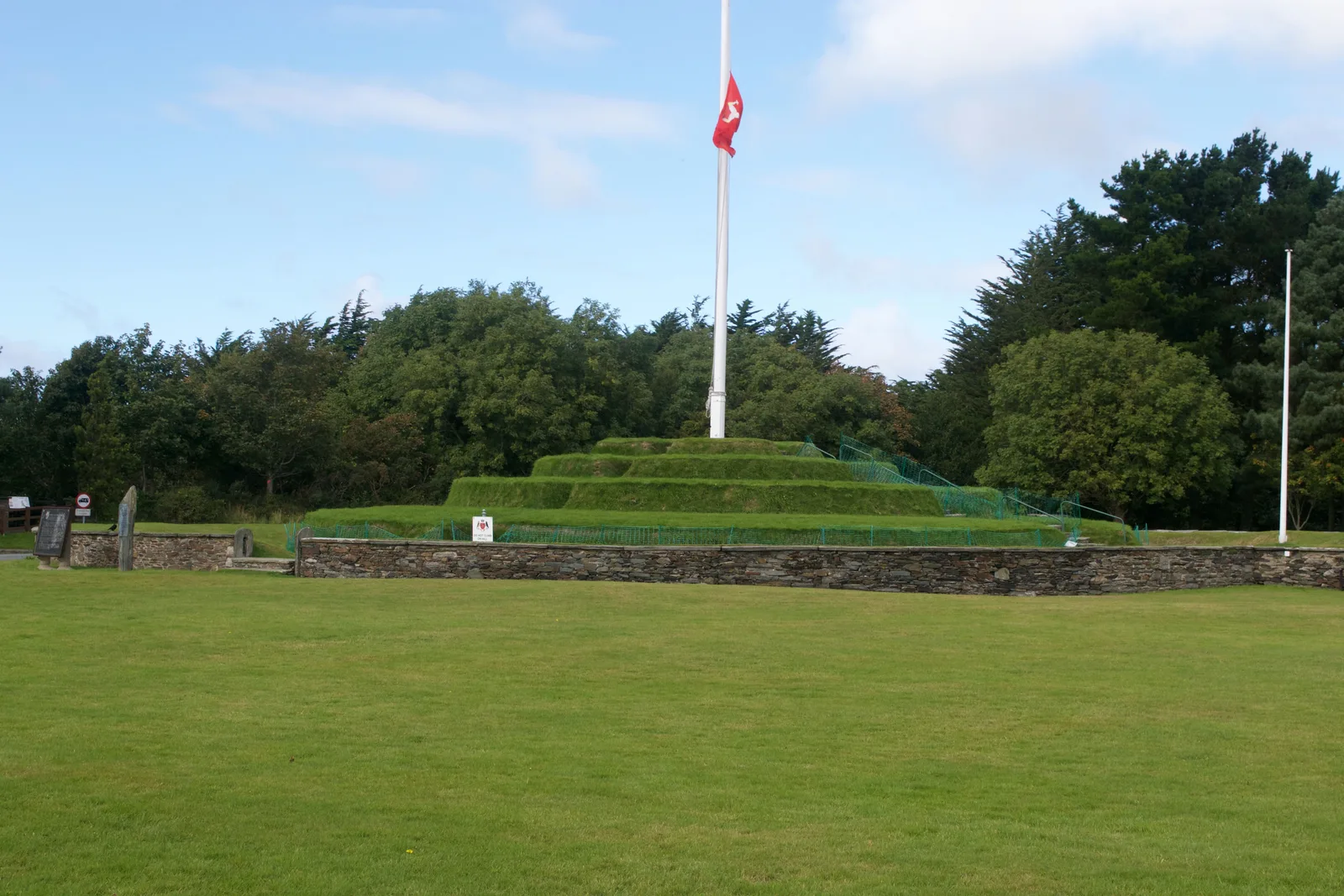
- Tynwald Day is 5 July, the island’s national day, held at St John’s. Acts passed in the preceding year are proclaimed from the tiers of Tynwald Hill in English and Manx – an Act not promulgated there within eighteen months of enactment ceases to have effect. It is a fixed date, with one wrinkle: when 5 July falls on a Saturday or Sunday, both the ceremony and the bank holiday move to the following Monday.
- The Manx Grand Prix takes over the same Mountain Course in August. It is the amateur meeting, quieter and cheaper than the TT but with the same road closures, and it now shares its fortnight with the Classic TT.
- The food festival is now The Big Manx Feast, with its 2026 edition set for a September weekend at Noble’s Park in Douglas, and our guide to Manx food and drink covers the festival along with what to eat the rest of the year.
What Is Actually Running, and When
| Season | Heritage railways | Outdoor heritage sites | Calf of Man boats | Crowds |
|---|---|---|---|---|
| Spring | Reopening for the season | Reopening for the season | No | Very quiet |
| May | Running | Open | Starting | Quiet, then TT |
| Summer | Full service | Open | Running | Busiest |
| Early autumn | Running | Open | Winding down | Easing off |
| Late autumn–winter | Closed for the season | Closed for the season | No | Empty |
None of these are fixed calendar dates – confirm the current season directly with Isle of Man Transport and Manx National Heritage before you build a day around a train or a castle. Both publish their running dates each spring and both have shifted them in recent years.
So Which Month Should You Pick?
For a first visit with sightseeing at its centre, take the first three weeks of May: the best sunshine and lowest rainfall on the record, everything reopened, and the island still to yourself. If May will not work, early September is the near-equal alternative, warmer in the sea and quieter than August.
Choose July or August if you are travelling with children who need long days and open attractions, and accept the company. Choose late May into early June only if you actively want the TT. And take January or February if the point is dark skies, empty cliff path and a museum with nobody else in it – just book the indoor half of your itinerary, because the railways will be shut.
Whichever month you land on, fix the bed before the plan. Beds are the constraint on an island this size, especially in race fortnight, so it is worth looking at places to stay in Douglas, the capital and the ferry port, before you commit to dates – and then working out what to actually do once you are there.
Frequently Asked Questions
What is the best month to visit the Isle of Man?
May, on the weather record. Met Office averages for Ronaldsway give it 235 sunshine hours and 54.6 mm of rain, the sunniest and driest month of the year. The caveat is the TT at the end of May, so aim for the first three weeks. Early September is the closest alternative.
What is the weather like on the Isle of Man?
Mild, breezy and often wet. Ronaldsway averages 883 mm of rain a year across about 142 rainy days, with daily maxima from roughly 8.5 °C in midwinter to 18.2 °C in July and August. Frost is rare on the coast – around ten days a year – but the uplands are considerably harsher.
When is the Isle of Man TT?
Late May into early June, every year, run over a qualifying week followed by a race week on the 37.73-mile Mountain Course. The exact dates shift annually and the island schedules a dedicated TT bank holiday around them, so check the official race calendar before booking travel or a bed.
Is the Isle of Man worth visiting in winter?
Yes, if you pick the right itinerary. The heritage railways and outdoor heritage sites close for the winter season, but the Manx Museum and the House of Manannan stay open year-round, the coast stays mild, and the island’s 26 dark sky sites are at their best under long winter nights.
Does it snow on the Isle of Man?
Occasionally, but not much. The Isle of Man Government’s climate summary describes winters as generally mild and wet, with snowfall and frost infrequent, and notes that snow rarely lies for more than a day or two. Temperatures fall with altitude, so the hills around Snaefell are colder than the coast, where Ronaldsway averages around ten days of air frost a year.
When is Tynwald Day?
5 July, the Isle of Man’s national day, when Acts of Tynwald are proclaimed in English and Manx from Tynwald Hill at St John’s. If 5 July falls on a Saturday or Sunday, the ceremony and the associated bank holiday both move to the following Monday.