Quick Navigation
- Queenies, the Scallop With a Protected Name
- Manx Kippers, and What Changed in Peel
- Loaghtan Lamb, and the Horn Myth
- Bonnag, and the Mill That Grinds the Flour
- Manx Cheese, Crab and Lobster
- Priddhas an' Herrin'
- Beer Brewed Under an 1874 Act
- Manx Gin, and a Real Manx Whisky
- What to Try, and Where to Find It
- The Isle of Man Food and Drink Festival, Now The Big Manx Feast
- Frequently Asked Questions
- What food is the Isle of Man famous for?
- Are Manx kippers still made in Peel?
- How many horns does a Manx Loaghtan sheep have?
- What is bonnag?
- When is the Isle of Man food festival?
- Is there a Manx whisky?
The Isle of Man is known for queenies (small, sweet queen scallops), Manx kippers (herring smoked near Peel), Loaghtan lamb from a rare native sheep, and bonnag, a dense soda bread. Two of them — queenies and Loaghtan lamb — hold Protected Designation of Origin status, a legal statement that they cannot be produced anywhere else. The rest are things the island has eaten for centuries and mostly still makes for itself, landed, grazed or milled within twenty miles of wherever you happen to be standing.
The short answer
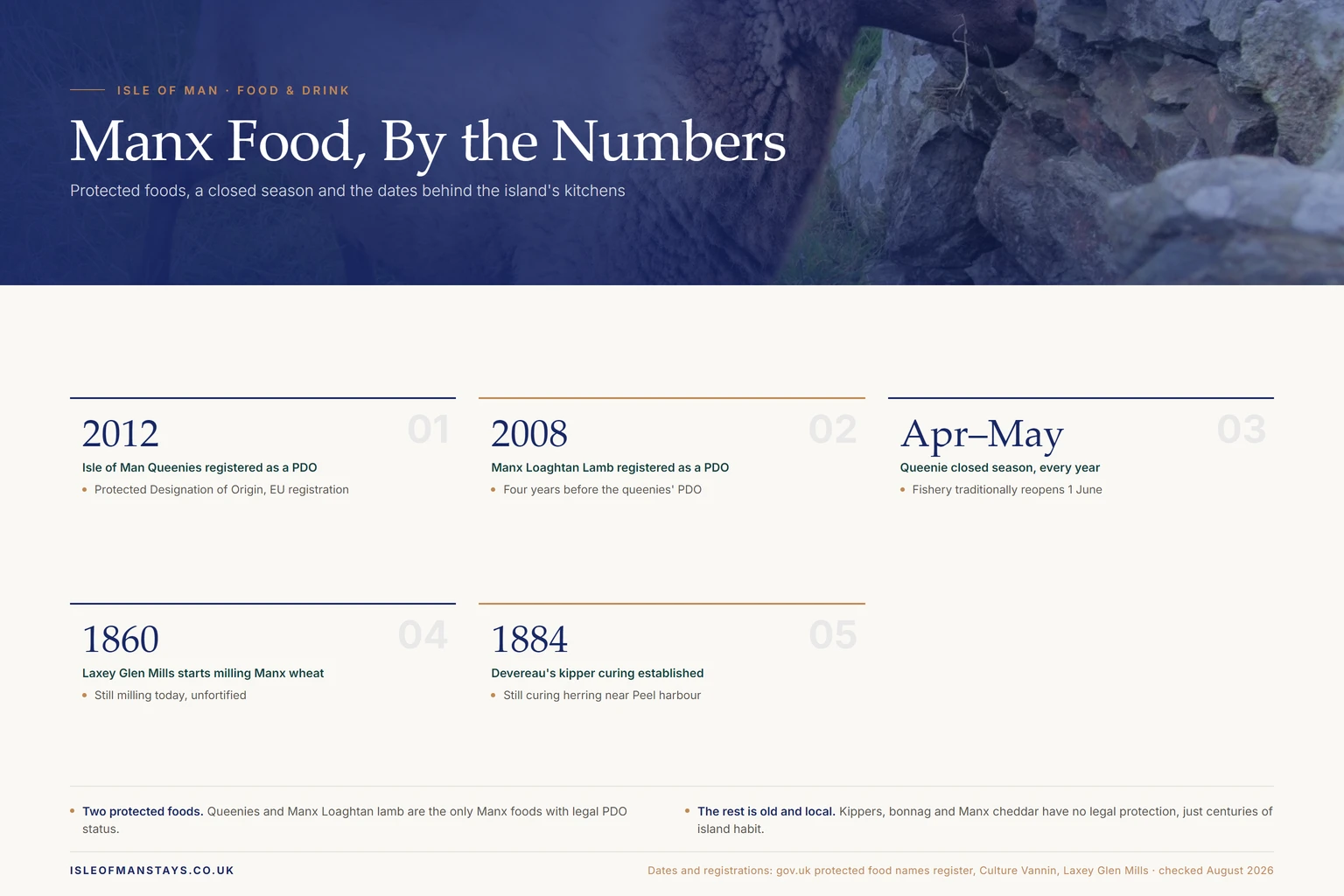
- Two protected foods. Queenies and Manx Loaghtan lamb both hold Protected Designation of Origin status — legally, they can only come from the Isle of Man.
- A closed season. Queenie fishing closes each year across April and May, reopening on 1 June.
- Kippers still cured near Peel. Devereau's, a Manx kipper name since 1884, still cures herring in a modern factory close to the harbour.
- Multi-horned sheep. Manx Loaghtans typically carry two or four horns, with three or five occurring occasionally through a horn-splitting gene.
- A working mill. Laxey Glen Mills has milled Manx wheat since 1860, in a building designed by the engineer behind the Laxey Wheel.
- Award-winning cheese. The Isle of Man Creamery's Vintage Cheddar and Mature Cheddar with Peppercorn were the trophy winners at the 2026 International Cheese and Dairy Awards.
Queenies, the Scallop With a Protected Name
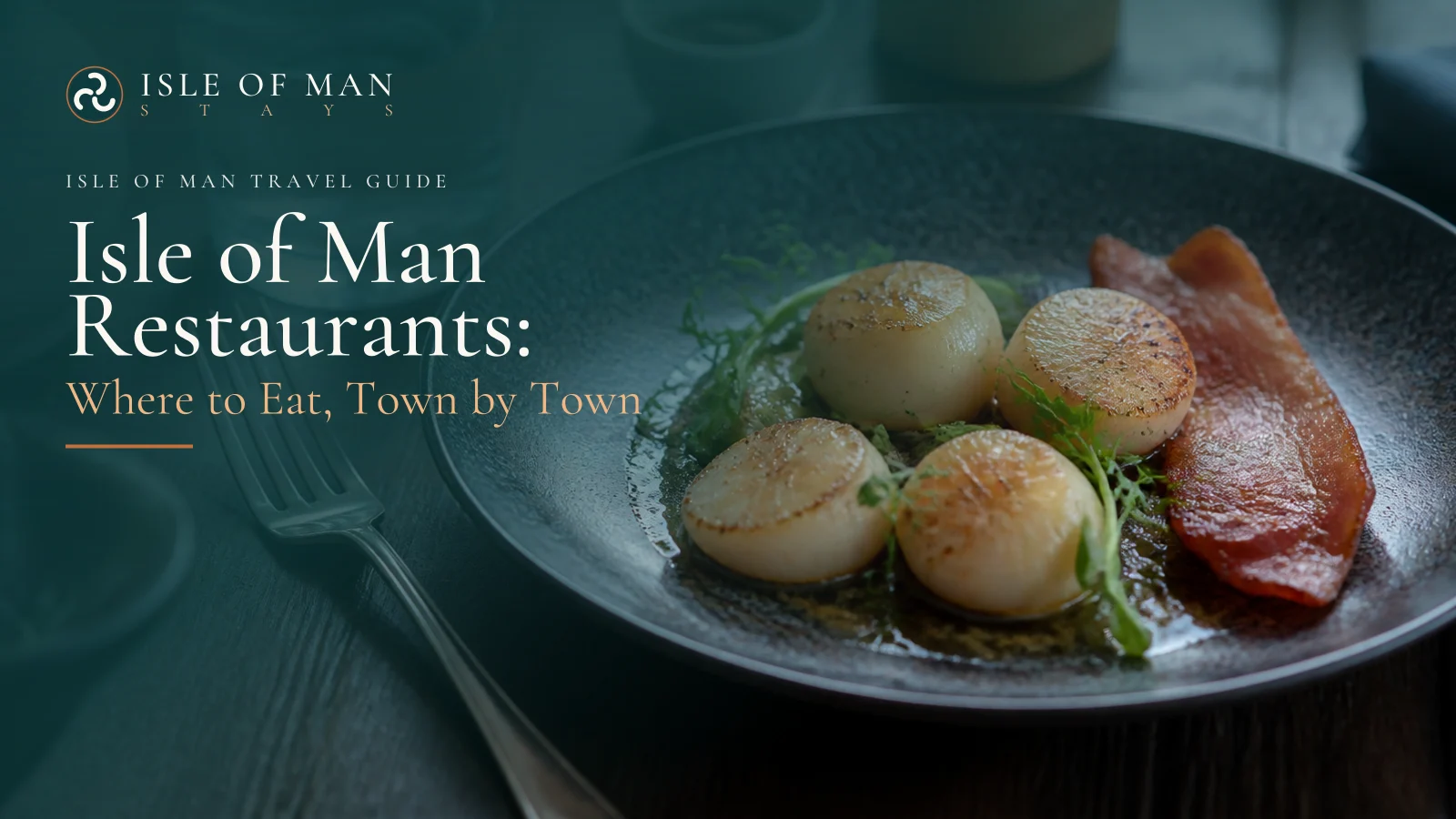
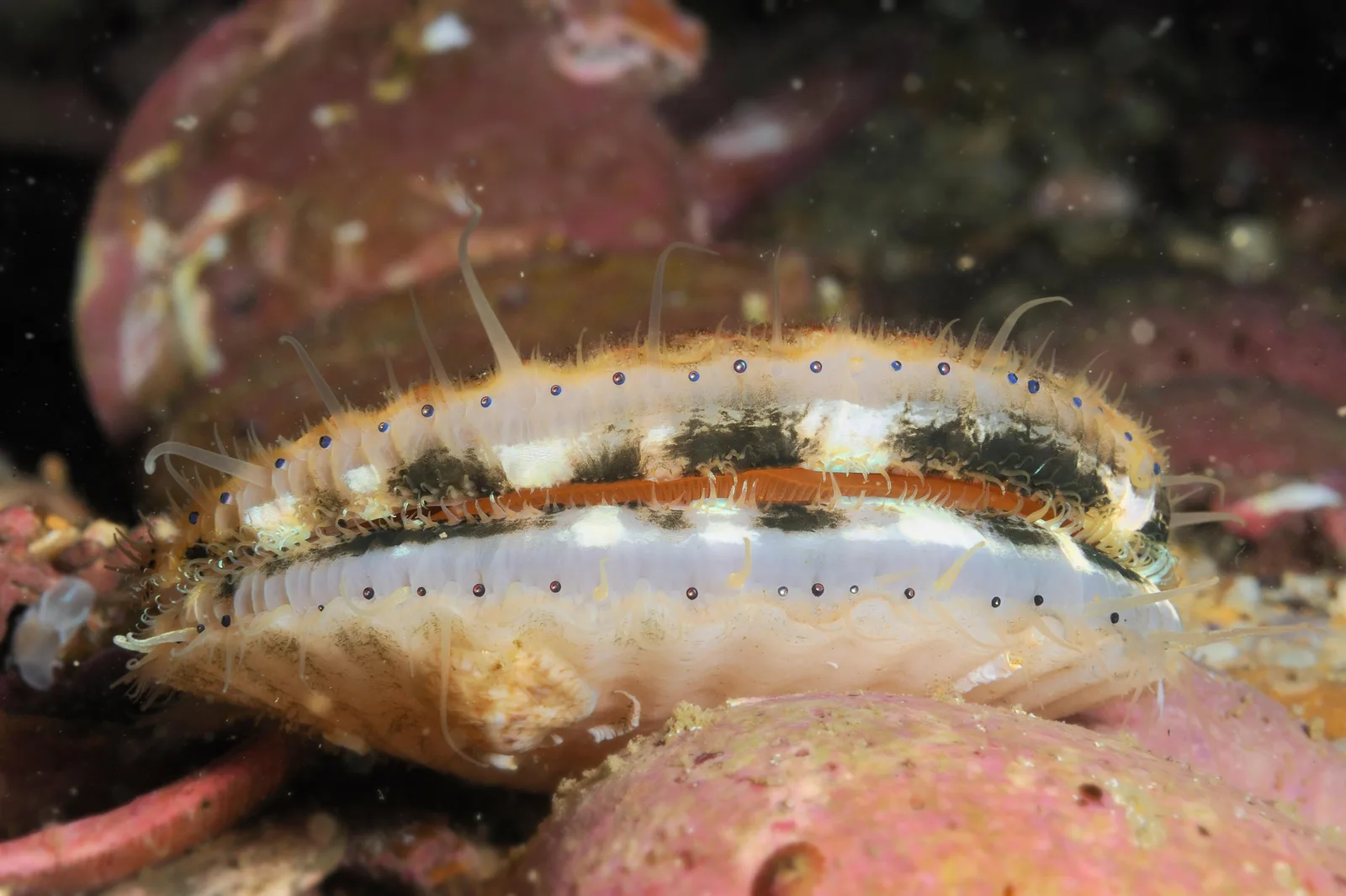
Ask what the island is famous for eating and the answer, nine times in ten, is queenies. They are queen scallops — Aequipecten opercularis — and a genuinely different animal from the king scallop most British menus mean by "scallop". The shell grows to about 90mm across and the muscle inside is small, roughly 20mm across, with a crescent of orange-and-white roe attached. The flavour is sweeter and more delicate, so they want cooking hard and fast rather than searing into submission.
Isle of Man Queenies hold PDO status, registered with the EU on 8 November 2012 and carried onto the UK register on 31 December 2020. The registered specification explains the seasonality: a closed season across April and May, and a fishery that traditionally reopens on 1 June, once the water has warmed enough for the scallops to lift off the seabed into a light trawl. Rules have tightened since that specification was written, so treat the season as a shape rather than a schedule.
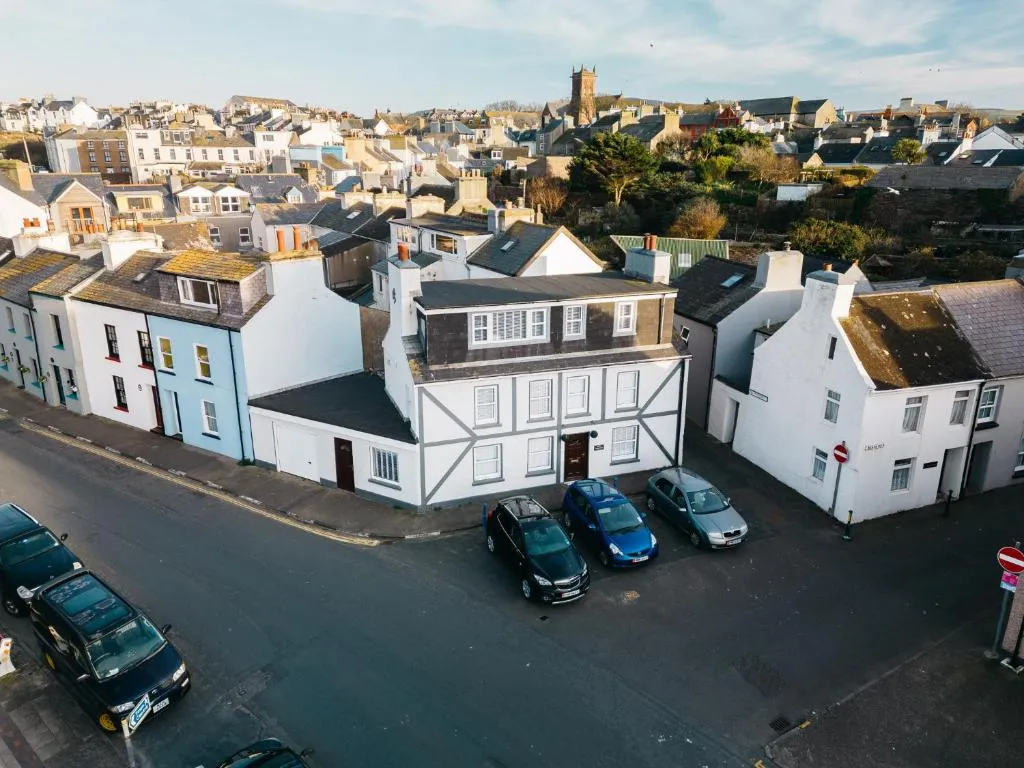
The fishery is younger than people assume. Queenies started out as cod bait, and it was only in 1969, as cod stocks fell away, that the first commercial landing was made at Peel; places to stay in Peel today put you a short walk from the same harbour where the boats still land.
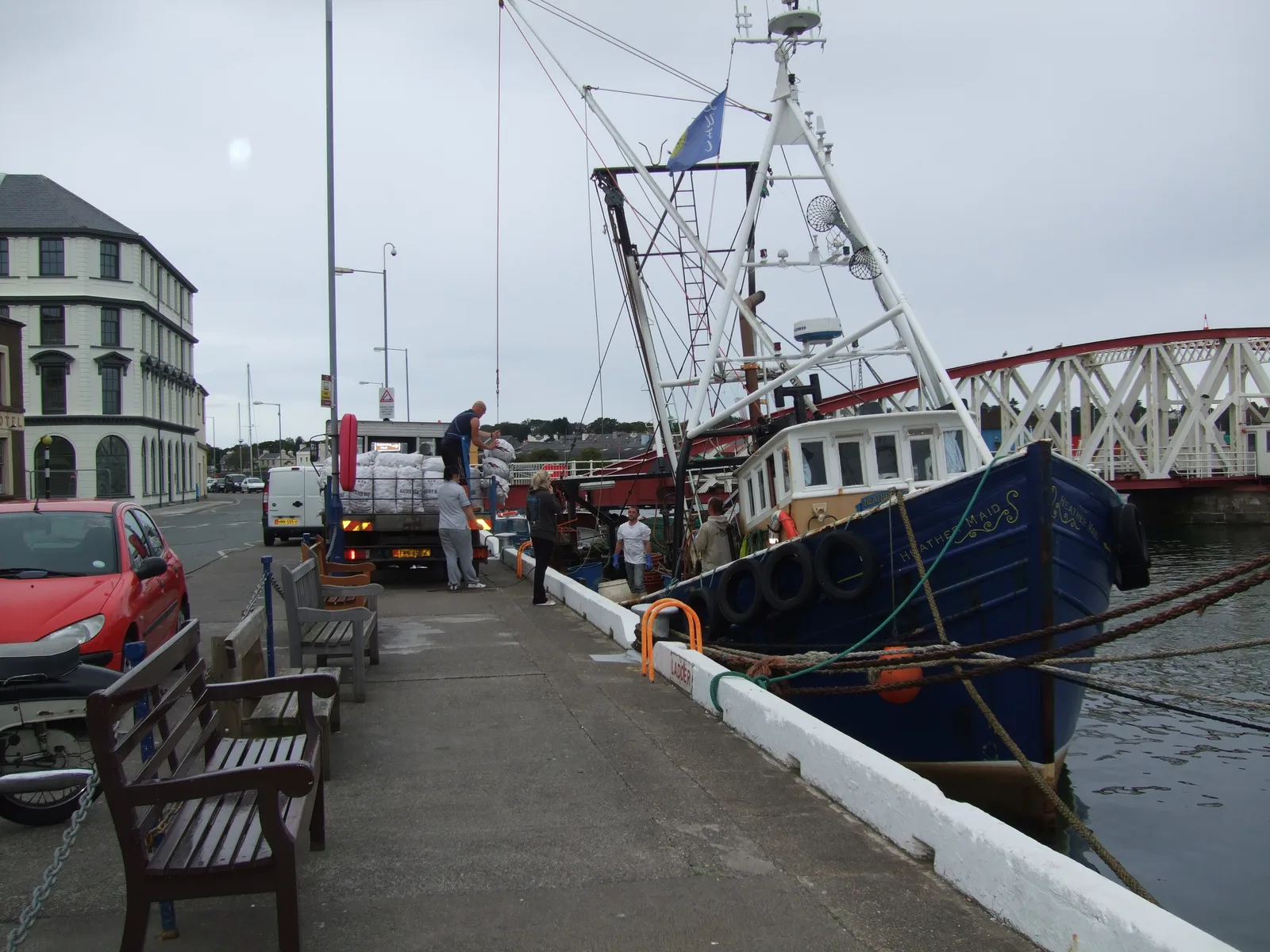
Boats now land into Peel, Ramsey, Douglas, Port Erin and Port St Mary — where places to stay in Port St Mary put you a short walk from the harbour — and the Manx government notes the Marine Conservation Society has rated the Isle of Man queenie the most sustainable wild-caught queen scallop in the British Isles. They are commonly floured and fried quickly in butter, often with bacon, though that is local practice rather than anything written down.
Manx Kippers, and What Changed in Peel
A kipper is a herring split down the back, brined and hung in a chimney to smoke slowly over smouldering wood until the flesh goes bronze and firm. The Manx version is the unadulterated one, with no dye and no smoke flavouring. Herring fishing has a long history around the island, and Peel became the curing town once purpose-built curing houses went up there, from around 1772.
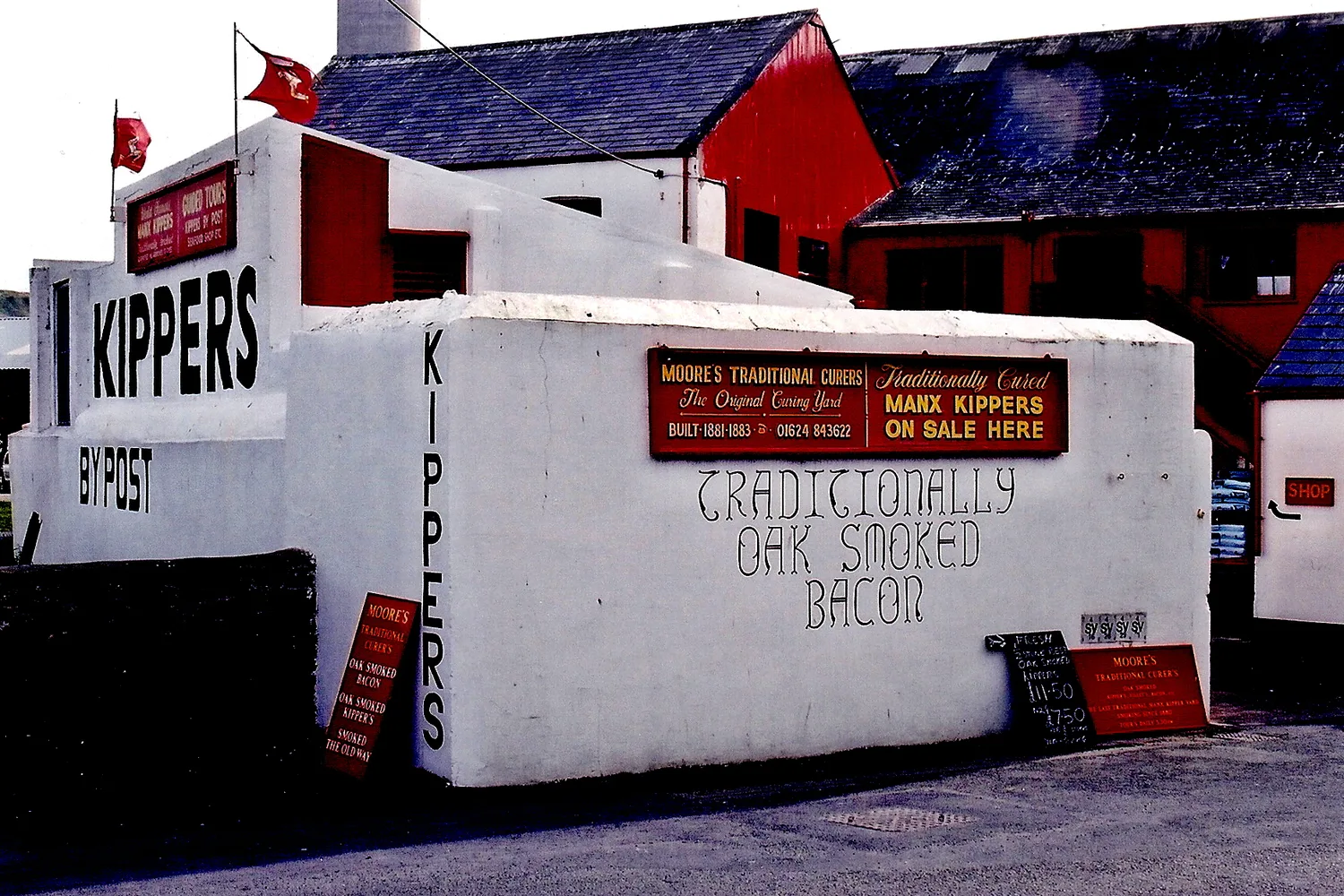
Older guidebooks are now wrong about this. Moore's Kipper Yard on Mill Road — the whitewashed building with KIPPERS painted across its wall, one of the most photographed things in the town — closed at the end of September 2023 after around 140 years. Culture Vannin, the island's heritage foundation, filmed inside it beforehand and calls the closure "the last traditional kipper yard closing in Peel".
That is not the end of the Manx kipper. The same piece notes that "Peel is, of course, still home to Devereau's, whose modern kipper curing factory is close to the harbour, ensuring that the Isle of Man is not without kippers." Devereau's has been a Manx kipper name since 1884. The herring has its own chequered history: local landings dwindled for decades and curers relied on fish from further afield, until a small targeted Manx herring fishery was restored in 2023.
Order kippers if you see them at breakfast; do not plan an afternoon around a smokehouse tour without checking first.
Planning your trip
Staying overnight? Compare live prices and availability across the Isle of Man on Booking.com.
Compare Isle of Man staysWe earn a small commission if you book through this link, at no extra cost to you.
Loaghtan Lamb, and the Horn Myth
The Manx Loaghtan is a small, primitive, short-tailed sheep from the same ancient group as the Soay and the North Ronaldsay. Its name is the colour of its fleece: loaghtan comes from the Manx lugh, mouse, and dhoan, brown. Loaghtans grazed the Manx hills until the 18th century; by the 1950s the breed was down to a handful of animals, and it sits on the Rare Breeds Survival Trust watchlist to this day.
Now the horns, because this is the claim that gets repeated wrongly. You will read that Loaghtans have four horns, or six.
The breed society's own standard says something narrower: "two or four horns in both ewes and rams, although occasionally polled ewes occur", with a gene that splits the horn bud occasionally producing three or five. The Rare Breeds Survival Trust does describe up to six, so the sources disagree — but the breed society stops at five. A four-horned ram is a startling animal; it is not compulsory, and the sheep you meet at Cregneash may have an ordinary pair.
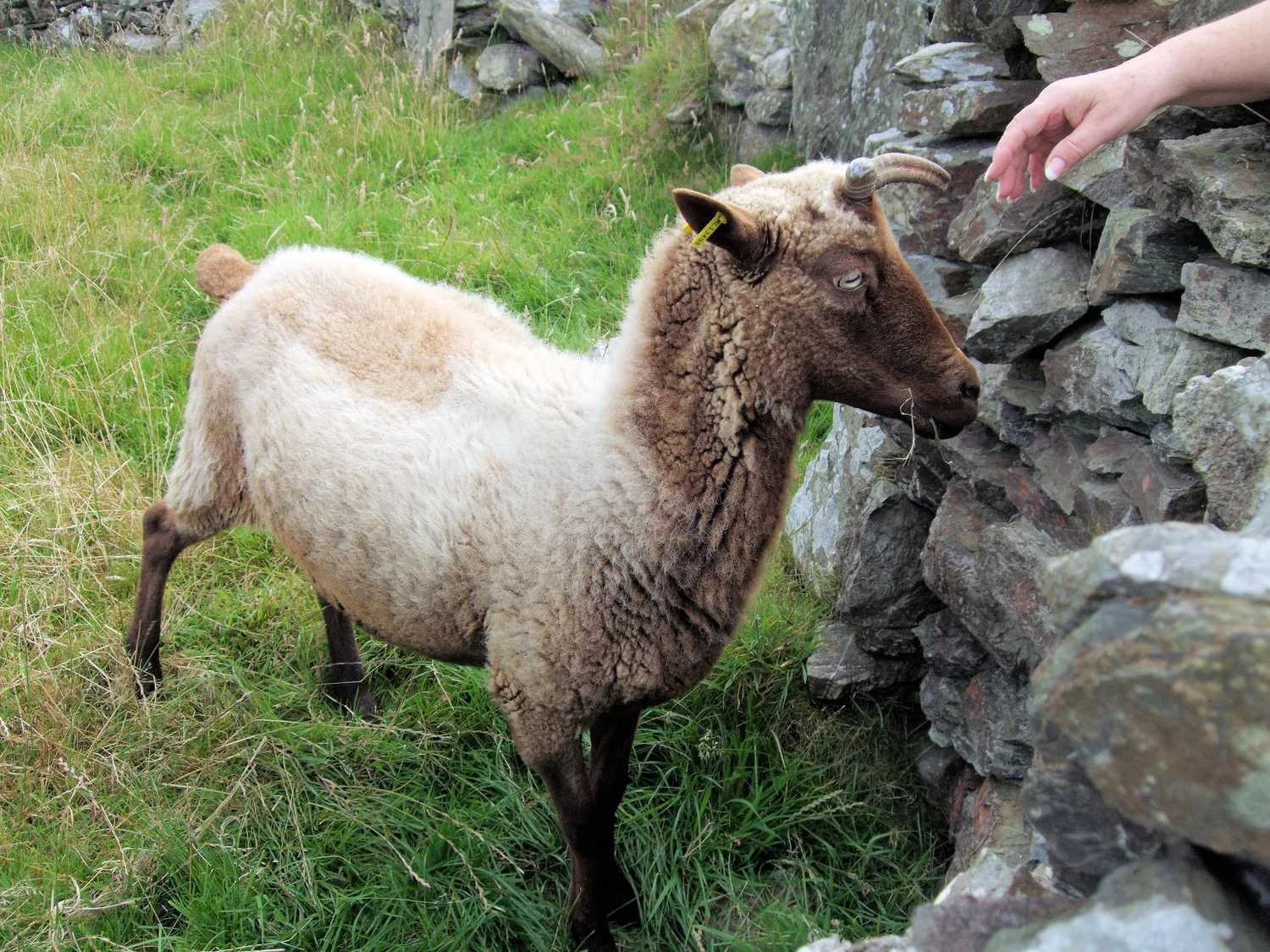
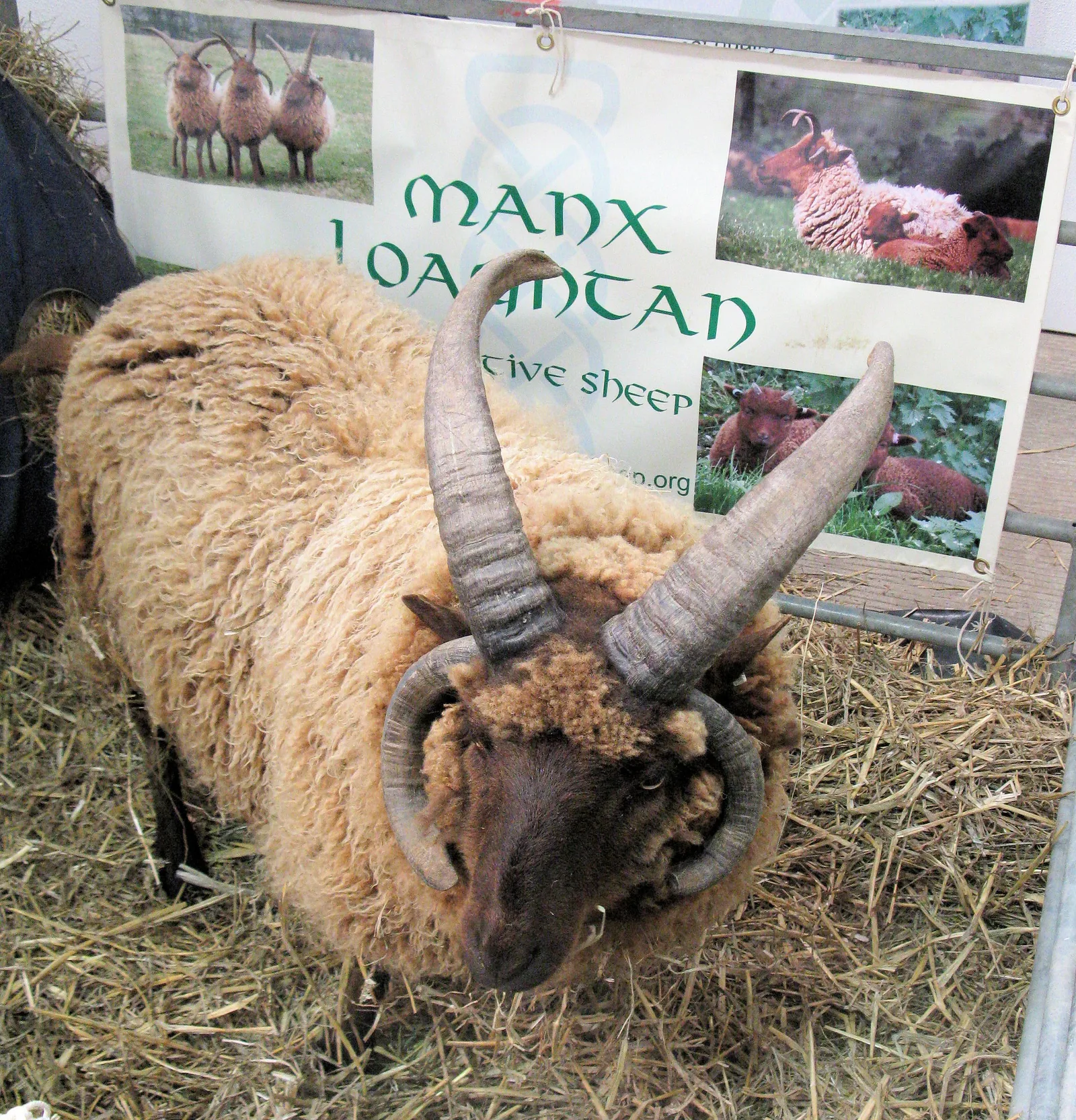
On the plate it is unmistakable. Isle of Man Manx Loaghtan Lamb was registered as a PDO on 3 April 2008, and the specification describes the meat as fine grained, darker and less fatty than commercial breeds, with a distinct gamey flavour. The protection is strict: pure-bred animals registered with the breed society, born, reared and slaughtered on the island. They graze unimproved pasture, gorse and heather moorland, which is why the meat is lean and why it tastes of somewhere.
Bonnag, and the Mill That Grinds the Flour
Culture Vannin defines bonnag carefully, as "a traditional soda bread or cake from the Isle of Man", and the hedge does real work. The oldest sense is a flat loaf baked on a griddle over the hearth, closer to a Scots bannock than to anything cakey, and the 1924 Vocabulary of the Anglo-Manx Dialect glosses it simply as "bannock".
What most people bake now is soda-raised with buttermilk, and the richest versions carry dried fruit and spice. The word looks Manx but behaves like Anglo-Manx dialect, so distrust any confident Gaelic etymology. Bonnag does have a season: Manx National Heritage records it among the things children hoped for going house to house at Hop-tu-Naa, the Manx Hallowe'en.
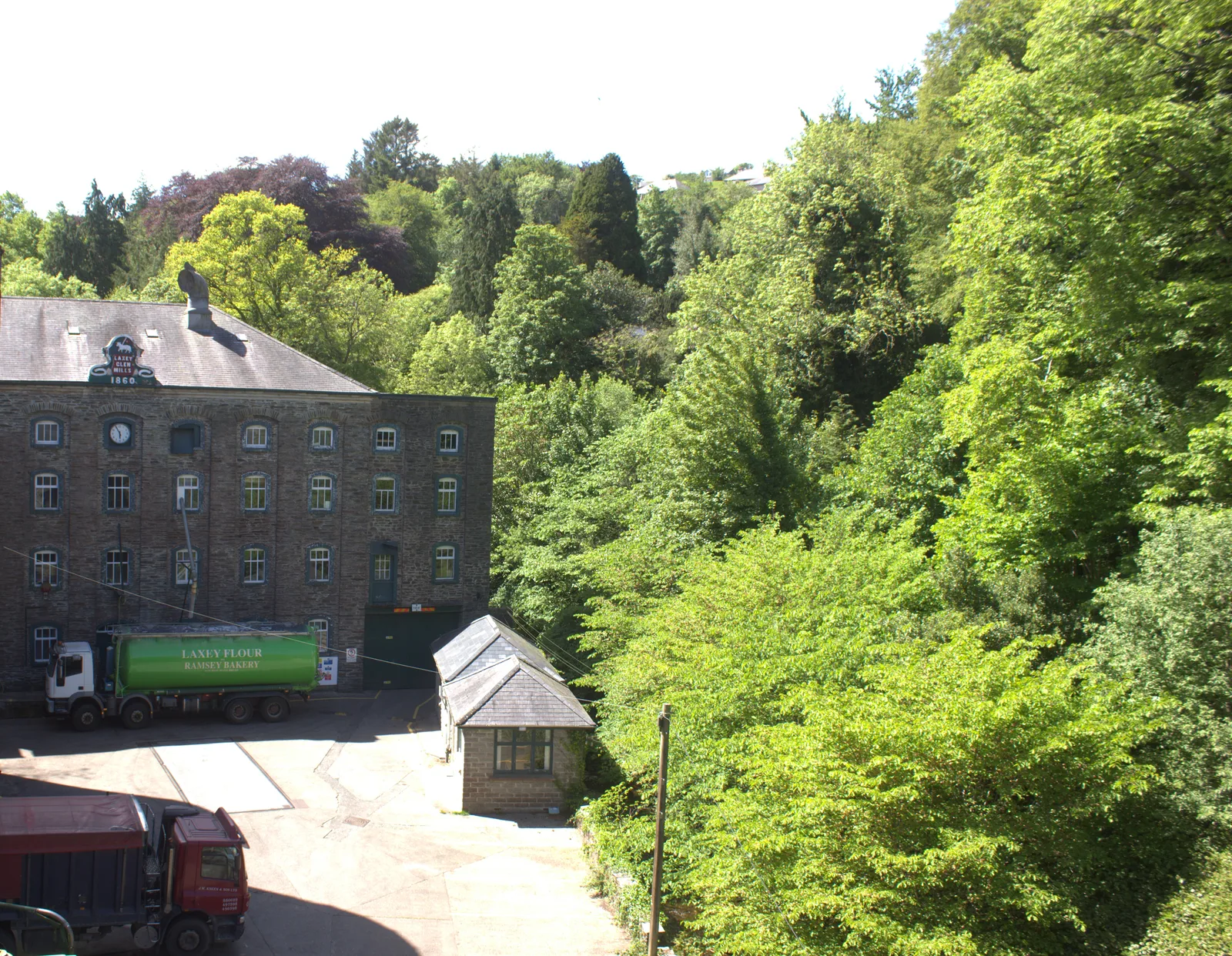
What makes a good one is the flour. Laxey Glen Mills has milled on the island since 1860, in a building designed by Robert Casement — the engineer behind the Laxey Wheel — using wheat grown on Manx farms. It does not fortify its flour, which UK mills must, so Manx flour is genuinely a different product. If kippers feel like a risk on the boat home, a bag of Laxey flour is the answer.
Manx Cheese, Crab and Lobster
Manx cheese means, overwhelmingly, the Isle of Man Creamery at Cronkbourne outside Douglas: established in 1934, a co-operative of around 30 family-owned dairy farms whose herds graze outdoors an average of 200 days a year on an audited grass-fed standard. The flagship is a vintage cheddar matured 15 to 18 months, alongside an oak-smoked mature cheddar cold smoked on site and a peppercorn version; the vintage cheddar and the peppercorn cheddar were the trophy winners at the 2026 International Cheese and Dairy Awards.
Beyond the queenies, Manx boats bring in king scallops, brown crab, lobster, langoustine and whelk. Island Seafare, the processor on the quayside at Port St Mary, describes Manx lobster as caught locally in small pots around the coast. The king scallop fishery went through a management review in 2023 and is now rated by the Marine Conservation Society among the most sustainably managed in the British Isles.
A crab sandwich eaten on a harbour wall is a reasonable ambition here, and what else is worth doing on the island routes you through the same harbour towns anyway.
Priddhas an' Herrin'
Priddhas an' herrin' is Anglo-Manx dialect for potatoes and herring, and it is the dish that explains all the others. Potatoes are boiled in their skins in one pot and the herring — salted and soaked overnight, or fresh — laid on top part-way through to cook in the steam.
It is eaten with butter melted over the potatoes and finely sliced raw onion, with bread and buttermilk. The Manx cookery books that record it frame it as peasant food that fed a whole population through scarcity, and the 1924 dialect dictionary preserves a speaker saying as much: "Nothin goin for dinner only I praasyn as skeddan."
A cuisine built on a small island is a cuisine built on what did not need importing: fish that swam past, potatoes that grew in thin soil, a sheep that could live on gorse.
You will not find it on a restaurant menu; it survives as a heritage dish rather than something sold to visitors. And while dialect potato names were recorded on the island — Kemps, Flour-balls, Paddy Kraaylls — there is no distinctively Manx-bred variety, whatever you may read. The potatoes were ordinary. That was rather the point.
Beer Brewed Under an 1874 Act
The island has a brewing law of its own, and it is not a tourist-board invention. The Brewers' Act 1874 is still on the Manx statute book — most of it repealed, but section 18 intact and amended as recently as the Brewers (Amendment) Act 1998. Everyone calls it the Manx Pure Beer Act.
Almost every popular account of it is loose, including the breweries' own. Section 18 is headed "No substitute for malt or sugar to be used", and what it says is that no brewer shall use or possess "any article, ingredient, or preparation whatever, for, or as a substitute for, malt or sugar or hops". That is a prohibition on substitutes, not a list of four permitted ingredients: water and yeast are not mentioned at all, and sugar is expressly allowed.
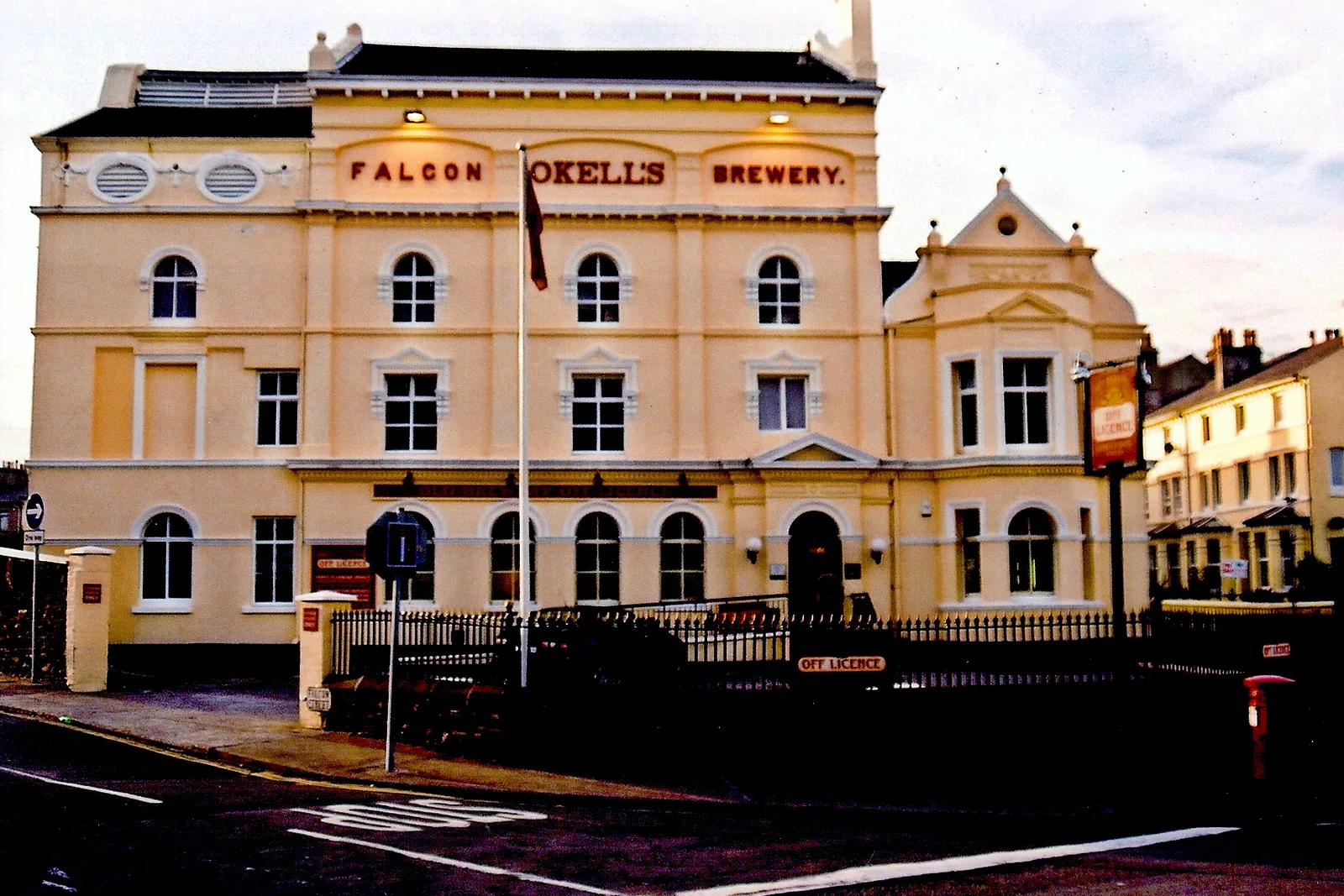
Okell's, founded in 1850 by Dr William Okell who campaigned for the Act, says its beer is still brewed in accordance with it; Bushy's, brewing at Mount Murray since 1990, gives a different rendering again. The statute is the one to trust.
The best detail is what the original wording banned by name — copperas, coculus Indicus, nux vomica, grains of paradise, Guinea pepper and opium — a list deleted in 1998. The Act was written to stop Victorian brewers poisoning people, not to enforce a German-style purity ideal.
Manx Gin, and a Real Manx Whisky
Spirits are a newer story, and one claim is worth getting right: there is now a genuine Isle of Man single malt made grain to glass on the island.
- The Manx Whisky Company, Baldrine. Its barley is grown on Ballavel farm outside Castletown, floor malted by hand in the distillery, distilled outside Baldrine and matured nearby.
- Kella Distillers, Sulby. A different proposition: its long-established Manx spirits are honest about being re-distilled from malt whisky and cognac brought in from elsewhere, and are sold as spirits rather than whisky.
- Fynoderee Distillery, Ramsey. For gin, going since 2017.
- Outlier. Award-winning rum from a wood-fired still in a converted milking shed.
What to Try, and Where to Find It
There is no fine-dining scene here and no need for one. The good eating is concentrated in the harbour towns and in Douglas, where the promenade and the streets behind it hold most of the island's restaurants; guest houses around Douglas put you within walking distance of most of them. Farm shops, butchers and the farmers' markets at St John's, Ramsey, Onchan and Colby are the other half of the picture: Isle of Man Meats sources from over 200 small family farms. Our guide to where to eat, town by town names verified restaurants and pubs in Douglas, Peel, Castletown and Ramsey.
Two dates are worth knowing. Manx Menu March puts Manx produce on menus across the island for the month, and the island's food and drink festival, covered in the next section, lands in September. Beyond those the food calendar is a scatter of agricultural shows, so the question of when to visit is usually settled by weather rather than by food.
| Dish | What it is | Where it comes from | When it's at its best |
|---|---|---|---|
| Queenies | Queen scallops, small and sweet, fried fast in butter | Landed at Peel, Ramsey, Douglas, Port Erin and Port St Mary | Summer and autumn; a closed season runs across spring |
| Manx kippers | Herring split, brined and cold-smoked over wood | Devereau's curing factory, near Peel harbour | Breakfast, year round |
| Loaghtan lamb | Lean, dark, gamey meat from the native rare breed | Hill and moorland farms across the island | Autumn and winter, from spring-born lambs |
| Bonnag | Soda bread or fruit loaf, no yeast, dense and buttered | Manx home baking; flour from Laxey Glen Mills | Hop-tu-Naa, in late October |
| Manx cheddar | Grass-fed vintage cheddar, matured 15–18 months | Isle of Man Creamery, a farmer-owned co-operative | Year round |
| Crab and lobster | Brown crab and pot-caught lobster | Small boats working the whole coast | Late spring through autumn |
The Isle of Man Food and Drink Festival, Now The Big Manx Feast
If you are searching for the Isle of Man Food and Drink Festival, you are looking for an event that has changed its name and its venue. For fifteen years it was a fixture of the Manx calendar, held in the Villa Marina Gardens in Douglas.
It then went quiet: the Department of Environment, Food and Agriculture cancelled the 2024 festival, and Isle of Man Today reported that the House of Keys was told the decision came down to costs, falling attendance and problems with the dates, location and weather. It was not held in 2025 either.
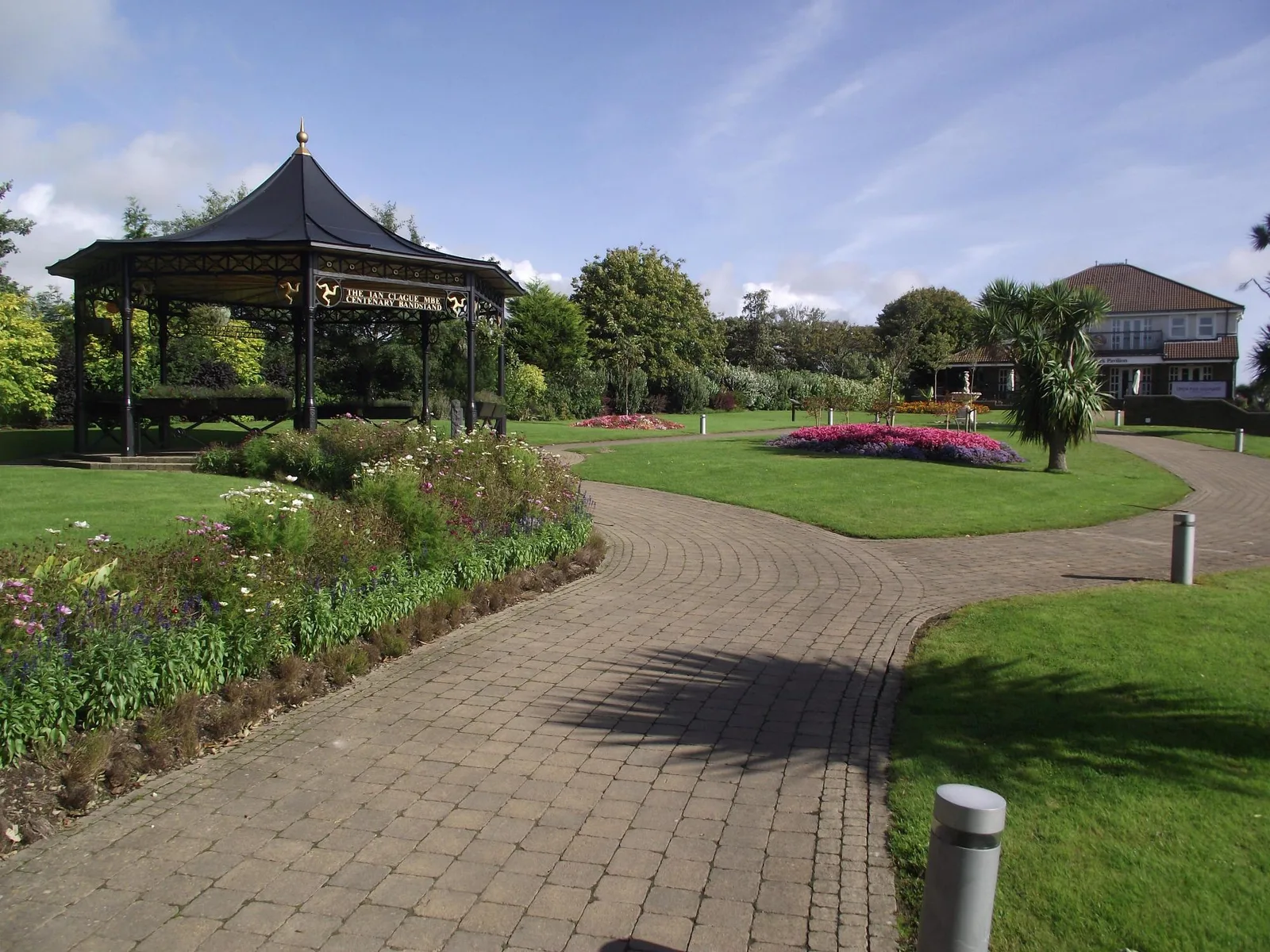
The revival carries a new name. Business Isle of Man has brought the festival back as The Big Manx Feast, now held over a September weekend at Noble's Park in upper Douglas rather than the Villa Marina Gardens, with dates published on the festival's own site. The organisers describe a cookery theatre with celebrity chefs and local cooks, a producers' tent, food trucks, talks, hands-on workshops and live music, with Manx produce to taste and take home. The first edition under the new name, in 2026, was built around Yn Mheillea, the Manx Gaelic term for harvest time.
It is a ticketed event, sold through the festival's own website. Whether the name, the park and the September slot all hold in future years is for the organisers to confirm, so check the official site before you fix a trip around it.
Because the park is in Douglas itself, guest houses in Douglas put you in the same town as the festival for the weekend.
Frequently Asked Questions
What food is the Isle of Man famous for?
Queenies first: queen scallops, Aequipecten opercularis, a smaller and sweeter relative of the king scallop, with a shell of up to 90mm. They are landed and processed on the island and cooked very quickly in butter, often with bacon. Then Manx kippers from Peel, Loaghtan lamb from the native rare-breed sheep, bonnag soda bread and Manx cheddar. Queenies and Loaghtan lamb both hold Protected Designation of Origin status.
Are Manx kippers still made in Peel?
Yes, but not where they used to be. Moore's Kipper Yard on Mill Road, the last traditional smokehouse, closed at the end of September 2023 after around 140 years. Devereau's, a Manx kipper name since 1884, still cures near Peel harbour in a modern factory, so the island is not without kippers.
How many horns does a Manx Loaghtan sheep have?
Two or four, most commonly. The breed society's standard says "two or four horns in both ewes and rams", with the horn-splitting gene occasionally producing three or five, and hornless ewes also occur. The Rare Breeds Survival Trust describes up to six, so sources disagree, but the breed society stops at five.
What is bonnag?
Bonnag is a traditional Manx bread raised without yeast. The oldest form is a flat griddle loaf much like a Scots bannock; modern versions are soda-raised with buttermilk, and the richest are close to a fruit cake. It is home baking rather than a commercial product, so a café or a farmers' market is where you will meet it.
When is the Isle of Man food festival?
In September. After not being held in 2024 or 2025, the long-running Isle of Man Food and Drink Festival is back as The Big Manx Feast, run by Business Isle of Man, and is now held over a September weekend at Noble's Park in Douglas. Dates are set each year, so check the festival's official website before booking travel around it.
Is there a Manx whisky?
Yes. The Manx Whisky Company at Baldrine makes an Isle of Man single malt from barley grown near Castletown, floor malted, distilled and matured on the island. Kella Distillers at Sulby sells long-established Manx spirits re-distilled from whisky and cognac brought in from elsewhere, labelled as spirits rather than whisky.