Quick Navigation
- Two Ways In, and No Third
- The Four Ferry Routes
- Finding the Isle of Man Ferry Terminal in Liverpool
- Getting to the Isle of Man From Ireland
- Taking the Car, or Leaving It Behind
- Flying to Ronaldsway
- Getting From the Boat or the Plane Into Town
- When to Book, and When Not to Leave It
- A Crown Dependency Inside the Common Travel Area
- Which Way In Suits Your Trip
- Frequently Asked Questions
- How long does the ferry to the Isle of Man take?
- Where do you get the ferry to the Isle of Man?
- Can you get a ferry to the Isle of Man from Ireland?
- Where is the Liverpool ferry terminal for the Isle of Man?
- Can you fly to the Isle of Man?
- Should I take a car to the Isle of Man?
You reach the Isle of Man either by Steam Packet ferry — from Heysham or Liverpool in England, Larne in Northern Ireland, or Dublin in the Republic of Ireland, all landing at Douglas — or by flying into Ronaldsway from airports across the UK and from Dublin. Which you choose comes down to one question worth settling early: are you bringing a car?
The short answer
- Two ways in, no third. Steam Packet ferry to Douglas, or a flight to Ronaldsway — there is no bridge, tunnel or rail link.
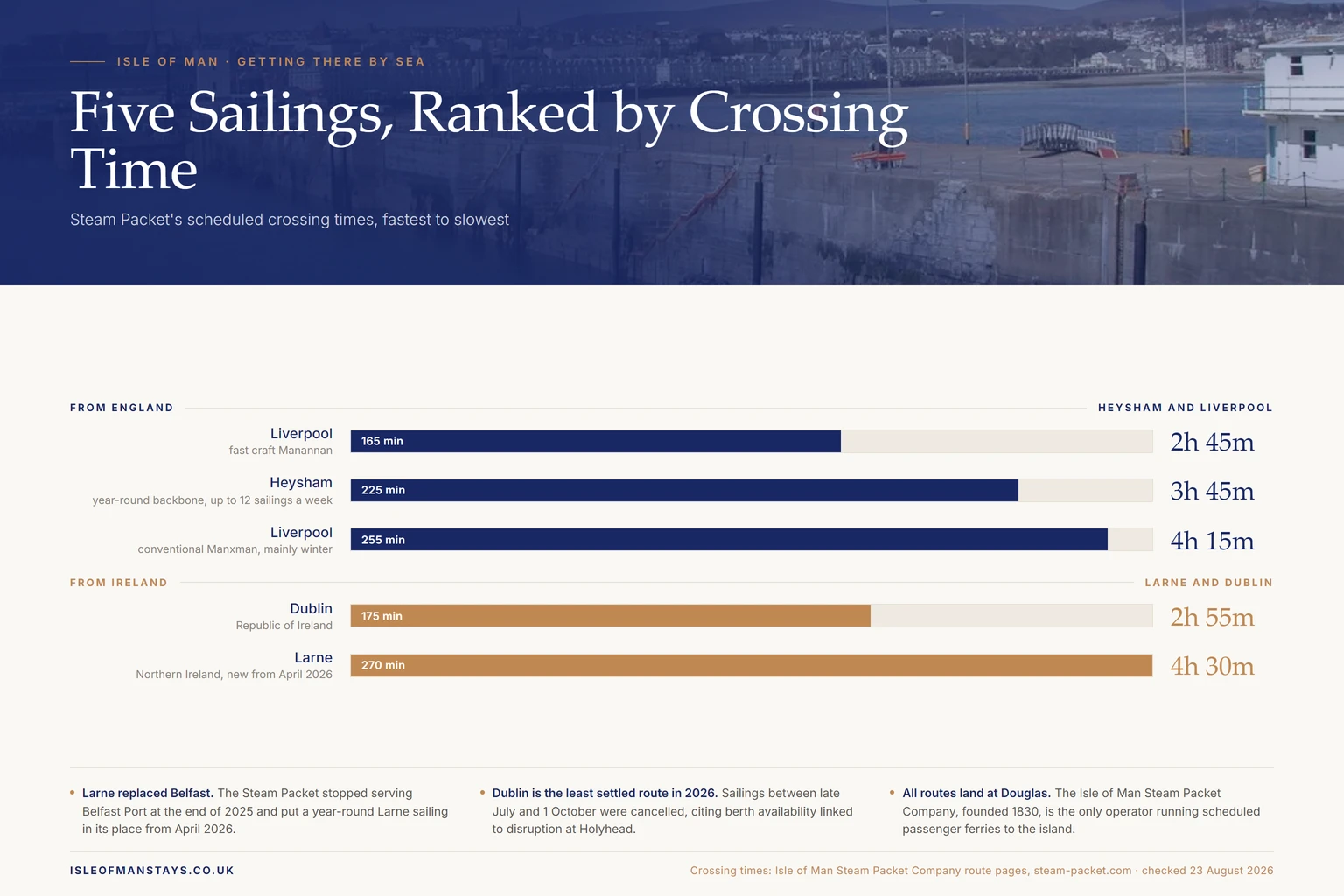
- Four ferry routes, five sailings. Heysham (3h 45m), Liverpool (2h 45m fast craft or 4h 15m conventional), Larne (4h 30m) and Dublin (2h 55m).
- Larne is new. It replaced the Belfast sailing as the year-round Irish route from April 2026.
- Ronaldsway flies year-round to nine destinations. Loganair, easyJet and Emerald Airlines (for Aer Lingus) between them serve Birmingham, Edinburgh, Liverpool, the three London airports, Manchester, Newquay and Dublin.
- Book early for the TT and the Manx Grand Prix. Race fortnight draws tens of thousands of visitors to an island of 84,069 residents — TT 2026 alone accounted for 56,106 air passenger movements and 37,941 sea passengers — so secure ferry space and a bed as far ahead as you can. The Manx Grand Prix in August is quieter but follows the same pattern.
- Dublin sailings are currently disrupted. As of August 2026, Steam Packet had cancelled Dublin crossings between late July and the start of October because of berth availability linked to disruption at Holyhead — check before you book.
Two Ways In, and No Third
The island sits out in the Irish Sea between Great Britain and Ireland, and nothing physical connects it to either. No bridge, no tunnel, no rail link. You arrive by boat or by aircraft, and both funnel into two places: one commercial airport at Ronaldsway on the south coast, and one passenger ferry port at Douglas.
Whichever route you pick you land within about half an hour of most of the island, which leaves you free to choose where to stay on the island on its merits. The crossing still deserves to be settled before anything else, because in the busiest weeks the seats and the car deck run out long before the beds do.
The Four Ferry Routes
The Isle of Man Steam Packet Company is the only operator running scheduled passenger ferries to the island, and it dates its founding, and its first vessel Mona's Isle, to 1830. Its four routes are not equivalent: two run from north-west England, two from Ireland, and they differ in frequency, duration and how confidently you can plan around them.
Heysham, in Lancashire, is the workhorse: the operator describes it as running up to twelve times each week with daily sailings, which makes it the most dependable crossing in the calendar. The port sits at the west end of Heysham village, signposted from M6 junction 34.
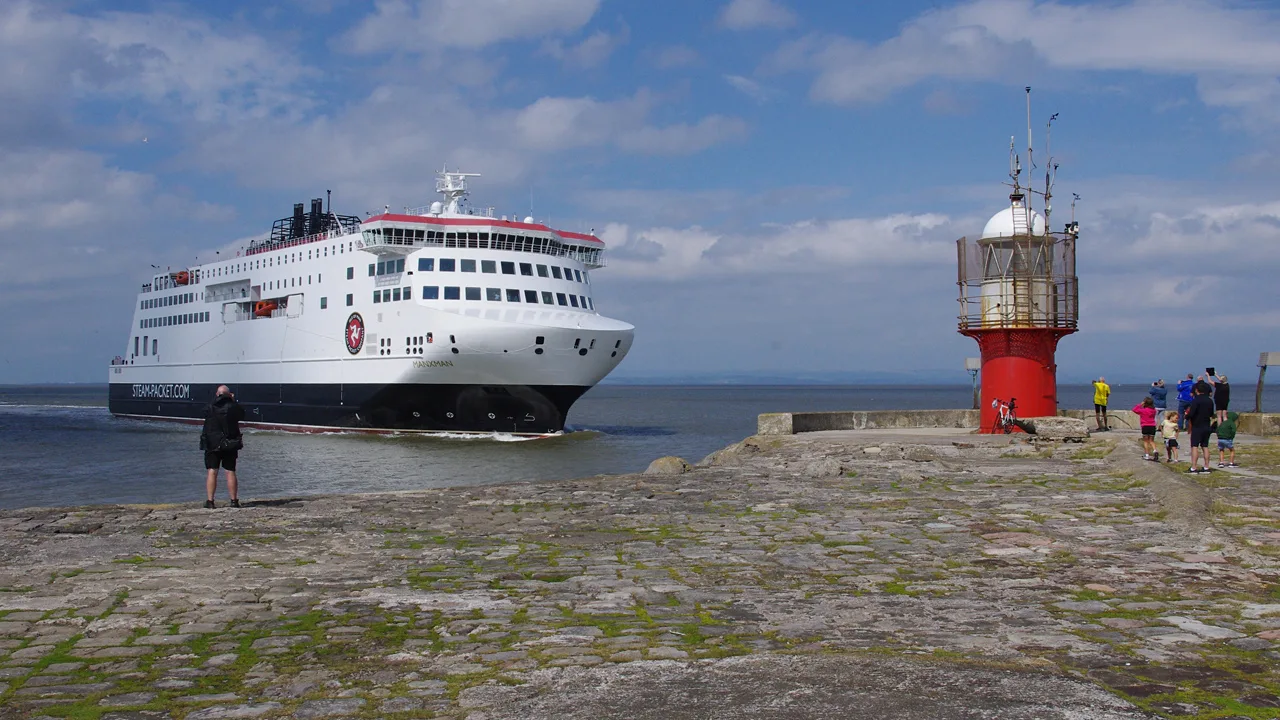
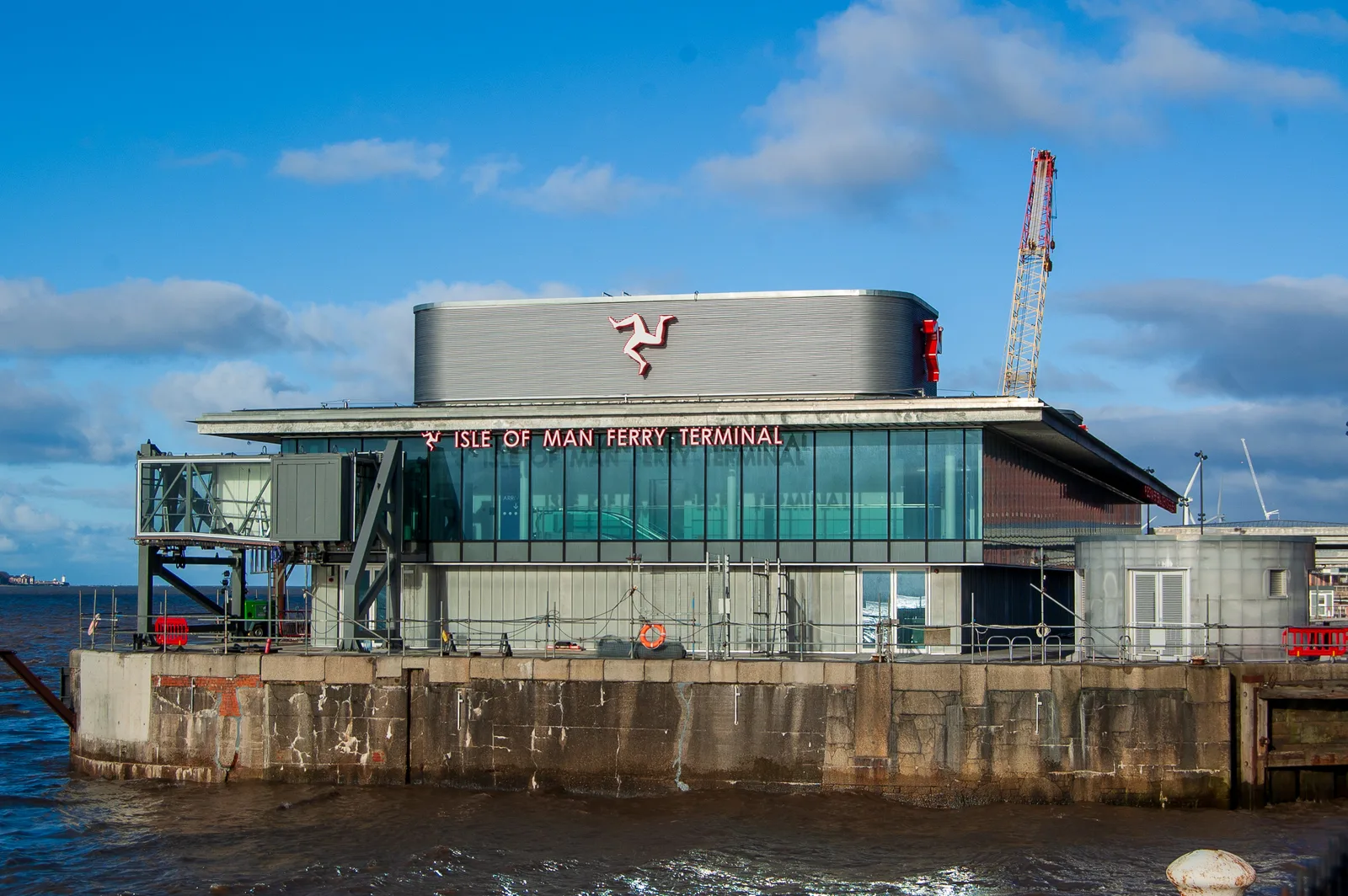
Liverpool is the one most people have heard of and the one that varies most. The operator describes it as seasonal, with daily sailings from April to October and weekend sailings through the winter, and it is the only route where the crossing time depends on which vessel is rostered: the fast craft Manannan takes around two and three-quarter hours, the conventional Manxman around four and a quarter. Sailings now use the Isle of Man Ferry Terminal at 1 Triskelion Way, about 800 metres downriver of the old Pier Head landing stage.
Finding the Isle of Man Ferry Terminal in Liverpool
Three details on the operator's Liverpool port page save a fraught arrival:
- Satnav. Because the terminal is still relatively new, some satnavs do not recognise its postcode, so take the alternative the Steam Packet recommends on that page rather than trusting the first result.
- Parking. There is no long-term parking for travellers at the port itself; the operator points drivers leaving a car behind to nearby multi-storeys instead, with Princes Dock the closest at about a five-minute walk.
- Trains. If you are arriving by train, James Street is the nearest Merseyrail station, about 1.35km away, while Lime Street, the main-line station, is about 2.3km.
The Irish routes changed recently, and the change is easy to miss: the Steam Packet stopped serving Belfast Port at the end of 2025 and put a year-round Larne sailing in its place from April 2026. An older guide sending you to Belfast is now wrong.
| Route | Where you sail from | Roughly how long | Worth knowing |
|---|---|---|---|
| Heysham | Lancashire – M6 junction 34 | 3h 45m | The year-round backbone |
| Liverpool | Ferry Terminal, Triskelion Way | 2h 45m or 4h 15m | Seasonal; duration depends on the vessel |
| Larne | Port of Larne, County Antrim | 4h 30m | New from April 2026, replacing Belfast |
| Dublin | Terminal 1, north bank of the Liffey | 2h 55m | 6km east of the centre; most disruption-prone |
Those durations come from the operator's own route pages and are scheduled crossing times, not promises. We carry no fare information or sailing schedules — check current sailings with the operator before committing to anything else.
Dublin has been the least settled: in August 2026 the Steam Packet was advising that Dublin sailings between late July and the start of October had been cancelled, citing berth availability linked to disruption at Holyhead.
Planning your trip
Staying overnight? Compare live prices and availability across the Isle of Man on Booking.com.
Compare Isle of Man staysWe earn a small commission if you book through this link, at no extra cost to you.
Getting to the Isle of Man From Ireland
You have three ways across from the island of Ireland: a ferry from Larne in the north, a ferry from Dublin in the south, or a flight from Dublin.
Larne is the dependable one. The Steam Packet's Larne port page describes a year-round service to Douglas with a crossing of about four and a half hours, mostly on Ben-my-Chree. The port is reached from Belfast along the A8, and Larne Harbour railway station serves the port with trains from Belfast, so it works whether or not you are taking a car.
Dublin is faster, at just under three hours on Manannan, but the operator describes the route as seasonal, sailing from Terminal 1 on the north bank of the Liffey, which it shares with Irish Ferries. It is also the route most exposed to outside disruption, as noted above, so if your dates are fixed and you are coming from the south, it is worth pricing Larne as a fallback before you commit.
By air, Isle of Man Airport lists Dublin as a year-round route, flown by Emerald Airlines on behalf of Aer Lingus. When we checked in September 2026 its routes page listed no flights to Belfast, so from Northern Ireland the Larne ferry is the direct option.
One paperwork point applies to Irish arrivals in particular: some visitors who are neither British nor Irish now need an ETA to travel on from the Republic, which our guide to passports, ID and visas for the island covers in full.
Taking the Car, or Leaving It Behind
Every Steam Packet route carries vehicles as well as foot passengers, so the question is not whether you can bring a car but whether you should. The island is about 32 miles long and 14 miles wide, with a bus network and three heritage railways that between them reach Peel, Ramsey, Castletown, Port Erin and the summit of Snaefell. Plenty of visitors manage a week without one. A car earns its place inland and in the north, where the glens, the smaller beaches and the coastal path trailheads sit off the main corridors.
The car deck is the constraint, not the passenger lounge. For eleven months of the year you can change your mind about driving; for race fortnight you cannot.
During the TT, which falls in late May and early June, vehicle space on the ferry is the hardest thing on the island to obtain, and it goes long before accommodation does. The same pressure applies in milder form during the Manx Grand Prix in August. In either period the sequence is: secure the sailing, then find the bed — and where to base yourself during race fortnight depends heavily on which side of the road closures you want to wake up on. The other way round is how people end up with a booking they cannot reach.
Dogs travel on the ferry too, which makes the island easier than most short-hop destinations for owners who would rather not use kennels. The rules are their own subject, set out in our guide to taking a dog to the Isle of Man.
Flying to Ronaldsway
Isle of Man Airport sits at Ronaldsway, beside the village of Ballasalla on the south coast and just outside Castletown. It is the island's only commercial airport, and the flight from most UK departure points is short enough that getting to your local airport is the longer half of the day.
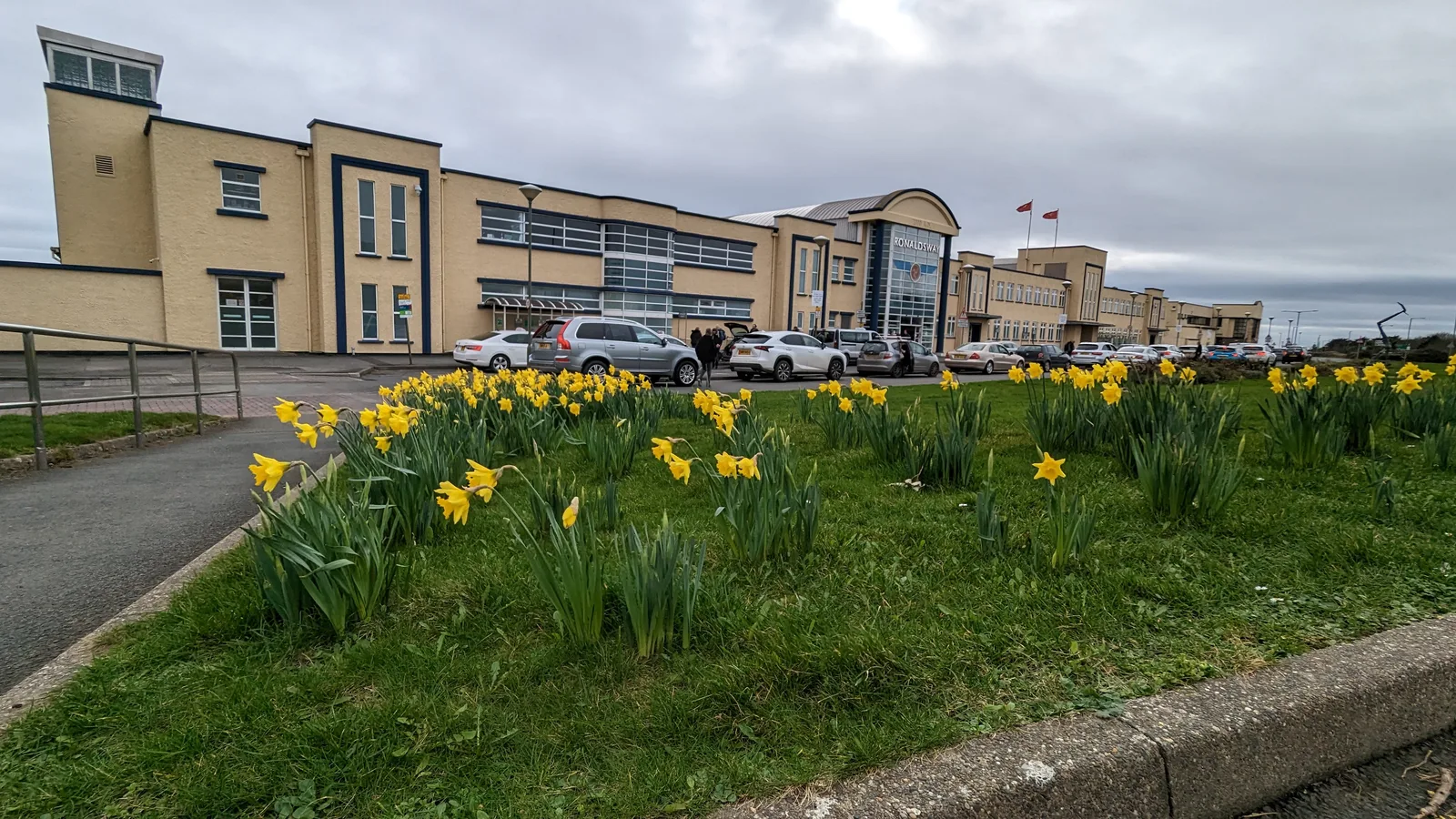
At the time of writing the airport's own routes and airlines page listed year-round services to Birmingham, Edinburgh, Liverpool, London City, London Gatwick, London Heathrow, Manchester, Newquay and Dublin, flown by Loganair, easyJet and Emerald Airlines on behalf of Aer Lingus. Bristol and a handful of holiday destinations were shown as seasonal, Geneva as a winter route.
Treat that as a snapshot, not a fixture. Regional routes to small islands are reviewed constantly, and a city pair that existed last year may not be bookable this one. Check the airport's page rather than trusting any article, this one included.
Getting From the Boat or the Plane Into Town
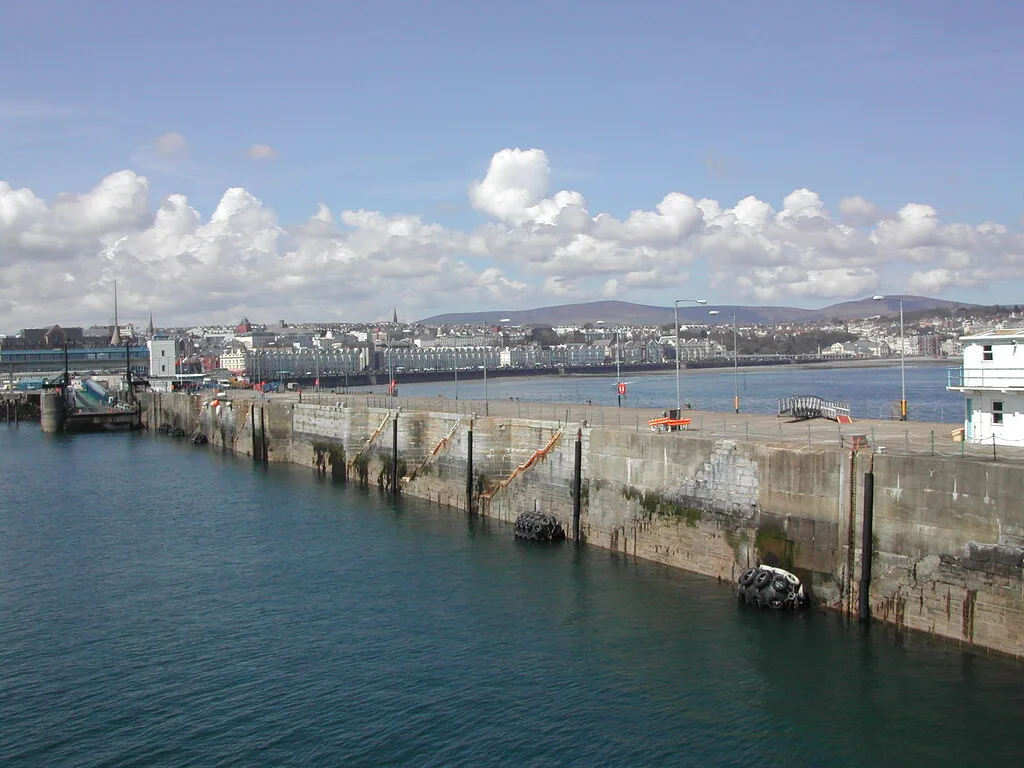
Foot passengers get the better arrival. The Sea Terminal stands at the southern end of Douglas promenade, so you walk off the ship into the town rather than an industrial estate. Douglas Bus Station is roughly a 400-metre walk away on Lord Street, with a taxi rank at the terminal's front entrance. Book one of the hotels within walking distance of the Sea Terminal and you will probably need neither.
The airport is served by bus routes 1, 1A, 2, 2A, 8, 8S, 11, 11A, 12 and 12A. Northbound they run into Douglas via Victoria Street and the promenades; southbound they reach Castletown, Port Erin and Port St Mary. Isle of Man Transport describes buses every twenty minutes through the daytime and early evening, and every thirty minutes outside those hours.
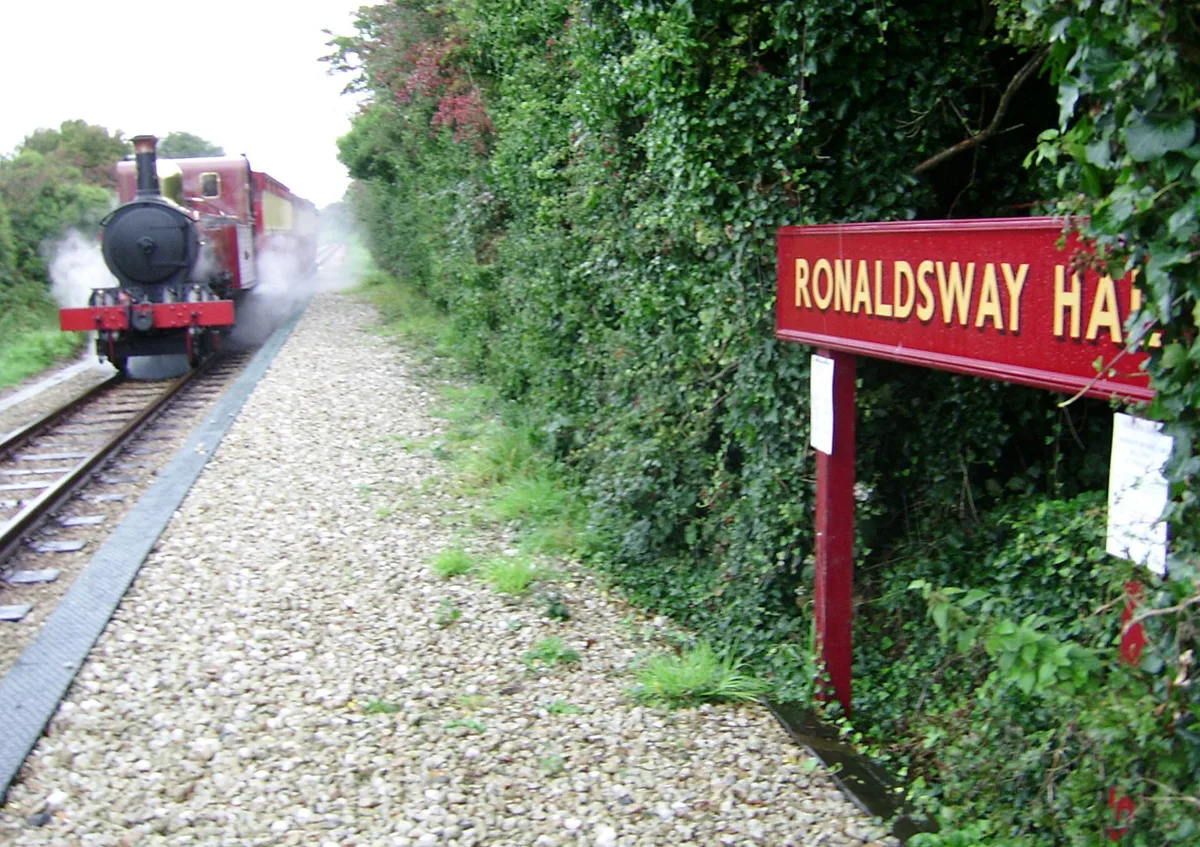
There is a quieter option too. Ronaldsway Halt, on the Isle of Man Steam Railway, is a five-minute walk from the terminal, so you can step off a flight and onto a Victorian steam train running the 15½-mile line to Douglas or Port Erin. It follows a seasonal calendar, so confirm it is running that day.
When to Book, and When Not to Leave It
For most of the year the island is not a place where you need to book far ahead. Two periods break that rule completely.
The TT, held in late May and early June, brings tens of thousands of visitors to a place with a permanent population under a hundred thousand. The Manx Grand Prix in August is smaller and more relaxed, but it draws a crowd of its own. If either is your reason for coming, book the crossing as soon as the schedule is released.
If keeping the cost of the crossing down matters more than the dates, the useful levers are flexibility rather than any one route. Compare more than one port and more than one day on the operator's own booking pages. The Steam Packet lists foot passenger and vehicle prices separately, so ask yourself honestly whether you need a car on the island at all. And keep clear of race fortnight if you can.
We do not quote fares here, because they change and we hold no live feed of them.
Outside those weeks the planning order runs the other way: decide when the island suits you, then sort the transport. Our guide to the best time of year to visit works through the seasonal trade-offs, including the ones that catch people out, such as the heritage railways running a shorter operating calendar in winter.
A Crown Dependency Inside the Common Travel Area
One point of confusion is worth clearing up. The Isle of Man is a self-governing Crown Dependency: not part of the United Kingdom, and never part of the European Union. As the Manx government puts it, "as a Crown Dependency the Isle of Man is represented internationally by the United Kingdom".
For anyone coming from Britain or Ireland that has almost no practical effect, because the island sits inside the Common Travel Area and there are usually no immigration controls on those crossings.
It is the carrier's photo ID rules, not a border, that will stop you at check-in, so carry photo ID regardless.
Passports, ETAs, currency, driving and the rest of the paperwork are covered in our practical guide to the island rather than repeated here.
Which Way In Suits Your Trip
For a long weekend without a car, fly, or take the fast craft from Liverpool and walk off into Douglas. With a vehicle, luggage and a dog for a week or more, Heysham behaves most predictably. From Ireland, Larne is the northern option and Dublin the southern one, with the caveat that Dublin has been the more disrupted.
Once the crossing is settled, the next decision is which town to base yourself in, and it matters here more than on most islands because the transport network shapes what a base can reach. That is the subject of our guide to choosing a base on the island, and if you are arriving on foot at Douglas you can compare self-catering apartments in Douglas from there.
Frequently Asked Questions
How long does the ferry to the Isle of Man take?
The Steam Packet lists 3 hours 45 minutes from Heysham, 2 hours 45 minutes from Liverpool on the fast craft Manannan or 4 hours 15 minutes on Manxman, 2 hours 55 minutes from Dublin and 4 hours 30 minutes from Larne. Those are scheduled crossing times and change with the vessel and the weather.
Where do you get the ferry to the Isle of Man?
From four ports: Heysham in Lancashire, the Isle of Man Ferry Terminal in Liverpool, Larne in County Antrim and Dublin. All four sail to Douglas. The Steam Packet stopped serving Belfast Port at the end of 2025 and replaced it with Larne from April 2026.
Can you get a ferry to the Isle of Man from Ireland?
Yes, from two ports. The Steam Packet sails year-round from Larne in County Antrim, a crossing of about four and a half hours, and seasonally from Dublin, which takes just under three. Both land at Douglas. Dublin has been the more disruption-prone route, so check current sailings with the operator before building a trip around it.
Where is the Liverpool ferry terminal for the Isle of Man?
At 1 Triskelion Way, about 800 metres downriver of the old Pier Head landing stage. The Steam Packet warns that some satnavs do not recognise the new terminal's postcode and gives an alternative on its Liverpool port page. There is no long-term parking for travellers at the port, and James Street Merseyrail station is about 1.35km away.
Can you fly to the Isle of Man?
Yes, into Isle of Man Airport at Ronaldsway on the south coast. Loganair, easyJet and Emerald Airlines flying for Aer Lingus have served it from Manchester, Liverpool, Birmingham, Edinburgh, the three London airports and Dublin. Routes change between seasons, so verify yours on the airport's site.
Should I take a car to the Isle of Man?
Only if your plans reach beyond the bus and railway corridors. The island is about 32 miles by 14, and public transport connects Douglas, Peel, Ramsey, Castletown and Port Erin well. A car pays off for rural stays and coastal path logistics, but is much harder to book during the TT.